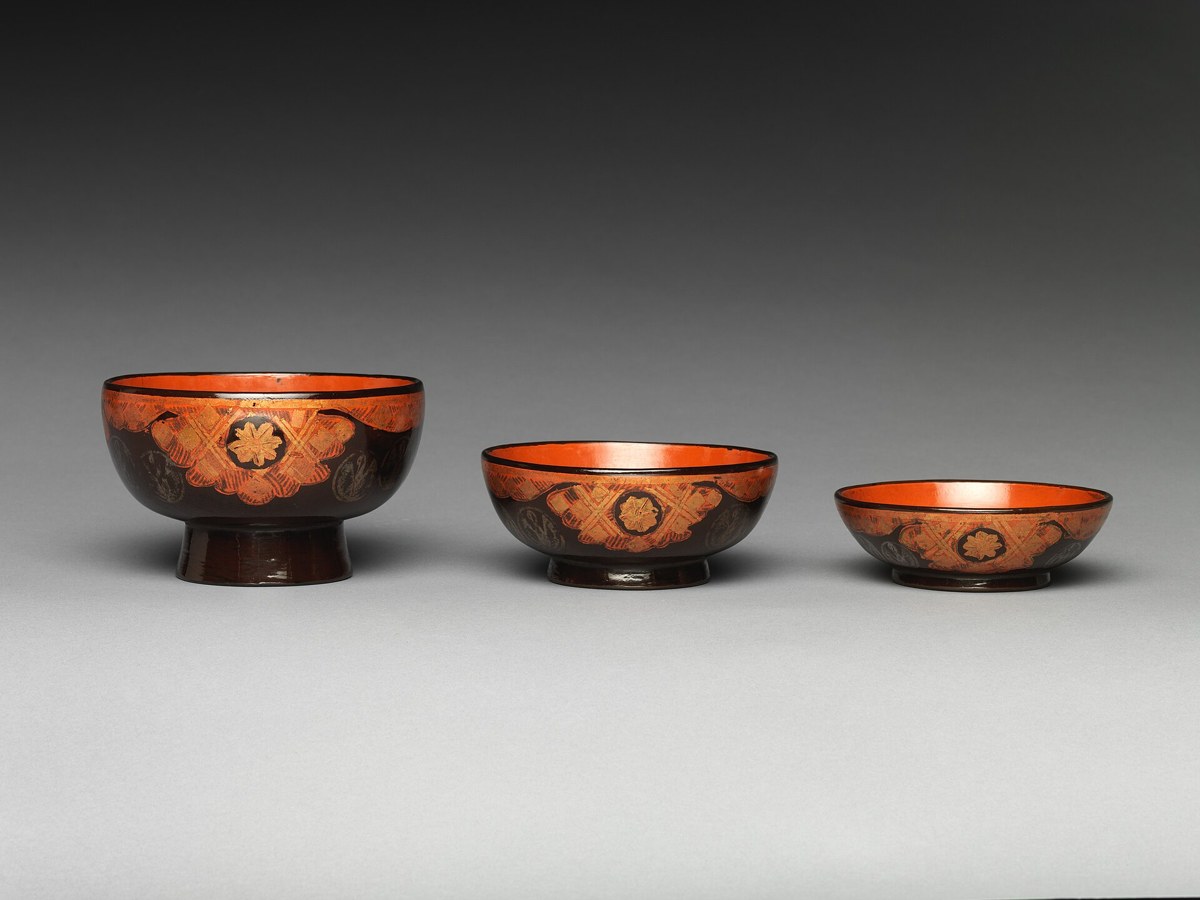
In Wajima, a soup bowl is a construction project. The port city on Ishikawa's Noto Peninsula makes Japan's most durable lacquerware by a method found nowhere else — a ground of powdered local earth under the lacquer, and more than a hundred and twenty steps between the tree and the table. It gives Ishikawa, whose two stories so far both belong to Kanazawa, its third story, from the far end of the prefecture.
An undercoat made of the city's own earth
Every lacquer tradition coats wood; Wajima first armours it. The maker's own step-by-step account — Tohachiya, a Wajima manufacturer and nushiya established in 1888 — shows the sequence: the wooden core is carved, hardened, and soaked in crude lacquer; cloth is pasted over the fragile parts, the rim and the foot, in the step called nunokise; and then the core is coated again and again with ji, a mixture of crude lacquer, rice glue and jinoko.
Jinoko is the local secret that is not secret at all: a powder of diatomaceous earth dug at Mt Komine in Wajima itself, graded from coarse to finest across the coatings and polished back between each. Mixed into the ground, it gives Wajima ware its famous resistance to impact and wear — the reason a Wajima bowl can be tableware for a lifetime rather than a cabinet piece. Only after that ground is complete do the middle and finish coats of pure lacquer, and then the maki-e and chinkin decoration, begin.
One hundred and twenty-four steps, none of them one person's
The full Wajima process runs to as many as 124 steps, and its second distinction is that no single craftsman performs them. Production is a complete division of labour — wood turners, ground coaters, middle and finish coaters, polishers, maki-e artists and chinkin engravers each hold one stage — coordinated by the nushiya, the lacquer house that commissions, supervises and finally sells the piece. The system was already old when it was standardised in the Edo period, and it is why a Wajima piece is signed by a house rather than a hand.
The state's honours followed the reputation. In 1975 Wajima-nuri was designated a Traditional Craft by the industry ministry of the day; in 1977 its preservation technique was designated an Important Intangible Cultural Property — the first lacquerware in the country to receive that designation. The ware's own memory runs much further back: the oldest surviving piece is said to be the vermilion door of the former main hall of Juzo Shrine in Wajima, said to have been made in 1524.
Made to be used, repaired and handed down
Wajima's makers insist, against the ware's price and gloss, that it is everyday equipment. Tohachiya's account gives the using case: a Wajima bowl spreads the heat of hot soup evenly and keeps food warm; its lustre improves the more it is handled, polished naturally by use; and if a piece is damaged it can be repaired, and so passed on to children and grandchildren. The durability is not a side effect — through trial and error across generations, it is what the jinoko ground was invented for.
The craft has needed its own durability lately. The Noto Peninsula earthquake of 1 January 2024 stopped Wajima's lacquer production completely for a time, in a city whose workshops, stores and morning market were themselves damaged. Buying Wajima ware now is therefore also a recovery act, which the makers state plainly and this page repeats without embroidery.
What it costs, and where to buy it
The public door into the craft is the Wajima lacquerware museum, opened in 1971: its exhibition space charges 300 yen for an adult, and its showroom — free to enter — sells bowls, chopsticks and trays by the thousand, the full ladder from daily pieces to exhibition work. At retail, honest Wajima carries an honest premium: a checked listing for a pair of Wajima-nuri soup bowls by a Wajima maker stood at 33,745 yen, and decorated work climbs far above the daily bowls.
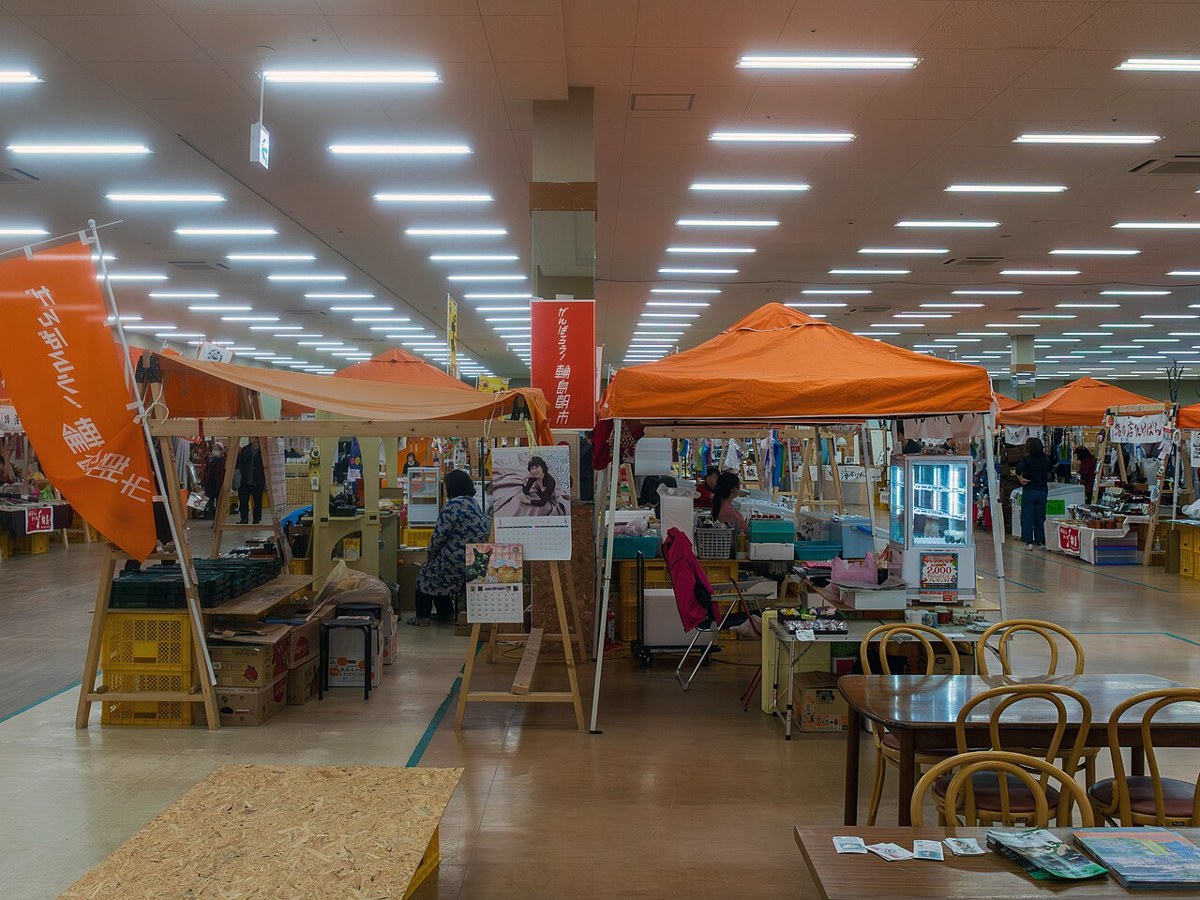
Buy in Wajima if you can — the morning-market street and the makers' own shops keep the whole range in one walk — and buy from a nushiya or a designated seller elsewhere, asking the two questions the craft itself teaches: is the ground jinoko, and can the house repair it? A yes to both is Wajima-nuri. The bowl you choose on that test is built, in the most literal sense this collection can offer, out of the city it comes from.
Sources — checked 10 November 2026
- Tohachiya (Wajima-nuri manufacturer and nushiya, est. 1888): About Wajima-nuri
- Imoto Sangyo: Wajima Lacquerware — the Inherited Artistry Sustained by a Division of Labor
- Japan Experience: The Wajima-nuri Lacquerware Museum
- Japan Mono: Wajima Nuri Lacquer Soup Bowl — where to buy
- Madison Prime Home: Wajima Lacquerware — Urushi, Jinoko and Commissions
Original prose and official links only; no source text or maker media reproduced. Photos are credited Creative Commons works, not product photographs.
Editorial review 2026-11-10