Some crafts dominate a town; this one quietly supplies a country. Kanazawa, Ishikawa's castle city, beats more than 98% of Japan's gold leaf — gold stretched so thin that a single gram covers a square metre — and it is now the only place in Japan that makes it at all. The leaf gilds Kinkaku-ji, Buddhist altars and lacquerware across the country, and in Kanazawa you can also eat it, on a ¥891 soft-serve cone, or learn to lay it yourself in a workshop from ¥2,000.
1593: an order, a ban, and a secret
The paper trail starts with power: a letter of 1593 from Maeda Toshiie, founder of the Kaga domain, orders gold-leaf production in his territory. Then the Tokugawa shogunate restricted leaf-making to Edo and Kyoto — and Kanazawa's beaters, rather than stopping, continued in secret under their domain's protection, supplying the castle town's lacquerers and altar-makers off the record.
Conditional official permission finally came in 1864, and the industry developed in the open from there. The rivals faded; Kanazawa's combination — a humid, low-static climate that lets a film of gold be handled without it tearing or flying, pure water, and nearby demand from Wajima lacquerware and altar crafts — did the rest. Today the Government of Japan puts Kanazawa's share above 98%, and the city is the sole remaining production hub.
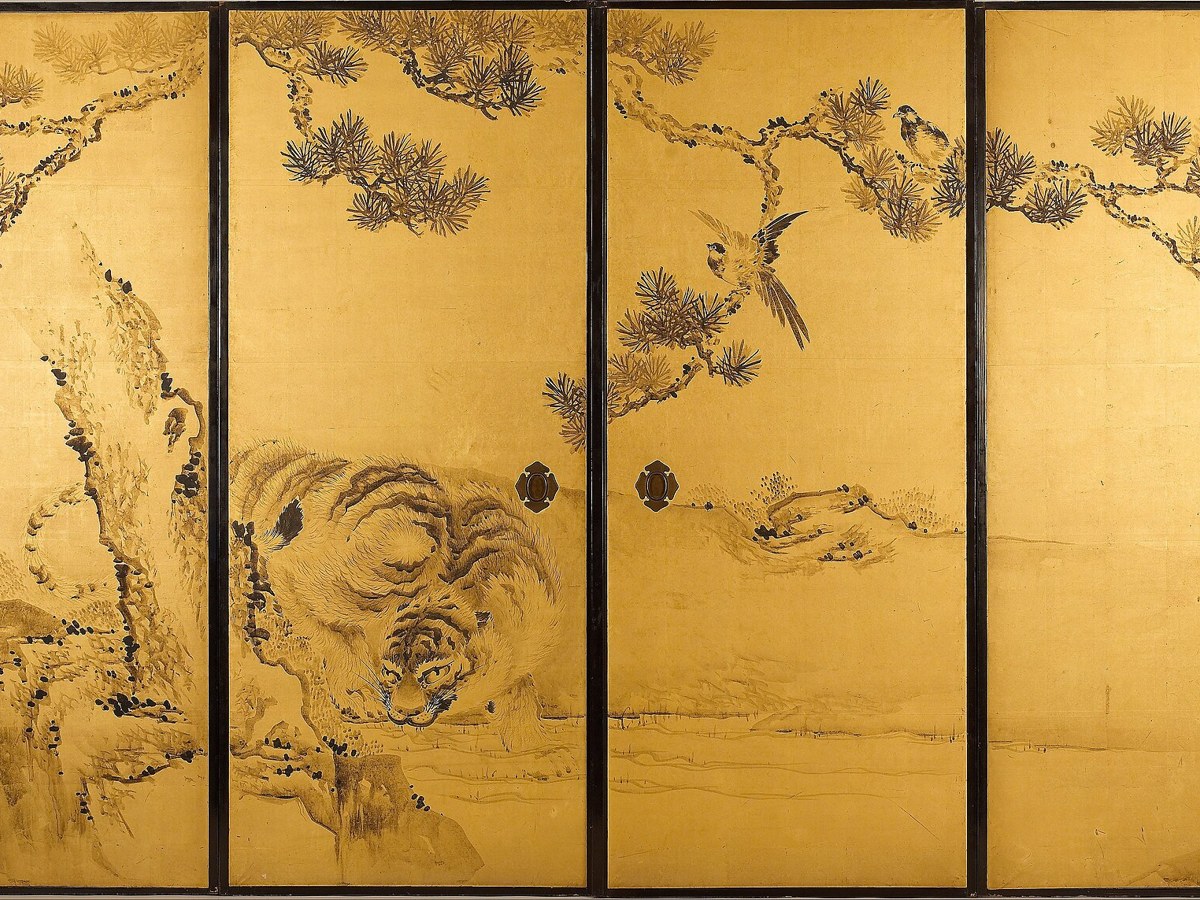
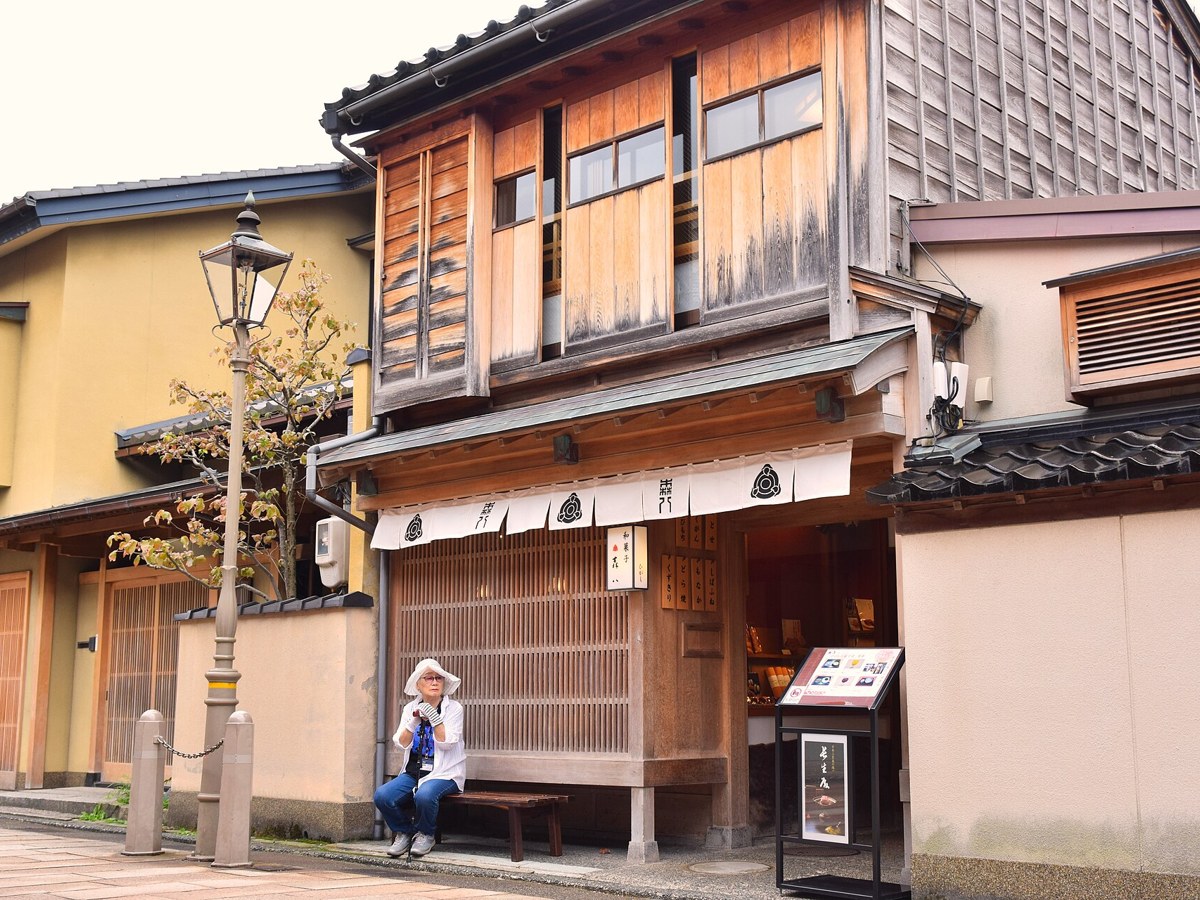
One gram, one square metre
Gold leaf begins as gold alloyed with a little silver and copper, cast, rolled and then beaten — traditionally between sheets of special paper (the enzuke method), now also by machine — down to about one ten-thousandth of a millimetre. One gram yields roughly fifty sheets and covers about a square metre. At that thinness the leaf is handled with bamboo tweezers and breath discipline; a static spark or a sigh can ruin a sheet.
The traditional enzuke technique was inscribed in 2020 on UNESCO's Representative List as part of the traditional skills for conserving wooden architecture — the leaf on Japan's great temples is a conservation craft as much as a decorative one. Most production still goes to its historic uses: household Buddhist altars, lacquerware, and the restoration of shrines and temples, Kinkaku-ji included.
Practical details: prices, experiences, where to buy
Prices (checked 2026-11-09): the emblematic taste is Hakuichi's gold-leaf soft serve at ¥891 — the price is a pun on the company name — launched in 2015 as the Hokuriku Shinkansen arrived. To make rather than eat: gold-leaf craft experiences at Hakuichi's Hakukokan and Bikazari Asano start at ¥2,000 depending on the item (chopsticks, plates, small boxes), and Hakuza's leaf-making plans start at ¥1,980. The Yasue Gold Leaf Museum, the craft's own museum, charges ¥300 admission.
Where to buy: Kanazawa's leaf shops and workshops — Hakuichi, Hakuza, Sakuda and others, concentrated around the Higashi Chaya district and the Haku Danchi leaf estate — sell sheets, gilded goods and cosmetics; finished gold-leaf goods are sold nationwide. Type of edition: regional edition — a single-city production monopoly of 98%-plus.
The souvenir that weighs nothing
Gold leaf is the perfect Kanazawa souvenir precisely because the craft is invisible in the finished object: a gilded chopstick rest or a single sheet in a presentation case weighs nothing, never spoils, and carries the whole improbable story — a banned craft kept alive in secret until it became a nation's only source.
Do the workshop if you can. Laying a sheet of leaf onto lacquer with bamboo tweezers, in a room kept deliberately humid, teaches your hands in ten minutes what four centuries of Kanazawa beating actually means — and the soft serve afterwards is not a gimmick but the same leaf, eaten in the city that makes it all.
Scope: what 'limited' means here
Kanazawa gold leaf is documented as Kanazawa's beaten leaf with a share above 98% of national production and sole-hub status, per the Government of Japan and the cited guides. Finished gilded goods are sold everywhere and are stated as such. Checked 2026-11-09.
Sources — checked 9 November 2026
- Highlighting Japan (Government of Japan): Kanazawa gold leaf — over 98% of Japan's production
- Japan Travel: Kanazawa's gold leaf production — 99% share, sole hub, Yasue Museum ¥300
- Food in Japan: Gold leaf soft serve — Kanazawa's golden treat, Hakuichi ¥891, 2015 launch
- Visit Kanazawa (official travel guide): Gold leaf craft experience at HAKUICHI Hakukokan — from ¥2,000
Original prose and official links only; no source text or maker media reproduced. Photos are credited Creative Commons works, not product photographs.
Editorial review 2026-11-09