Kutani is porcelain turned up loud: five overglaze colours — green, yellow, red, purple, dark blue — painted over nearly the whole surface until the white clay disappears under gardens, birds and brocade. It comes from southern Ishikawa, where the Kaga domain opened a kiln in 1655. In Kanazawa's Higashiyama tea district, small Kutani cups sell for ¥2,000–¥8,000; in Nomi, the Kosen Kiln lets you paint one yourself.
Five colours over the glaze
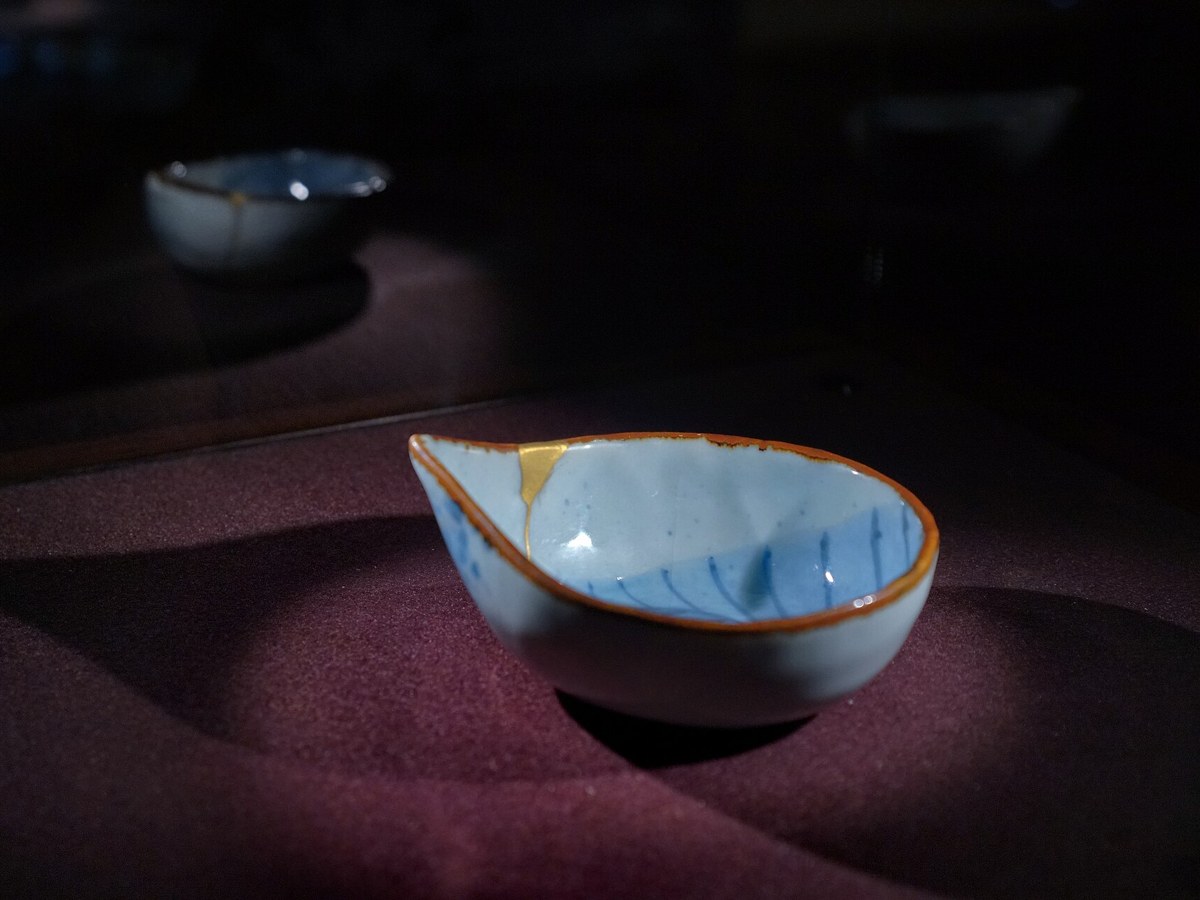
Most Japanese porcelain whispers in blue and white. Kutani declaims. Its painters lay enamel over the fired glaze and fire again at lower heat, building scenes in the 'five colours' (gosai) until a cup becomes a miniature screen painting. Styles accumulated across revivals — the bold greens of Ko-Kutani, the gold-brocade kinrande, the fine red painting of aka-e — each a school with its own kilns and masters in Ishikawa's cities.
The tradition famously broke and restarted: the original Kutani kiln of the 1650s closed within decades, and the craft was revived in the 19th century by Kaga merchants and potters. That break is part of the object's romance — antique Kutani is a puzzle of kilns and marks — but the living craft is continuous now, centred on the same southern Ishikawa ground: Kanazawa's shops, Kaga's kilns, Nomi's pottery village.
Kanazawa, Kaga, Nomi: the working map
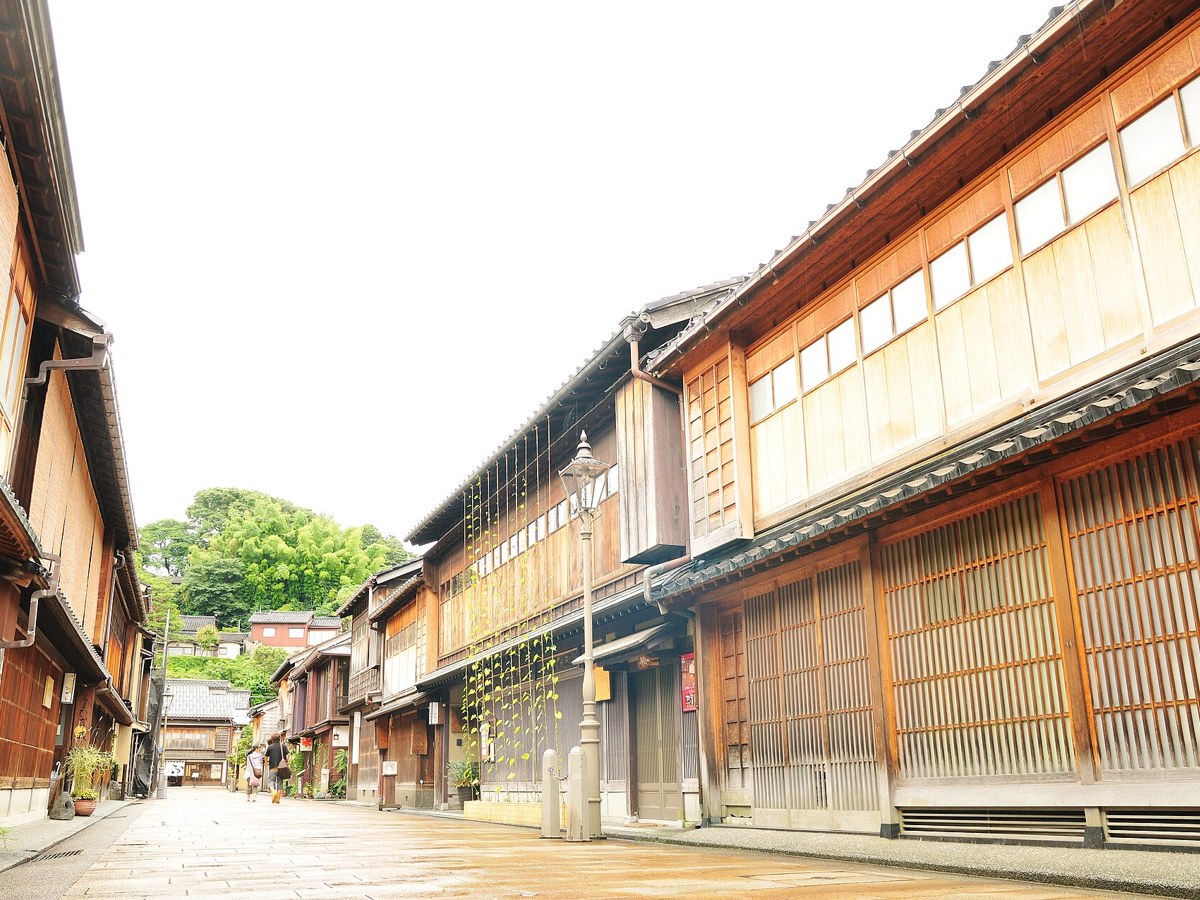
Kanazawa is where most visitors meet Kutani: the Higashiyama geisha district's shops stock cups and sake ware from the region's kilns, and the Ishikawa Prefectural Museum for Traditional Products and Crafts, near Kenroku-en, shows museum-grade Kutani beside Wajima lacquer and Kanazawa gold leaf — the prefecture's whole craft system in one building, with a shop selling certified pieces.
Nomi City, about twenty minutes from Kanazawa, holds the production heart: the Kutani Kosen Kiln runs tours and a showroom, and its painting workshops (¥2,500–¥5,000) let a visitor enamel a piece that is then fired and shipped home. Kaga and Komatsu complete the kiln map. A Kutani purchase made anywhere else in the world still points back to these four cities — the ware's name is its address.
Practical details: price, where to buy, online sales
Price (checked 7 November 2026): small Kutani cups and sake cups in Kanazawa's Higashiyama shops run ¥2,000–¥8,000; tourist pieces start near ¥800, mid-quality hand-painted work runs ¥3,000–¥15,000, and signed fine pieces ¥20,000–¥100,000 and beyond. The band, not a single price, is the honest unit for a kiln tradition with hundreds of makers.
Where to buy: Higashiyama and station shops in Kanazawa; the Prefectural Traditional Crafts Museum shop by Kenroku-en; the Kosen Kiln showroom in Nomi; dealers in Japan and abroad. Official online sales: Kutani is widely sold online by dealers — the regional definition governs the kilns, not the shops. Type of edition: regional edition (southern Ishikawa kilns).
Painting your own evidence
The Kosen Kiln workshop quietly solves the souvenir problem. A bought cup says 'I went to Ishikawa'; a painted cup says it in your own shaky brushwork, fired into permanence by the kiln. Kutani's overglaze technique is uniquely suited to the amateur — the colours sit on the surface like gouache — and the kiln mails the finished piece after firing, so the souvenir arrives weeks later as a second trip in a box.
For buyers rather than painters, the prefectural museum is the education: twenty minutes among certified masterworks recalibrates the eye before the Higashiyama shops. Kutani's price spread is a quality spread — density of painting, fineness of line, the kiln's name — and Ishikawa, unusually, provides the museum, the workshops and the shops within one short itinerary.
Scope: what 'limited' means here
Kutani ware is overglaze-enamel porcelain produced in southern Ishikawa — Kanazawa, Komatsu, Kaga and Nomi — in a tradition dated to 1655, per the guide sources checked 2026-11-07. It is sold worldwide; the limit documented here is the place of making. Antique prices are a separate market.
Sources — checked 7 November 2026
- JapanFlow: Kutani ware guide 2025 — history, kilns, prices and workshops
- Baopai Asian Art: vintage Kutani sake cup by Senshan Kiln, Ishikawa
- 1stDibs: Kutani ware market overview — production around Kanazawa since 1655
Original prose and official links only; no source text or maker media reproduced. Photos are credited Creative Commons works, not product photographs.
Editorial review 2026-11-07