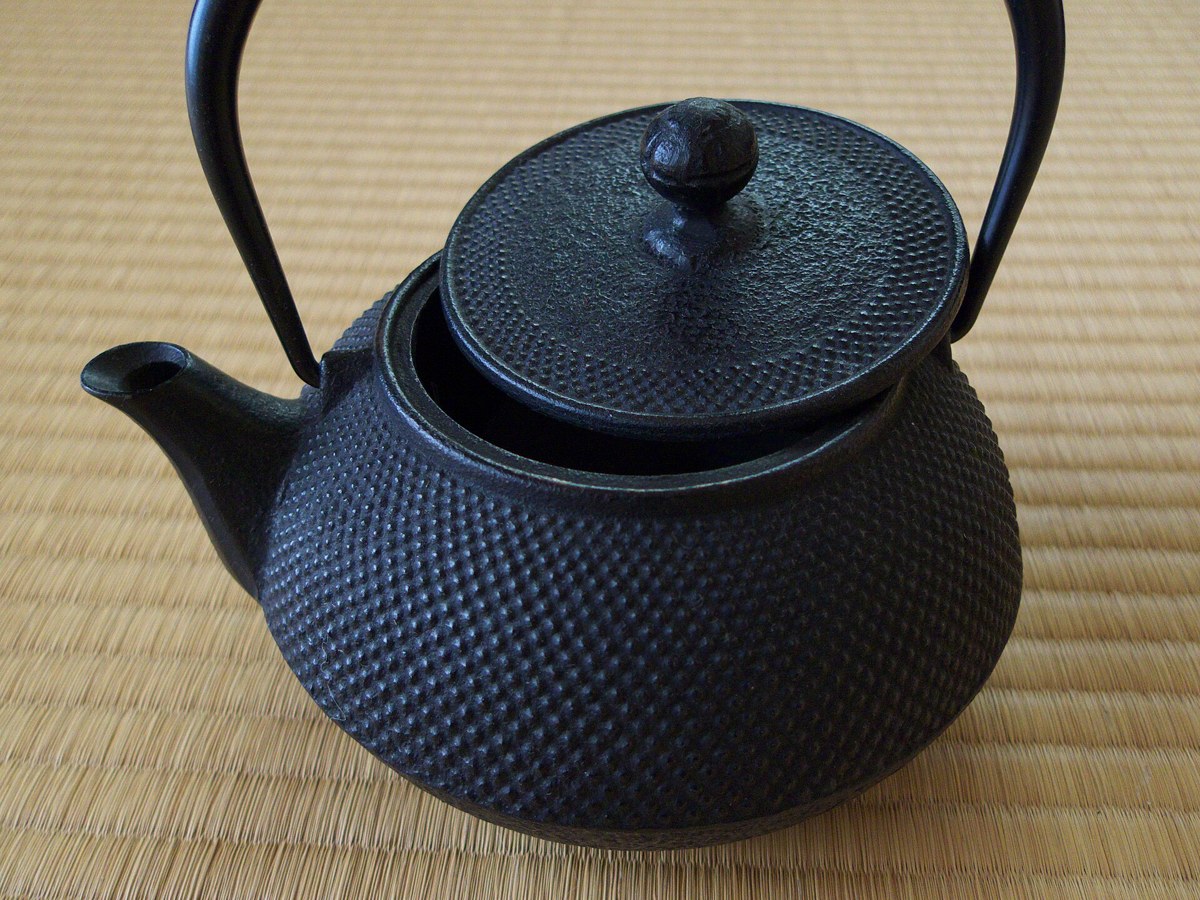
Some regional editions are marketing. A Nanbu Tekki teapot is geography: iron sand and clay from Iwate, cast in Morioka as it has been since the days of the Nanbu domain, by a foundry — Iwachu — that has worked since 1902. Its bestselling shape, the 5-gata teapot-kettle in hobnail relief, is listed at ¥11,000, and it is the rare object in this collection whose photograph below shows the product itself.
Iron that improves the water
The 5-gata is a hybrid: a tetsubin kettle's body with a tea strainer, so the same vessel boils the water and brews in it. Iwachu's English description is practical — 0.65 litres, strainer included, hobnail arare relief across the surface — but the reason generations keep these pots is what cast iron does to water: it softens the taste, and the pot itself holds heat long after the flame is out.
Iwachu puts its own history briefly: founded in Morioka in 1902, building on a Nanbu-domain casting tradition that the domain's tea culture called into being centuries earlier, when kettle-makers were invited to Morioka to serve the lord's tea ceremony. The arare dots that cover the 5-gata are the visual signature of that tradition — hundreds of small raised studs, cast, not applied.
A craft the state wrote down
In 1975, Nanbu Tekki was among the first crafts designated under Japan's Traditional Crafts Act — official recognition that the technique, the materials and the Morioka workshops form a single regional inheritance. Iwate's own English guide for visitors presents it the same way: a representative craft of the prefecture, bought at the foundries and craft shops of Morioka.
That designation is what makes this a regional edition in the strictest sense used in this collection. The value is not scarcity — Iwachu ships widely — but attribution: the pot is from somewhere, made in a named way, and every source says so.
Practical details: price, where to buy, online sales
Price (checked 6 November 2026): the maker's list price carried in a national trade catalogue for the Iwachu 5-gata teapot-kettle (0.65 L) is ¥11,000 excluding tax; retail prices vary by shop and pattern, so treat the figure as the catalogue reference, not a fixed shelf price. The range runs from small teapots to large kettles at correspondingly higher prices.
Where to buy: Iwachu's own presence is in Morioka, Iwate; Nanbu Tekki is sold by craft retailers across Japan, and the prefecture's visitor guide directs travellers to Morioka's craft shops for the widest choice. Official online sales: the maker presents the range on its official site; online stock varies. Type of edition: regional edition (Traditional Craft, designated 1975).
Why keep a pot for fifty years
A cast-iron teapot fails every test of modern convenience: it is heavy, it must be dried, it rewards patience. And yet the 5-gata is Iwachu's standard-bearer precisely because it contradicts disposability — the enamel lining can chip and the iron will still be sound; the handle stays cool; the arare relief still catches the light of a kitchen fifty years on.
Regional crafts survive when they remain the best tool for a real job. Boiling water well, in Morioka iron, is that job.
Scope: what 'limited' means here
Nambu Tekki is a Morioka, Iwate tradition designated a national Traditional Craft in 1975; Iwachu (founded 1902) is one of its representative foundries, and its official site presents the teapot-kettle range as its own. Checked 2026-11-06. Prices shown are catalogue references; individual shop prices and stock are not monitored.
Sources — checked 6 November 2026
- Iwachu official site (English): Nanbu Tekki of Morioka since 1902
- Iwachu official: tetsubin and teapot-kettle pages (English)
- Iwate Prefecture visitor guide: Nanbu Tekki feature (English)
- Endo Shoji trade catalogue: Iwachu Nanbu Tekki range (PDF, p.872)
Original prose and official links only; no source text or maker media reproduced. The teapot photograph is an independent Creative Commons photograph of a Nanbu Tekki teapot, credited in the caption.
Editorial review 2026-11-06