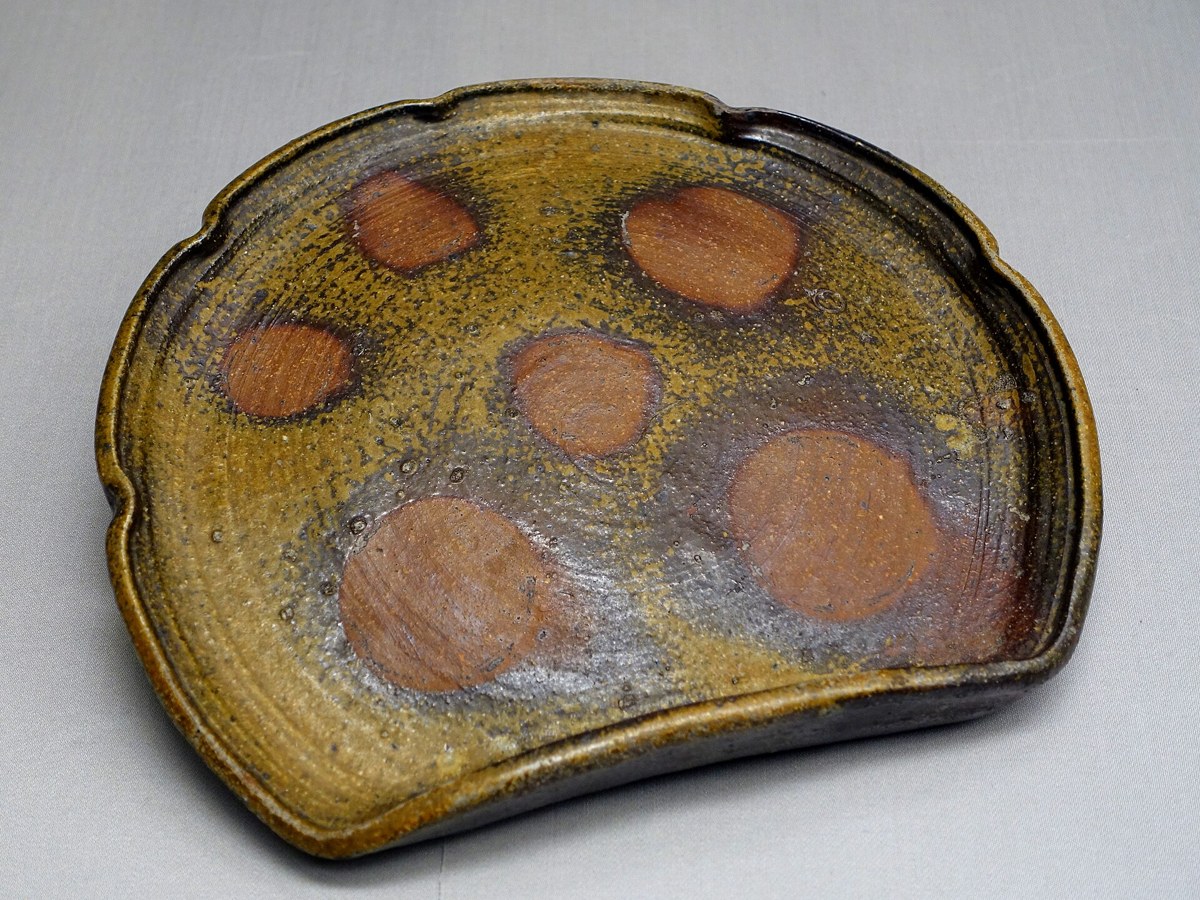
No glaze, no paint, no decoration — just clay, fire and two weeks in a wood kiln. Bizen ware, from Imbe in Bizen City, Okayama, is stoneware whose colours are accidents of flame: scarlet cords (hidasuki), sesame ash (goma), kiln-changed flashes (yohen). Its potters state the geography as a law: it can only be found in Imbe — to be Bizen ware, it cannot be made anywhere else.
Fire does the decorating
Bizen is one of Japan's six ancient kilns and the purest of them. The potter shapes local clay — dug and aged in Imbe, sometimes for years — and then surrenders the piece to a wood-fired kiln for days to weeks. Red pine ash melts where it lands; straw wrapping burns off in scarlet stripes; pieces stacked in the kiln's hot and cool zones emerge iron-brown, silver-flashed or ash-crusted. No two firings repeat, which is why Bizen drinkware is said to change the taste of sake, beer, coffee and tea: the unglazed, slightly porous body breathes with the drink.
The sake cup priced in this article shows the type: potter Shibuta's kiln-transformed (yohen) cup, with a true metallic silver finish thrown up by the firing — a one-of-a-kind piece, handmade from clay the potter digs and ages himself in Imbe. The listing's language is the craft's language: authentic Bizen, from the hands of a named potter, in the one village where it exists.
Imbe, the village of kilns
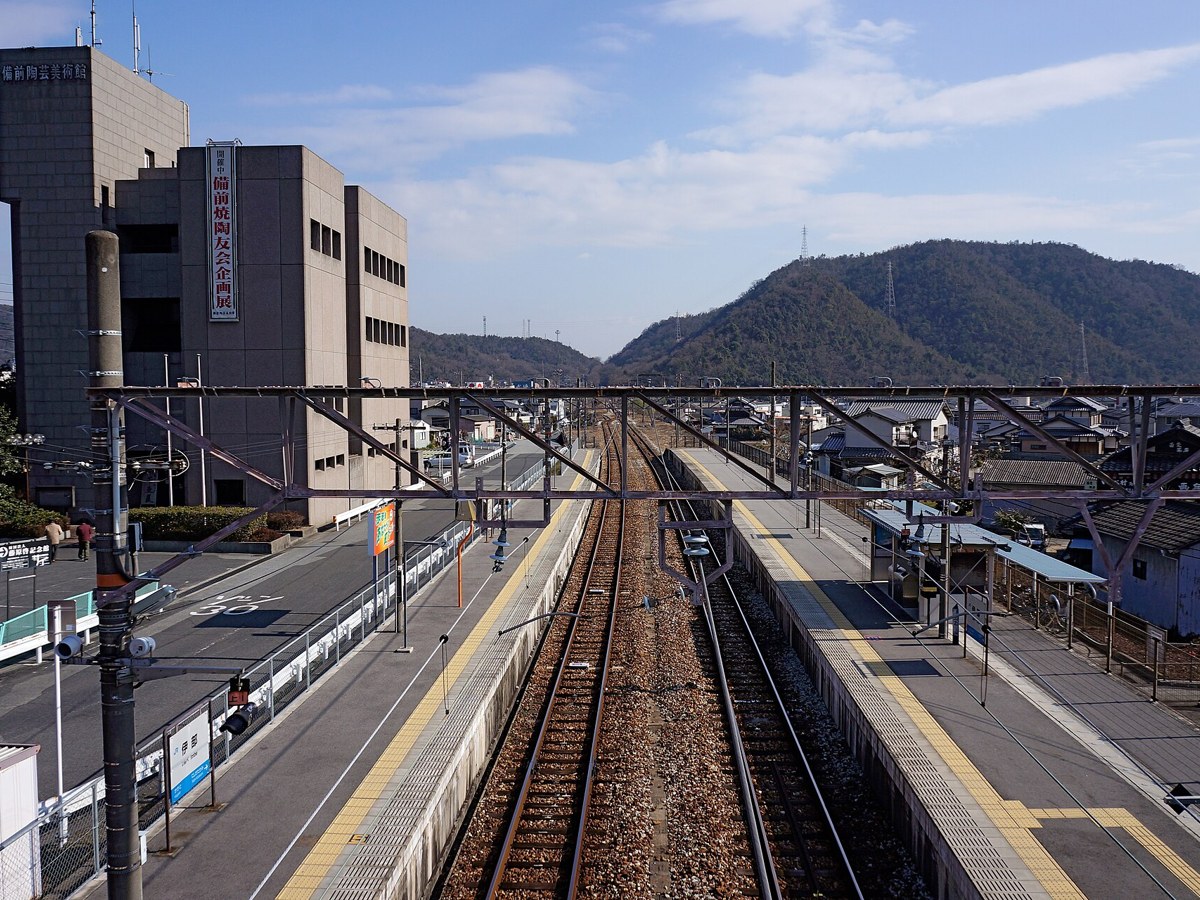
Imbe is a village built by this clay: galleries along its streets, climbing kilns in its yards, and a station square where even the public objects are Bizen ware. The tradition runs unbroken for over a thousand years in the usual telling — Sue ware roots, medieval tea masters who prized its wabi severity, and today's generation of potters who still fire with wood because the flame is the point.
The limited cup in the second listing shows the modern end of the village economy: Asemi Co.'s small Bizenyaki cup, 100 ml, handcrafted from local Okayama clay and wood-fired unglazed, produced as a limited edition of one hundred pieces every six months at US$68. Scarcity in Bizen is not manufactured; it is the kiln's calendar. A firing takes weeks, a village makes what it makes, and the edition size is a fact of firewood and time.
Practical details: price, sizes, where to buy, online sales
Price (checked 7 November 2026): Shibuta's kiln-transformed Bizen sake cup is listed at US$139 by its international seller; the Asemi small cup (100 ml) is listed at US$68 as a limited edition of 100 pieces per half-year. Yen prices in Imbe's galleries vary by potter and firing — this article quotes the listings as listed rather than convert them.
Where to buy: the galleries and kiln shops of Imbe, Bizen City (nearest station: JR Imbe, Ako Line), Bizen ware shops in Okayama City, and specialist dealers in Japan and abroad. Official online sales: yes, through potteries' and dealers' online shops — the regional limit is on making, in Imbe clay and fire, not on selling. Type of edition: regional edition (single production village).
The strictest address in pottery
This collection contains looser geographies — a cake sold across a region, a notebook sold in one shop. Bizen is the strictest: a ware whose definition is a village. A potter could move to Tokyo with Bizen technique and Bizen training and still not make Bizen ware, because the clay body itself is Imbe's ground, aged in Imbe's yards. The name is not a brand licence; it is a soil report.
That strictness is also the buying guide. Genuine Bizen announces itself — unglazed, heavy for its size, marked by fire rather than by pattern, and sold with a potter's name and kiln. In Imbe the education is free: walk the gallery street, hold a dozen cups, and the hand learns what the kiln does. Then the US$139 listing reads differently — not as a price for a cup, but for one unrepeatable firing.
Scope: what 'limited' means here
Bizen ware is unglazed stoneware made in Imbe, Bizen City, Okayama, from local clay; its potters state it cannot be Bizen ware if made anywhere else. Checked 2026-11-07. It is sold worldwide; the limit documented here is the place of making. Prices are the cited listings, in dollars as listed.
Sources — checked 7 November 2026
- Ooika: Shibuta's Bizen kiln-transformed sake cup — Imbe-only statement and price
- My Japanese World: Bizenyaki cup (small), limited edition of 100 every six months
- Suigenkyo: Bizen beer tumbler (Hidasuki) by Mori Toshiaki, Hozangama kiln
Original prose and official links only; no source text or maker media reproduced. Photos are credited Creative Commons works, not product photographs.
Editorial review 2026-11-07