A clan that ruled the western capital left its mark in lacquer: a deep, quiet vermilion, autumn grasses in yellow-green, drifting cloud shapes, and a diamond crest picked out in gold leaf. Yamaguchi's fifth story is Ouchi-nuri — the ware of Yamaguchi City, and the round doll pair that turned a lord's homesick bride into the prefecture's emblem of a happy marriage.
The Kyoto of the West, trading in lacquer
The Aoyama Square history sets the ware in the Muromachi era, when the Ouchi lords — the power of Japan's west, ruling from a Yamaguchi styled the Kyoto of the West — promoted trade with Korea and Ming China and encouraged local lacquerware production for export. In the clan's heyday the ware circulated widely as Ouchi-bon, the Ouchi trays; the skills persisted in the city after the clan itself fell.
The present craft is a revival with a heraldic memory. Reference accounts describe the ware re-established in the Meiji era after an attempted Bunkyu-era revival, its makers forming their trade association in 1935 and pushing the lacquer upmarket and toward export, with trays, bowls, inkstone boxes and tobacco boxes as the classic products. What the revival kept, above everything, was the palette — and it is the palette that the designation of 1989 protects.
Vermilion, grasses, clouds, a crest
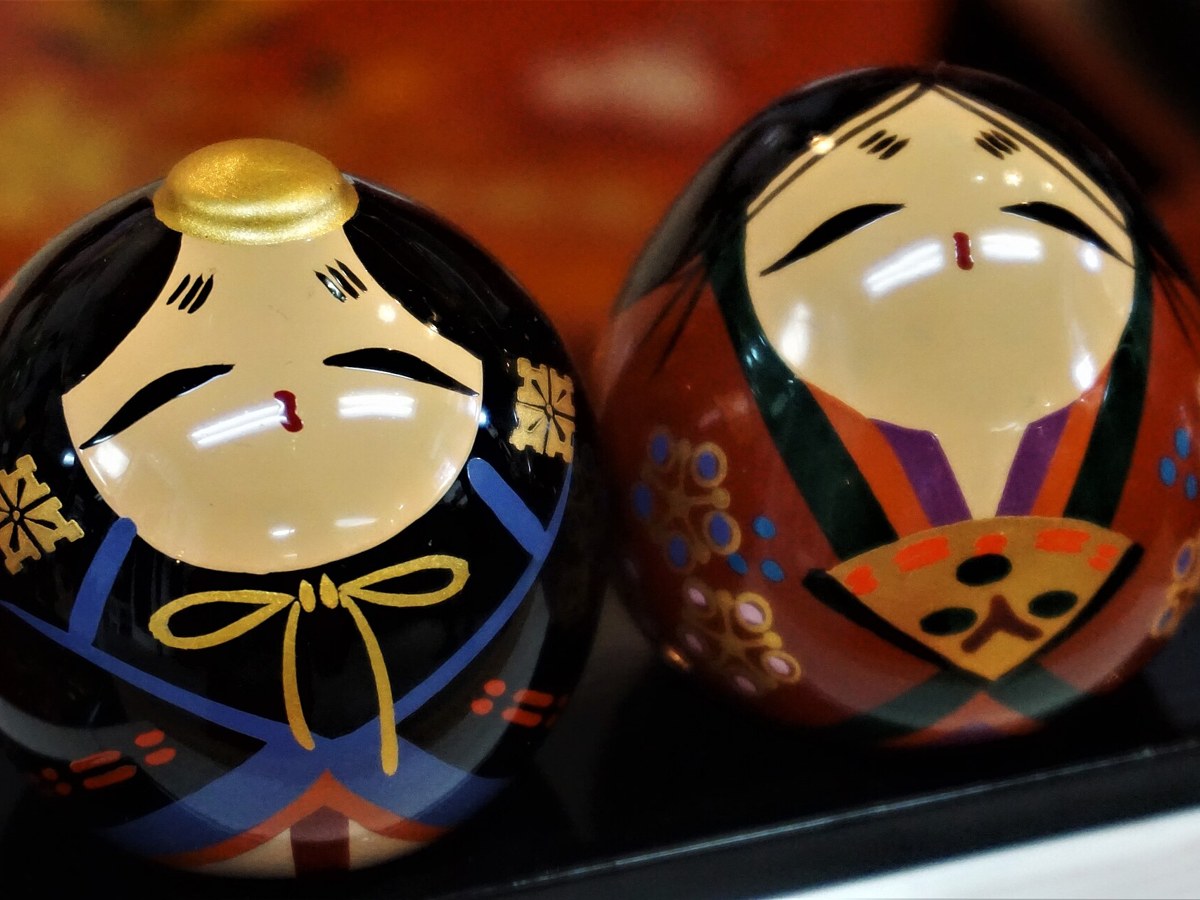
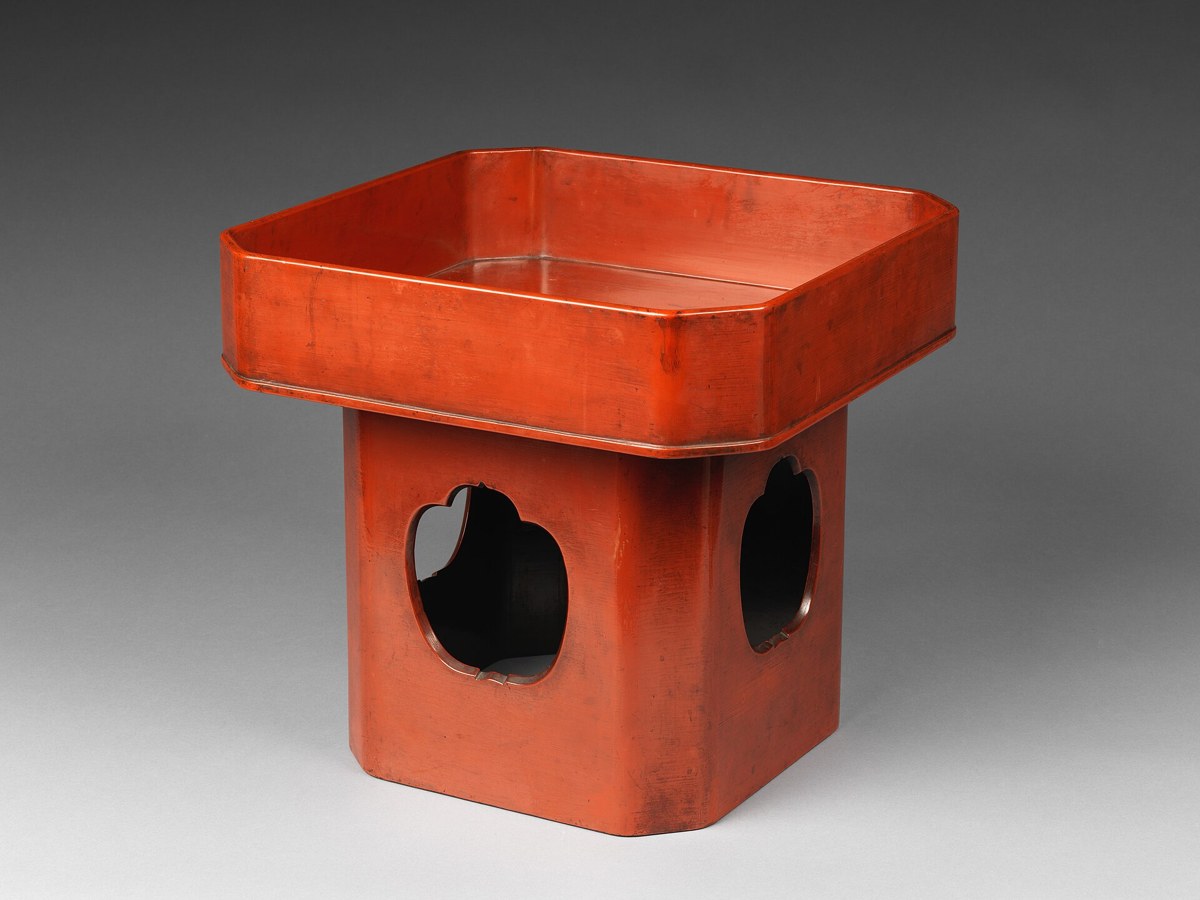
Traditional Crafts Aoyama Square defines the ware by its surface: a subdued vermilion — the colour the trade calls Ouchi shu — laid as the ground; autumn grasses painted over it in yellow-green lacquer; cloud shapes drifting across the piece; and inside them the Ouchi-bishi, the Ouchi clan's diamond crest, set in gold leaf. Its main products today are round trays, individual plates, tea coasters and dolls, and the manufacturing area is Yamaguchi City and Hagi City.
The making runs in four stages on the Aoyama Square record — wood preparation, undercoating, painting and decoration — over woods that include mochi tree, hinoki cypress and zelkova. The craft is administered from inside the producing quarter by the Ouchi Nuri Lacquerware Promotion Cooperative Association, at Ouchi-Mihori in Yamaguchi City: a small, place-bound industry, exactly the shape the designation system was built for.
A doll born from a bowl, for a bride from Kyoto
The ware's most loved form is not a tray but a pair of dolls. The maker Kuwahara tells the origin in the form all the workshops share: the seventeenth-generation lord Ouchi Hiroyo welcomed a wife from the Imperial court, and to comfort her longing for Kyoto he had dolls made in the capital's style with local character added. The pair — a lord and lady turned round on the lathe, finished in lacquer with pure gold leaf and gold powder — became a symbol of marital harmony and a guardian of household peace.
Yamaguchi Prefectural University's research adds the form's secret: the doll was originally modelled on an old lacquered bowl, the urushi-e eda-giku wan — a doll born from a bowl — which is why the pair sits so roundly in the hand. Today the dolls are also widely used in place of hina dolls, small enough for a modern shelf: Yamaguchi's own hina exhibitions display them by the pair, eleven couples at a time. And the form is still being designed: the cooperative, the university and Yamaguchi City have since developed the Ouchi Ningyo Bowl — a child's bowl that is also a doll, returning the doll to the bowl it was born from.
The maker's ladder
Kuwahara's own shop — the Kuwahara Ouchi-nuri and Ouchi Ningyo workshop — sells the pair by size number, and the ladder is the craft's price structure in one list: the No.15 pair, about four and a half centimetres across, ping-pong-ball size, in a paulownia box; then No.18, No.21, No.23, No.25, No.28, up to a No.40 at the top. A single basket doll is the entry rung, and the same shop prices the ware's summit — an Ouchi-nuri document box in gold maki-e — an order of magnitude above the largest dolls.
The Yamaguchi makers also sell the making itself. At the annual Ouchi-nuri and Ouchi Ningyo festival, where the cooperative's workshops gather, Nakamura Mingeisha's record lists hands-on work at the benches — chopstick-making and woodwork for a few thousand yen — the lacquer city's invitation to leave with the palette on your own hands as well as in your bag.
Sources — checked 11 November 2026
- Traditional Crafts Aoyama Square: Ouchi-nuri
- Japan Shopping (Traditional Crafts Aoyama Square): Ouchi-nuri history
- Kuwahara Ouchi-nuri / Ouchi Ningyo workshop: online shop
- Yamaguchi Prefectural University: Ouchi Ningyo Bowl and Yamaguchi Wan Rei
- Nakamura Mingeisha (Yamaguchi): Ouchi-nuri maker
Original prose and official links only; no source text or maker media reproduced. Photos are credited Creative Commons works, not product photographs.
Editorial review 2026-11-11