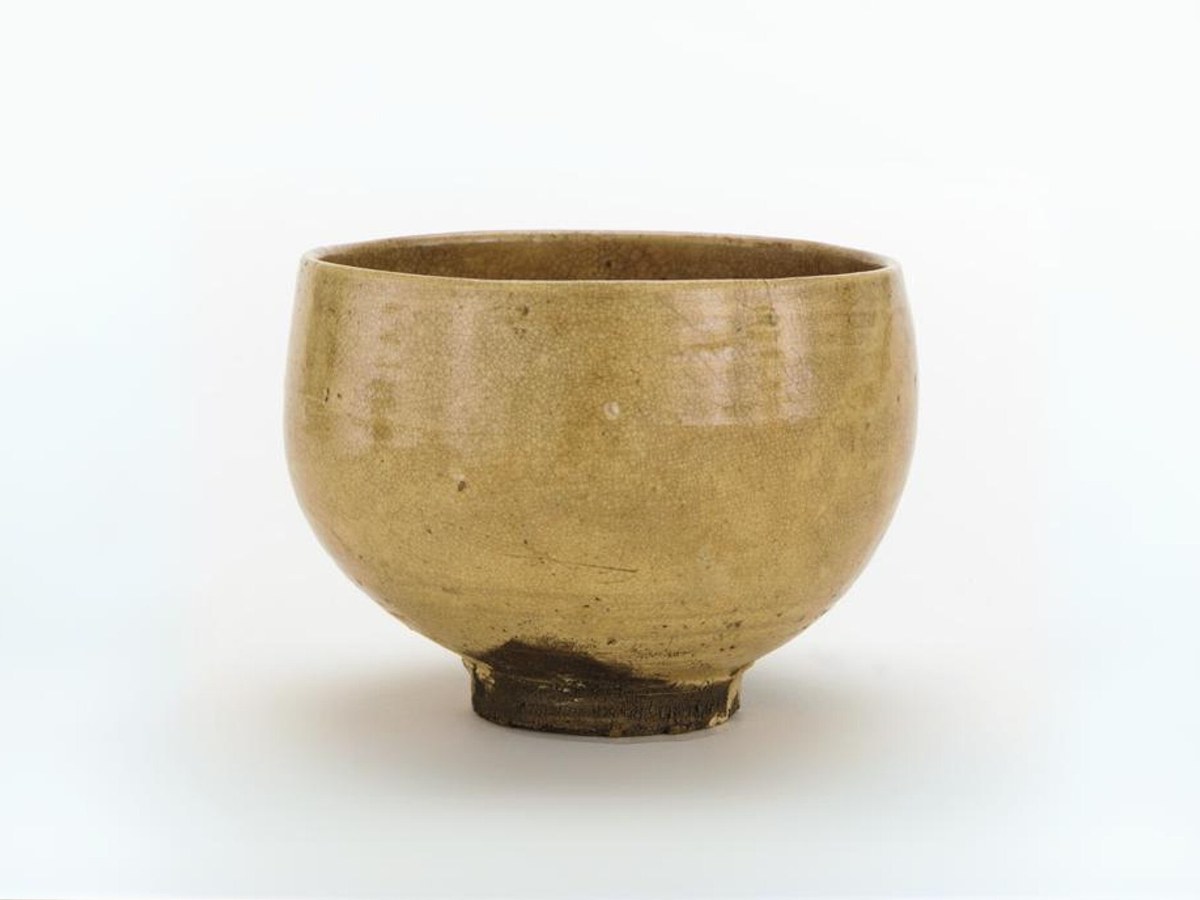
Most pottery asks to be kept as it was bought. Hagi ware asks the opposite: its soft, porous clay drinks tea, darkens, deepens — and the change is the value. The place pottery of Hagi, a castle town on Yamaguchi's Japan Sea coast, has been prized by tea people for exactly this slow transformation. There is no single price for a ware made by a whole town, but documented retail is easy to find: a pair of layered-glaze cups at ¥4,180, a teapot set at ¥5,500.
The ware that improves by being used
Hagi's clay is soft and its firing gentle beside the hard stonewares elsewhere on this site, and the result is a body full of microscopic openness. Tea and water work into it over months and years, and the surface gathers a richness the Japanese call aji — literally 'flavour'. The Senryuzan kiln's own account puts it plainly: you have to live with Hagi ware to see its beauty; the time you give it is what makes it worth its price.
That philosophy shapes the forms: tea bowls above all, cups and pots for daily use — objects meant to be handled every day rather than shelved. Hagi's kilns include climbing kilns of real scale; Senryuzan's four-chamber kiln is described by its potters as the largest in Hagi, and its Ido-style bowls are fired once, glaze on raw clay.
Kakewake and the Hagi palette
The classic Hagi surface is quiet — milky white or soft pink over warm clay — but the town's potters also work kakewake, the layering of two glazes or colours across one piece, a traditional Hagi technique. The documented pair of 'Shikisai' cups below uses it in gentle layered colours, new combinations built on the old method.
Buying Hagi ware is therefore a choice between tempers: the plain bowl that will change the most, or the layered, coloured piece that arrives already composed. Either way the town is the maker — Hagi ware means ware made in Hagi, and the kiln's name rides with the piece.
Practical details: prices, where to buy, online sales
Prices (checked 9 November 2026, department-store listings shipped direct from the maker side): the Hagitouen 'Shikisai' pair of cups — about 8.5 cm across, 10 cm tall, kakewake layered colours — is ¥4,180 tax included. The same kiln's 'Hime-do Tea Room Set', a rounded teapot (about 400 ml) with two cups, is ¥5,500 tax included. Named masters' tea bowls sit far above these everyday anchors, as they do in every pottery town.
Where to buy: kilns and pottery shops in Hagi itself for the full range and the makers' own prices; department stores and their online shops carry documented Hagi lines beyond Yamaguchi. Official online sales: kiln-by-kiln — there is no single official shop for a town's ware. Type of edition: regional edition — a place-defined craft.
Buying a bowl your tea will finish
The honest way to buy Hagi ware is to choose the piece you will use daily, because use is the second making. A tea bowl bought for the shelf keeps only its first face; the same bowl at breakfast for five years becomes the object the proverb describes. If that idea appeals, buy plainer than feels exciting — the change needs somewhere to go.
And handle it as its softness asks: Hagi ware is tougher than it looks but more tender than Bizen or Shigaraki stoneware. It is the contemplative end of this site's pottery shelf — the ware for readers who like their souvenirs alive.
Scope: what 'limited' means here
Hagi ware is documented as a place craft of Hagi, Yamaguchi, made by the town's kilns from local clay; retail beyond Yamaguchi exists and is stated. Checked 2026-11-09. Prices vary by kiln and piece; quoted anchors are the listings cited.
Sources — checked 9 November 2026
- Takashimaya Online Store: Hagi ware 'Shikisai' pair cups (Hagitouen, direct from maker side)
- Takashimaya Online Store: Hagitouen 'Hime-do Tea Room Set' (teapot and cups)
- Tablin Store: Senryuzan kiln, Hagi — kiln account and the 'aji' that develops with use
Original prose and official links only; no source text or maker media reproduced. Photos are credited Creative Commons works, not product photographs.
Editorial review 2026-11-09