Some crafts are guarded by guilds. This one was guarded by a domain. The red shale that makes an Akama inkstone occurs around two Yamaguchi cities, and in the Edo period the Choshu lords fenced its mountains as otome-yama — off-limits, quarried only by permission, the stones reserved as gifts worthy of the road to Edo. Yoshida Shoin's own inkstone is still kept as a sacred object in Hagi. Yamaguchi's fourth story is the stone a domain thought worth locking up.
A shogun's gift, a document's floor
The craft account is careful with the legend, and this page follows it. The precise origins of Akama Suzuri are uncertain, although the craft is traditionally believed to date back to the early Kamakura period: Ube City preserves a tradition that an inkstone presented by Minamoto no Yoritomo to Tsurugaoka Hachimangu in Kamakura in 1191 was an Akama inkstone, suggesting production may already have begun by the late twelfth century. The account is explicit that this is best treated as part of the craft's traditional history — the documentary floor is firmer and later: sources from the early Edo period contain the name Akama Suzuri, confirming the term was already in use by then.
The name is a map. It derives from Akama-no-seki, the former name of present-day Shimonoseki, where the inkstones were historically produced; production was initially centred there, while quarrying later shifted toward the present Ube area during the eighteenth century, and Shimonoseki and Ube subsequently developed as the two principal production areas. The newspaper report's arithmetic on the same tradition is the rounder one visitors will hear: a history of more than 800 years in production, treasured for the smooth sumi liquid ink the stones produce.
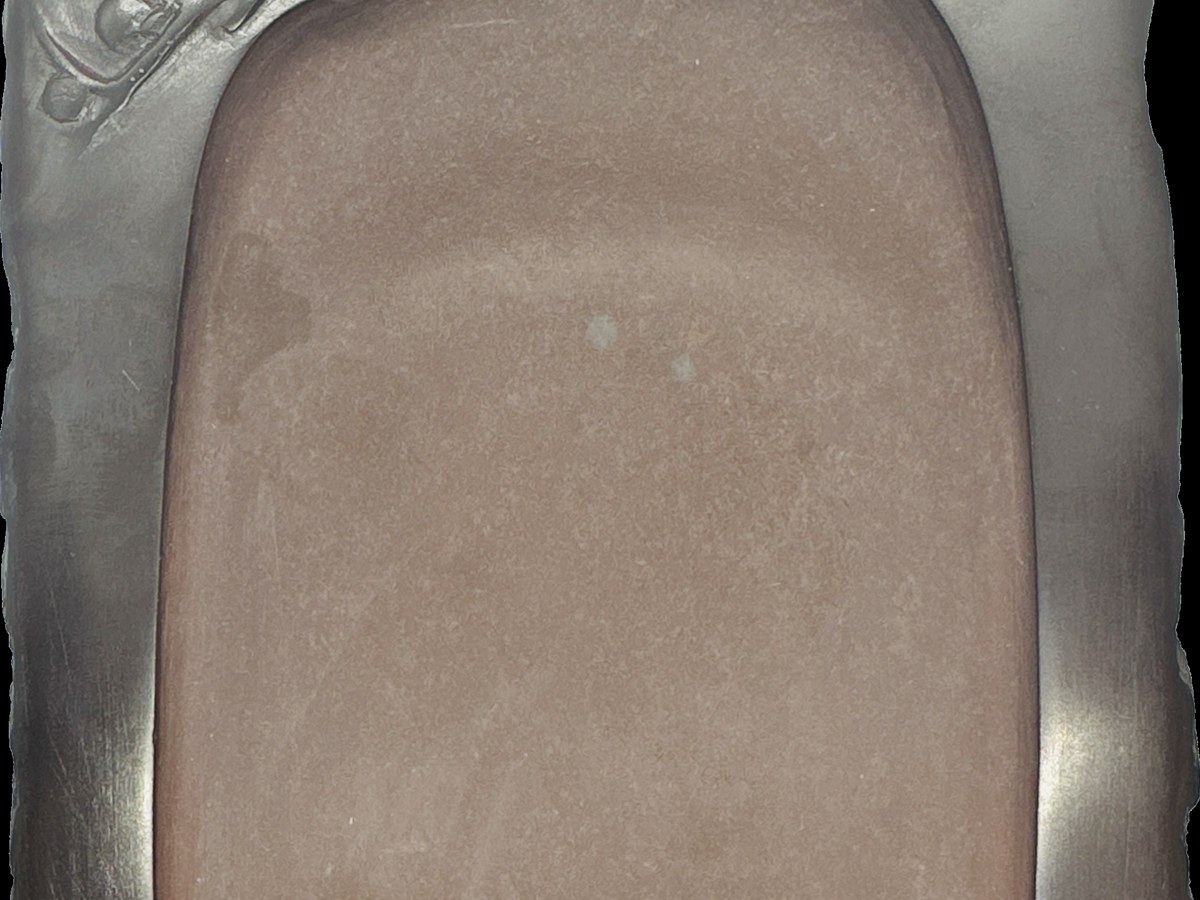
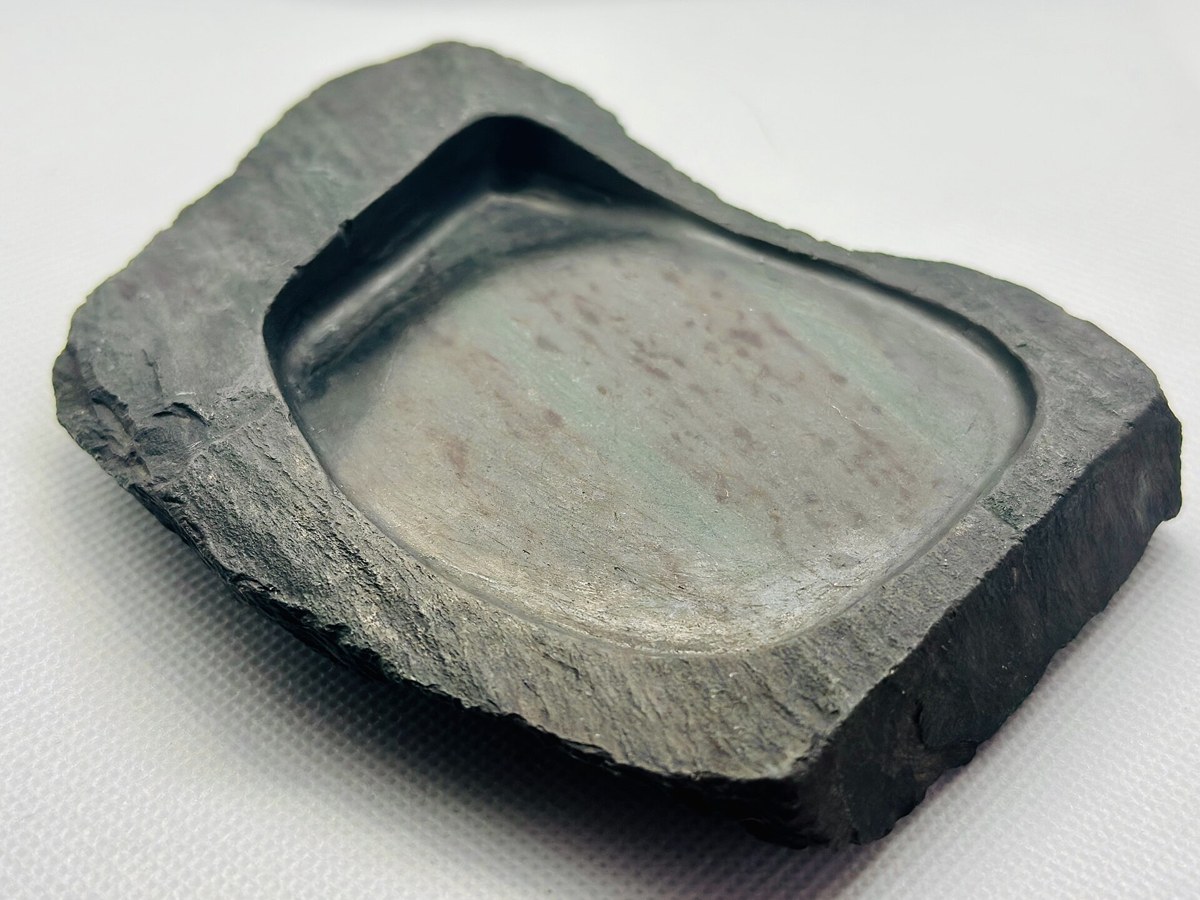
The mountains the domain locked
In the Edo period the stone became a state asset. Mountains containing Akama stone were controlled by the Choshu domain as restricted areas known as otome-yama; quarrying was permitted only under domain authority, and Akama inkstones were used as prestigious gifts and presentation pieces — the kind of object a lord carried on the sankin-kotai road to Edo. By the late Edo period many specialist inkstone makers were active in Akama, Asa and surrounding areas, and the craft had developed into one of the best-known products of the Choshu domain.
Its most famous user anchors the stones in the prefecture's own story: Akama inkstones are associated with figures of the late Edo period including Yoshida Shoin, the teacher of the men who would make modern Japan — and the report adds the relic's present address: the Akama inkstone Shoin used is now housed in Shoin Shrine in Hagi, Yamaguchi, as the shrine's goshintai, its object of worship. An inkstone you can no longer grind ink on, because it has become the god of the shrine.
Three hundred craftsmen, then six
The Meiji period was the flood: production expanded as education and writing became more widespread, and at the peak, the report counts, nearly 300 craftsmen produced Akama inkstones. Then writing itself changed. With subsequent changes in writing tools and daily life, the number of specialist inkstone makers declined — to six, the report says, in the two cities today; and of them, only three artisans in Ube, Hieda among them, consistently carry out the entire production process from quarrying to polishing.
The survivor the report visits is Yoichi Hieda, fourth-generation owner of his Ube factory, learning from his father Toshio since 2002 — and, unusually, the craft's own researcher. When records were scarce he took the inkstones as his graduate dissertation topic, examining the stone's surface and components: he proved that raw Akama stone's particles are so tightly packed that the sumi ink particles the inkstone produces are very small, and he solved a postwar mystery — the years when Akama stones were harshly criticised as 'impossible to grind on' were years when artificial whetstones, not natural ones, had been used in the polishing. His modern answer to a heavy stone is a lighter, oval inkstone, shaped for the many women who practise kana calligraphy; it became a favourite, the report says, so popular that production cannot keep up with demand.
Carve one, or watch one made
The prefecture keeps the bench open to visitors. The JAL guide records that the Ube Convention & Tourism Bureau offers a guided tour in English at Hieda Gyokuhodo, one of the few establishments that craft Akama inkstones in Ube City — a three-hour experience that starts with an introduction to calligraphy, then immerses visitors in the process of crafting inkstones, at a workshop 25 minutes' drive from Ube Station, where artisans have made the stones for centuries.
For the hands-on price, the checked workshop record is specific: a carving workshop with Yoichi Hieda himself — lecture and production, a maximum of eight students — was priced at ¥13,500 plus postage. Participants finish-carve, whetstone-polish and paper-polish a stone of about 10.5 by 5.7 by 1.5 centimetres; Hieda, who carries out the entire process himself from quarrying the raw stone to carving, completes the remaining processes, and the finished inkstone arrives later in a paulownia box with its maker's name engraved. Eight centuries of domain treasure, finished by your own hands in an afternoon.
Sources — checked 11 November 2026
- KOGEI JAPAN: Akama Inkstones (checked craft account)
- The Japan News (Yomiuri Shimbun): Akama-suzuri Inkstone has an 800-Year History (checked report, 2024)
- JAL Japan Travel: Akama Inkstone Artisan Workshop Visit, Ube (checked guide record)
- Koshu Japanese Art: Akama Inkstone Carving Workshop with Yoichi Hieda (checked workshop record)
Original prose and official links only; no source text or maker media reproduced. Photos are credited Creative Commons works, not product photographs.
Editorial review 2026-11-11