Before Japan had brush regions, it had Nara. The tradition says the monk Kukai brought Tang brush-making home in the early 9th century and taught it to a man of Yamato whose brushes went to the Emperor; twelve centuries later the brushes of Nara City and Yamato-Koriyama are a designated national craft, blended from up to ten animal hairs under a method with its own name. It opens this collection's regional stationery axis — the first stationery story here that belongs to a region rather than a venue. A school brush from Nara's Akashiya lists at ¥880.
The brush Kukai carried home
The tradition is precise about its founder. Around the 9 century's opening, Kukai returned from Tang China and, under his supervision, Sakaina Kiyokawa of Yamato learned the newest Chinese brush-making method and presented the finished brushes to Emperor Saga. However the documentary weight is shared, the craft's geography is not in doubt: brush-making in Japan begins in Nara, serving first the sutra-copying demand of the great temples.
The centuries added a guild and a reputation: by the Muromachi period, imperial brush smiths supplied feudal lords, and calligraphers treated Nara brushes as the luxury standard. Designation followed in October 1977, under the traditional-crafts law. Today the brushes are made in Nara City and Yamato-Koriyama — fewer than history might suggest, which is precisely why each maker's name matters.
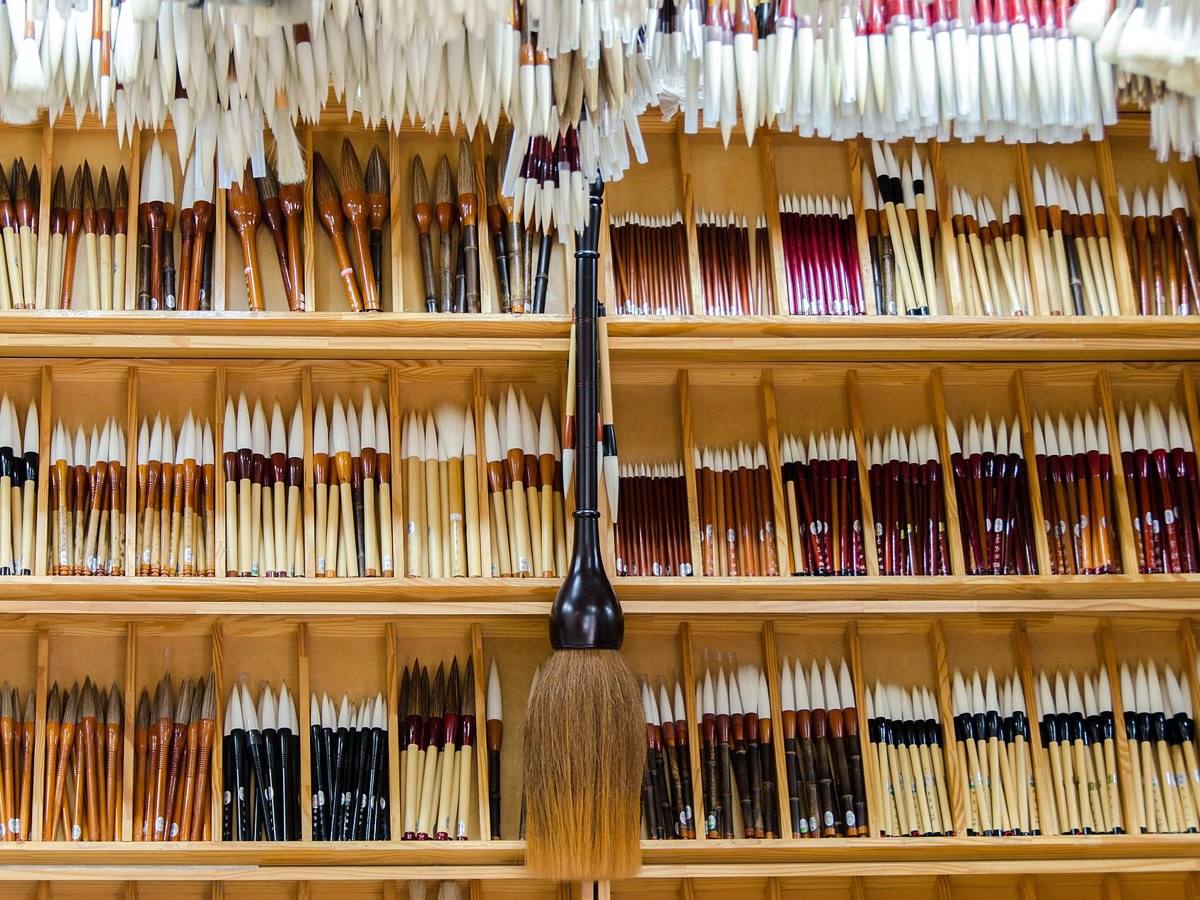
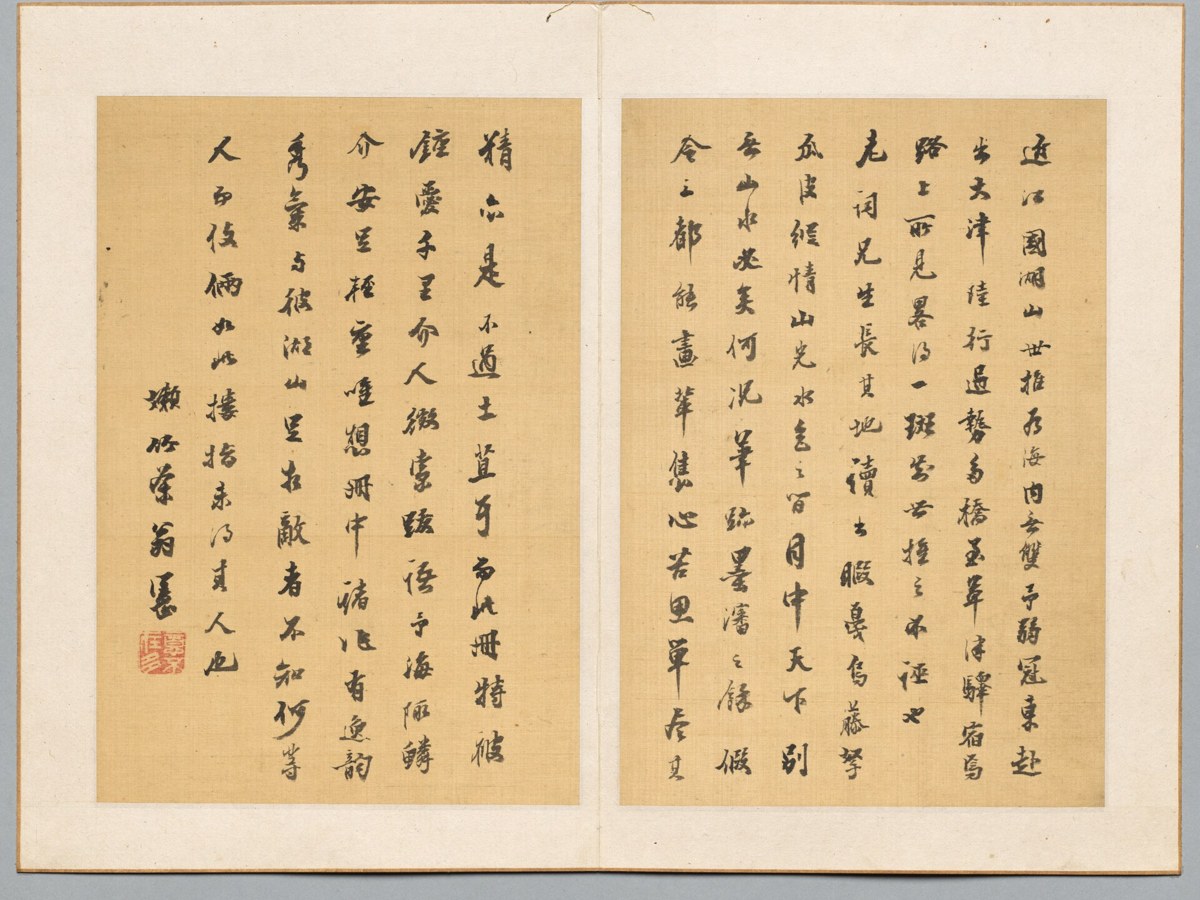
Nerimaze-ho: ten hairs, one point
The designated method is nerimaze-ho, the kneading-and-mixing method. Every strand of raw hair is soaked, hardened, and sorted by softness, thickness and length; then hairs of up to ten animals — sheep, horse, deer, raccoon dog, weasel, sable, rabbit and squirrel among them — are blended so the finished head holds a great deal of ink while keeping a point neither too hard nor too soft.
That blend is the whole art. A brush of one hair writes one way; a Nara brush is engineered at the level of the individual strand to write several ways at once — soft enough to flood a stroke, firm enough to end it in a clean stop. Makers guard their ratios the way blenders guard theirs, and a traditional master may carry a single brush through as many as 120 work steps.
Practical details: what Akashiya charges
Akashiya, the Nara brush maker founded in 1716, anchors the prices. Its school thick brush 'Tenga' carries a list price of ¥880 (sold at ¥482 tax included by Yodobashi at the check date); its standard classroom brushes run about ¥1,380–1,540 each — the Ichijo Shusui No. 3 lists at ¥15,400 for a set of ten through brush retailers. Handmade brushes by individual masters cost far more, and are priced by the maker.
Buy by purpose, not by price: the maker's own guidance divides brushes into thick brushes for main characters and thin ones for signatures, with hair blends matched to script style. And note the natural partner purchase — Nara also supplies the great majority of Japan's high-grade sumi ink sticks, so the brush's home town can sell you the ink it was blended to hold.
Oldest, not largest — and content with that
Honesty about scale belongs in this story, so here it is: Kumano in Hiroshima makes the great majority of Japan's brushes today, and Nara does not compete on volume. Nara's claim is different — priority and method. It is where the craft entered the country, and its nerimaze blending is the tradition the other regions' histories all begin after.
There is something fitting in a brush town that behaves like its brushes: a small, dense core of mixed strengths, made slowly, meant to be used for years rather than replaced. A ¥880 school brush and a master's five-figure piece share the same sorting table logic. The tradition is not the price; it is the blend.
Scope: what 'limited' means here
The edition is a designated craft of two Nara municipalities, made by its named method; brushes are sold nationally, and this page says which region outsells it. The Kukai origin is told as the tradition's account, as the sources tell it. What is checkable today — designation, method, makers, prices — is checked, and the rest is labelled tradition.
Sources — checked 9 November 2026
- Japanese Traditional Culture Promotion Foundation: Nara brush
- Traditional Crafts of Tokyo (national crafts pages): Nara Fude
- Yodobashi.com: Akashiya AL-81 'Tenga' Nara brush
- Manekineko AI: How to choose a Japanese calligraphy brush — a guide to Nara fude
- Embassy of Japan in Singapore, JCC E-Magazine: calligraphy brushes and ink of Nara
- OneMall blog: Japanese calligraphy supplies — brushes, sumi ink and paper (Oct 2026)
Original prose and official links only; no source text or maker media reproduced. Photos are credited Creative Commons works, not product photographs.
Editorial review 2026-11-09