Most noodles arrive in a bowl. These arrive on the roof. At Kawatana Onsen in Shimonoseki, green-tea soba is heaped onto a roof tile heated until it sizzles, under ribbons of sweet beef and golden egg — and the bottom layer crisps against the tile while you eat the top. It gives Yamaguchi, whose two stories so far are Hagi clay and Shimonoseki's fugu, a third story you eat with chopsticks and a dipping bowl.
A dish served on the roof
The Japan Tourism Agency's account of Yamaguchi's soul food is exact about the construction. The noodles are cha soba — soba made with green tea, which colours them green — and they are served piled on a piping hot roof tile, a kawara, topped with shredded egg crepe and shredded beef, with a dipping sauce on the side. The finishing condiments are grated daikon radish with red pepper, called momiji oroshi, sliced scallions and a squeeze of fresh lemon.
The tile is not theatre alone; it cooks. The Tourism Agency notes that the bottom layer of soba crisps up on the hot tile, creating a contrast with the chewy noodles, beef and egg above — a dish that changes texture as it crosses the plate, soft and sauced at the top, toasted at the bottom. It resembles the nationally popular yakisoba only in silhouette: here the ingredients are cooked separately and then assembled on the tile.
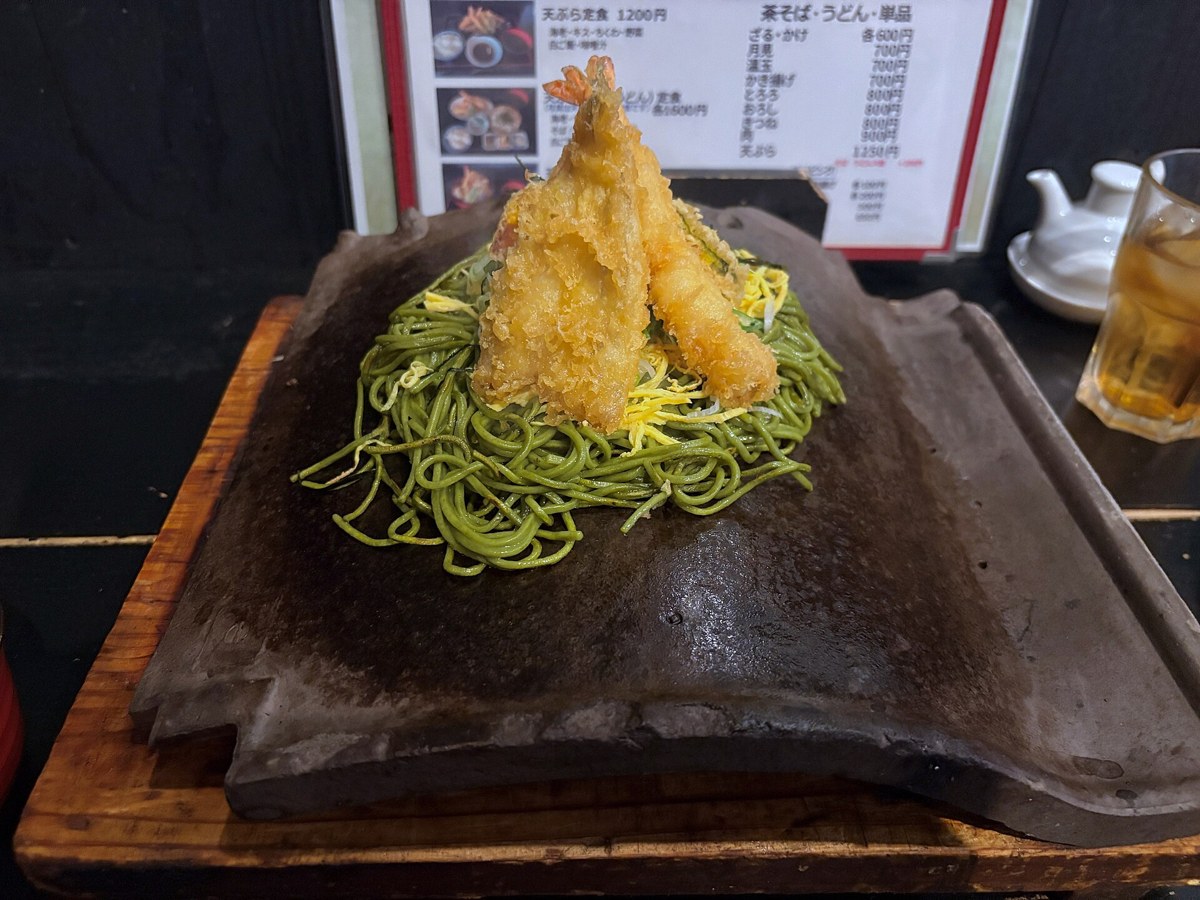
Invented in 1961, inspired by 1877
Kawara soba is a young specialty, and its youth is documented. The Tourism Agency records that it was invented in 1961 by Takase Shin'ichi, a business owner in Kawatana Onsen, who wanted to create a signature dish to promote the hot-spring town; from Kawatana its popularity spread to the urban areas of Shimonoseki and later across the entire prefecture. One honest wrinkle: the originator's own house gives 1962, a one-year difference the checked guide records between Takase and the agriculture ministry — this page follows the Tourism Agency's 1961 and notes the difference rather than hiding it.
The inspiration is older and is offered as legend. During the Seinan War of 1877, the Tourism Agency recounts, Satsuma troops besieging Kumamoto Castle for fifty-two days are said to have heated roof tiles as makeshift hotplates to roast wild plants and meat. A battlefield improvisation became, eighty-four years later, a hot-spring town's signature — and former Yamaguchi residents have since carried the dish as far as Hawai'i and New York.
What it costs at the source
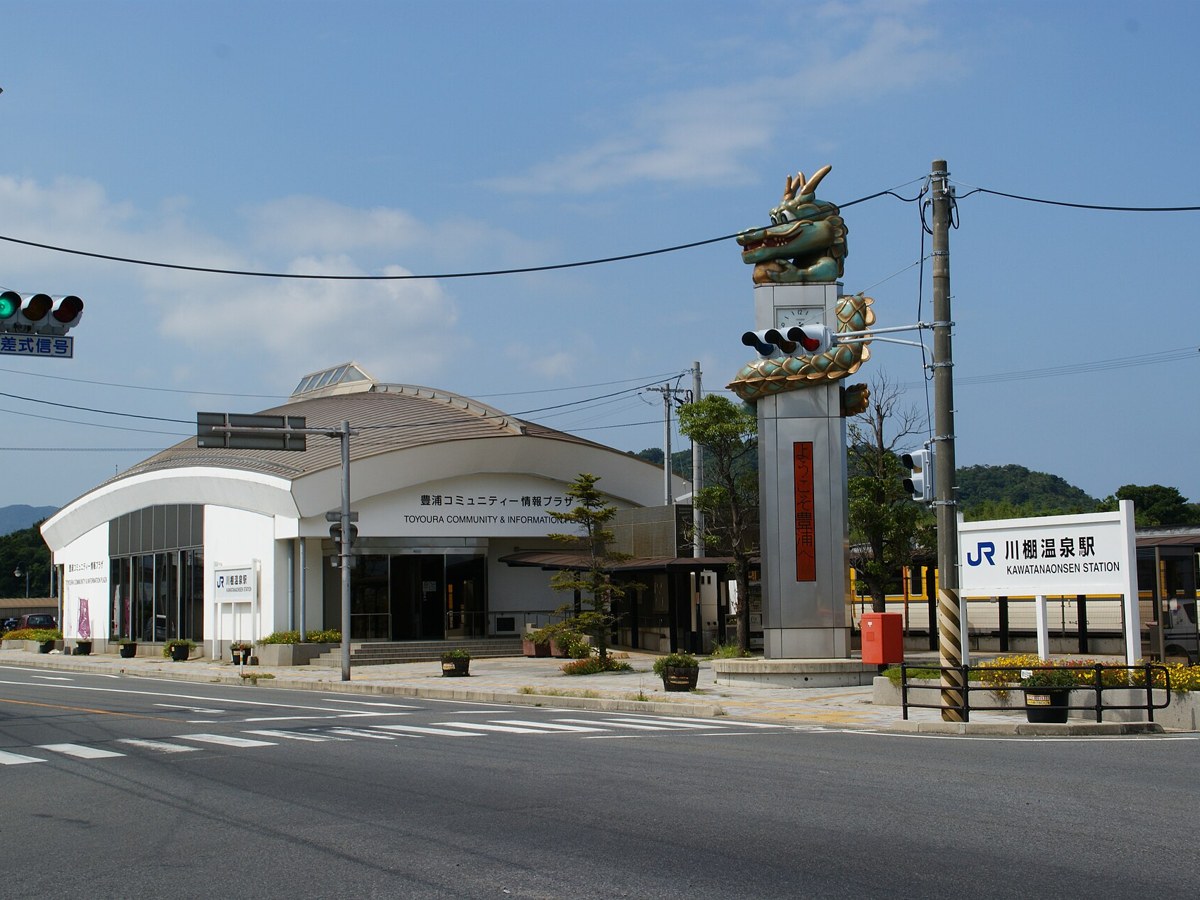
Eat it where it was invented. The checked guide confirmed the two Kawatana houses on their official pages on 28 October 2026. At Ganso Kawara Soba Takase — the originator's own restaurant, tied to the dish's creator — one serving cost ¥1,485 tax included until 31 October 2026, and Takase had announced a new price of ¥1,595 from 1 November 2026, which is the price that stands at this check. At Kawara Soba Honten Otafuku, inside the Kawatana Grand Hotel Otafuku, one serving was ¥1,320 tax included, served on a heated tile over the restaurant's own burner, with up to four servings on one tile for groups.
Getting there is part of the portion. Kawatana-Onsen Station is about forty minutes from Shimonoseki Station, with the onsen about five minutes further by taxi; buses from JR Shimonoseki Station take about fifty minutes. And if Yamaguchi is out of reach, the dish travels in a box: home-use sets have been sold since 1997, and Yamaguchi's Tokyo antenna shop in Nihonbashi has carried Takase's two-serving set and Miura Seimen's four-serving pack — stock varies, so check before you go.
How to eat it, and the one rule
The method is dipping, not soup. Pour the warm tsuyu into your own bowl, lift small portions of noodles and toppings from the tile, and dip as you eat. Both Takase and Yamaguchi's tourism federation suggest the same arc: taste it plain first, squeeze the lemon into the sauce, stir in the momiji oroshi for gentle heat, and save the crisp noodles from the bottom of the tile for the end — the texture is the finale, and it is worth arriving hungry enough to reach it.
The one rule is about the tile itself. Restaurants use purpose-made heat-resistant tiles or, in Otafuku's case, selected old unglazed roof tiles weathered for over a decade and tested on a dedicated burner — a controlled professional practice. At home, use a frying pan or a domestic hot plate, as the agriculture ministry itself suggests, and never heat a construction-grade roof tile: coatings, hidden cracks and sudden temperature shocks make it a hazard, and the crisp bottom layer forms just as well in a pan.
Sources — checked 10 November 2026
- Japan Tourism Agency (MLIT): Kawara Soba — Yamaguchi Prefecture's Soul Food
- Food in Japan: Kawara Soba
Original prose and official links only; no source text or maker media reproduced. Photos are credited Creative Commons works, not product photographs.
Editorial review 2026-11-10