In Izumo, soba arrives as a small tower: three round red-lacquer bowls, stacked, each holding a single portion of dark noodles. You dress the top bowl, eat it, pour what broth remains into the second, and work down — warigo, the signature service of Izumo soba, one of Japan's three great soba traditions. The noodles are dark because Shimane mills the whole buckwheat kernel, hull and all, and a three-tier set near Izumo Taisha costs between ¥900 and ¥1,500.
Brought from Shinshu, made Izumo's own
Izumo soba begins with a relocation. In the early Edo period Matsudaira Naomasa, first lord of the Matsue domain, arrived from Matsumoto in Shinshu — Nagano, already a soba country — and brought soba craftsmen with him. Within a generation the craft had spread across the Izumo plain, where buckwheat had been grown for centuries, and the local flour decided the local style.
That style is hikigurumi: instead of husking and refining the kernel to a pale flour, Izumo mills the whole seed with its hull. The noodles come out visibly darker, coarser and far more fragrant — the buckwheat's aroma survives the mill. It is the clearest possible contrast with the refined white soba of other regions, and Shimane is proud of the difference.
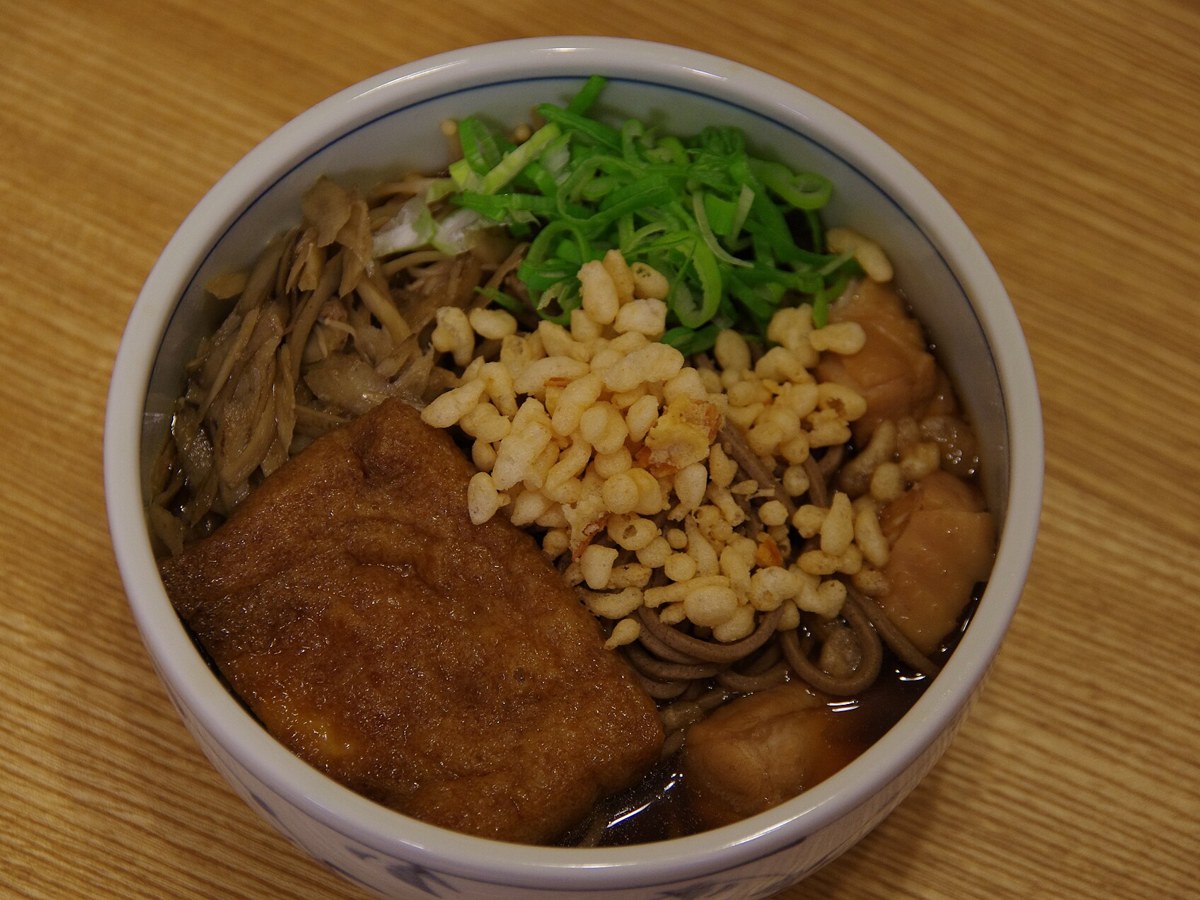
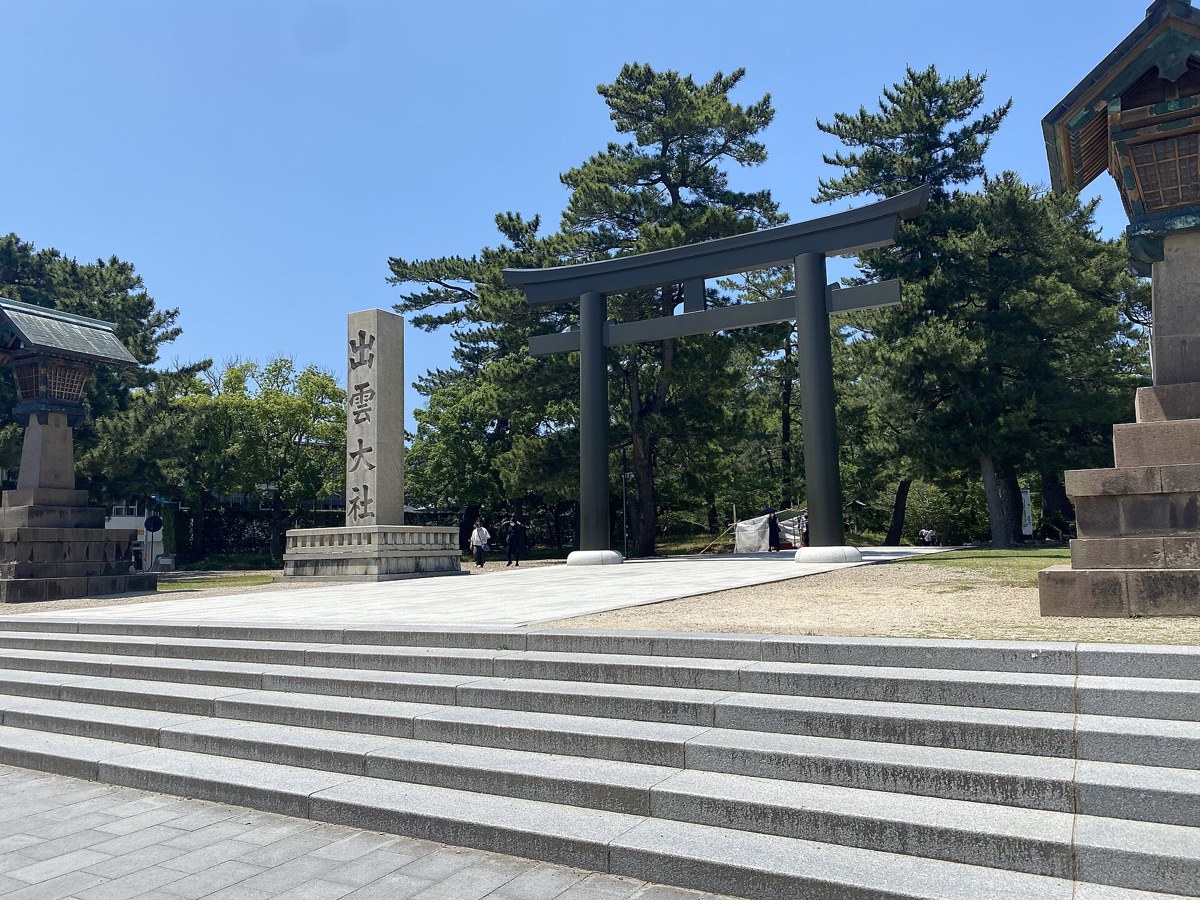
Warigo and kamaage: two ways down the tower
Warigo is the cold service and the famous one. The stacked bowls descend from Edo-period picnic lunch boxes — first rectangular, then oval, and round since 1945 — carried outdoors so groups could eat soba together at festivals and shrine visits. You pour the concentrated tsuyu over the top tier with its toppings — grated radish, green onion, bonito flakes, sometimes egg — eat, then cascade the seasoned broth downward, so each tier tastes richer than the last.
Kamaage is the hot counterpart: the noodles come straight from the pot in a bowl of their own cooking water, the cloudy sobayu, and you season the bowl yourself to taste. Winter belongs to kamaage; the tower belongs to everyone. Most houses offer the standard three tiers (mitsuwari), with five-tier upgrades for the committed.
Practical details: prices, where to eat, the old houses
Prices (checked 2026-11-09): standard warigo sets near Izumo Taisha run ¥900 to ¥1,500. Named anchors: Haneya, a house of the late Edo period, prices its three-tier warigo at ¥900 and kamaage at ¥850; Tanakaya, in front of the shrine gate, serves a three-colour warigo — egg, grated yam, tempura — at ¥1,254; Arakiya, regarded as the oldest Izumo soba house at over 200 years, keeps its warigo under ¥1,000.
Where to eat: the shrine approach in Izumo and the castle town of Matsue hold the historic houses; most are lunch specialists, closing mid-afternoon when the day's noodles end. Type of edition: regional edition — one of Japan's three great soba traditions, defined by its region's milling and service.
Eat the tower in order
Warigo is a small ceremony of accumulation, and it rewards patience: resist drowning the first bowl, because the broth you pour down is the seasoning of the next, and the third bowl — the deepest, most noodle-rich liquor — is the payoff the form was designed around. Finish with the sobayu if the house offers it; in Izumo the cooking water is part of the dish, not a by-product.
Paired with this collection's wanko soba, Izumo completes a study in contrasts: Iwate's soba is a game of speed and count, Shimane's a slow tower of three — both, not coincidentally, counted among the three great sobas of Japan, and both unmistakably the food of one region.
Scope: what 'limited' means here
Izumo soba is documented as the soba tradition of the Izumo region, Shimane — its hikigurumi milling, warigo and kamaage services and its Shinshu transmission — per the cited sources. Dried-noodle souvenirs and out-of-prefecture servings are stated. Checked 2026-11-09.
Sources — checked 9 November 2026
- Food in Japan: Izumo soba — one of Japan's three great sobas, warigo and hikigurumi
- JAL OnTrip: Japan's three great soba — Izumo soba, Haneya warigo ¥900, Tanakaya ¥1,254
- EatMono: Shimane food guide — Izumo soba warigo ¥900–1,500, kamaage, 700 years of buckwheat
Original prose and official links only; no source text or maker media reproduced. Photos are credited Creative Commons works, not product photographs.
Editorial review 2026-11-09