The other two great sobas of Japan are already in this collection — Iwate's refill marathon and Shimane's stacked bowls. This is the third: Togakushi soba, grown and served in the cedar-shadowed shrine district above Nagano City, where a portion arrives not as a mound but as five small folded bundles on a bamboo basket, a style called bocchi-mori. About forty soba houses work the district, and a plain zaru serving at its most famous costs ¥880.
A noodle that climbed a sacred mountain
Togakushi's story begins with worship, not lunch. From the Heian period, buckwheat was prized as portable rations for the ascetic monks who climbed Mount Togakushi, and the shrine district that served those pilgrims made the crop its own. The fame settled slowly and completely: today Togakushi soba is named, with wanko soba and Izumo soba, as one of Japan's three great soba traditions.
The district still farms like a mountain should. Local growers harvest twice a year — a summer soba raised quickly before the frosts, from May to July, and an autumn soba from August to October built on Togakushi's own heirloom strain. The summer noodle tastes green and clean; the autumn one is fuller and rounder, and regulars argue about which season they are loyal to.
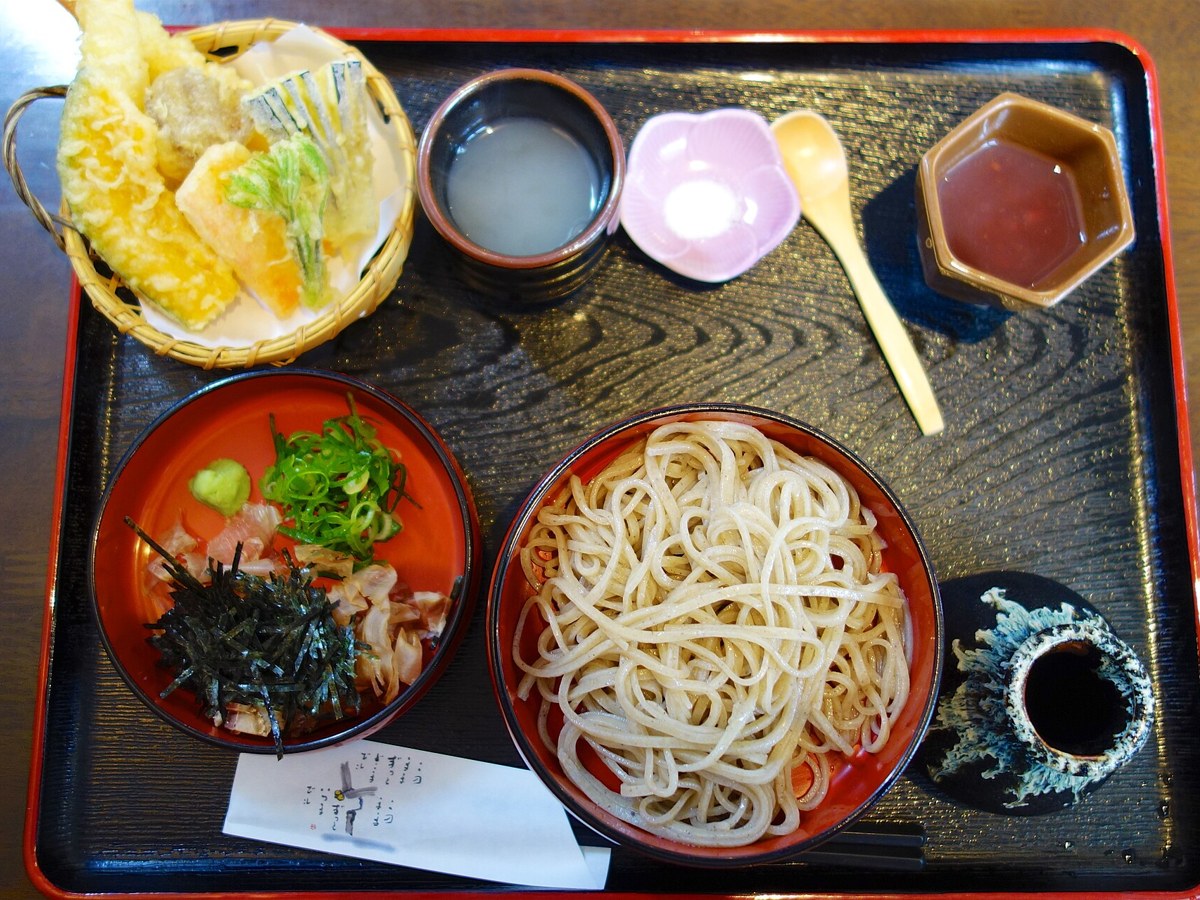
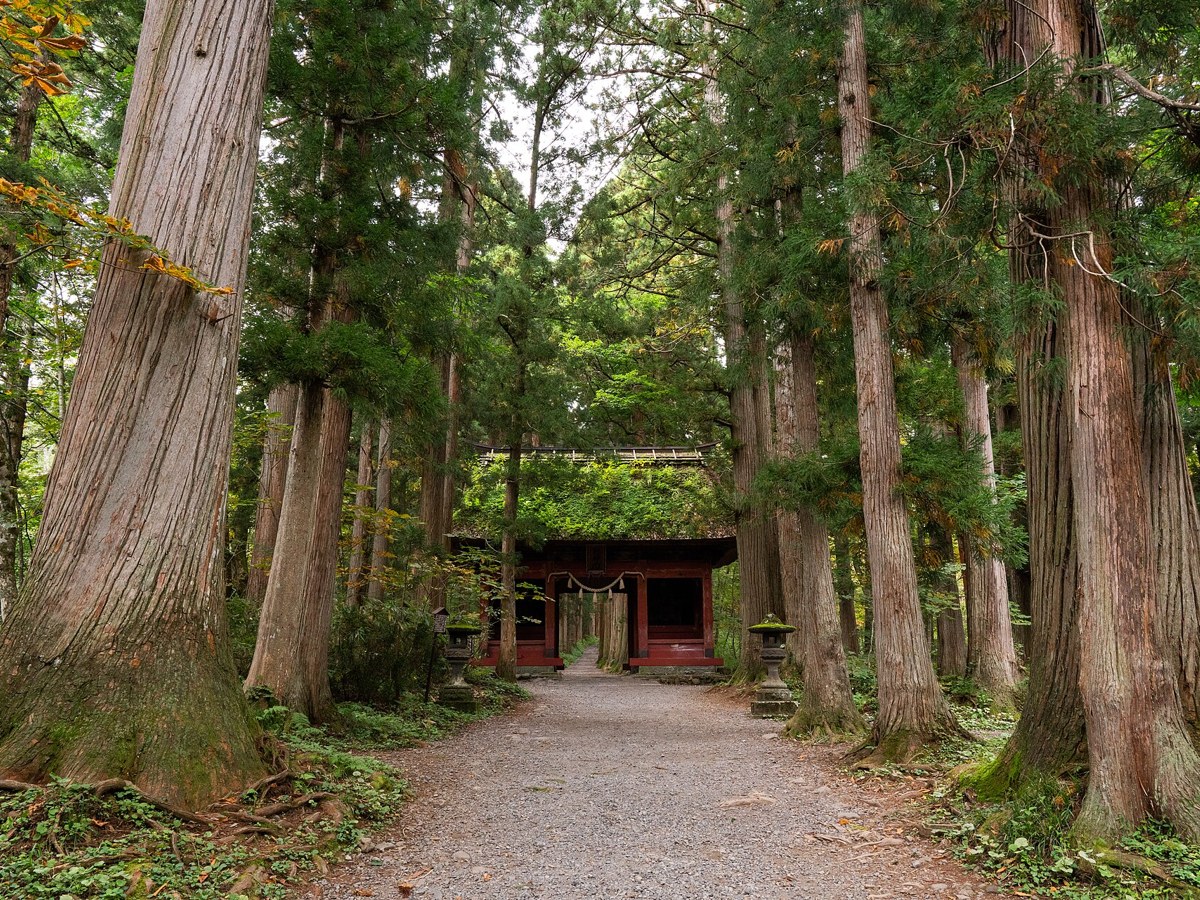
Bocchi-mori: five bundles on a basket
The signature is in the plating. Instead of one loose heap, a Togakushi serving is divided into small bundles — at the house by the middle shrine, five of them, each folded in half and laid on the basket in a loose horseshoe row. The style is called bocchi-mori, and the leading account of its origin is practical kindness: temple lodgings once piled soba onto one large basket for everyone to share, and dividing it into bite-sized bundles simply made the sharing easier.
Two local crafts ride along with the noodle. The condiment is Togakushi daikon, the district's own sharp radish, grated fresh; and the baskets themselves are Togakushi takezaiku, woven from the nemagari-dake bamboo that grows wild on the mountain. The flour at the better houses is stone-ground, which gives the noodle its gentle elasticity and smooth, moist bite.
Practical details: prices, where to eat, the festival
Eat where the shrines are: the Togakushi district holds about forty soba restaurants, strung along the approach roads to the five shrines. At Uzuraya, the district's most celebrated house, a zaru soba has been reported at ¥880; expect queues at weekends and cash to be safer than cards at the smaller houses.
Two dated offers are worth planning around. The Togakushi Soba Festival's eating-tour booklet costs ¥2,200 and carries four tickets, each good for a half-portion at a participating restaurant — twenty-eight houses joined in the cited year — through about a month around November. And at the Tonkururin soba museum, the tourism association's model course prices soba-making plus lunch at ¥4,500 for two people or ¥7,000 for four, reservation required.
Which great soba is this one?
Set the three greats side by side and each is a different idea of hospitality. Wanko soba will not let your bowl stay empty; Izumo soba stacks your noodle in a tower of lacquer; Togakushi soba portions yours out in advance, bundle by bundle, in a serving style invented for pilgrims sharing a basket. It is the quietest of the three, and the most architectural.
It is also the most seasonal. A district that crops its buckwheat twice, changes cultivar with the calendar and grates its own radish is asking you to taste a place at a moment, not a brand at any time. If you can choose, come in autumn for the heirloom strain — and let the festival booklet walk you through four houses instead of one.
Scope: what 'limited' means here
The claim is place, not packaging: this is the soba of one shrine district, eaten in its houses, in its own plating style. Dried noodles labelled Togakushi travel widely, and soba of this name is served elsewhere in Nagano City; nothing here pretends otherwise. What does not travel is the district itself — the five bundles, the radish, the bamboo basket and the mountain they all come from.
Sources — checked 9 November 2026
- SHUNGATE: Togakushi soba — local pride among Japan's three great soba noodles
- Visit Nagano: Enjoying soba and soba-flavoured desserts at Togakushi's soba festival
- Togakushi Tourism Association: model soba-making and hiking course
Original prose and official links only; no source text or maker media reproduced. Photos are credited Creative Commons works, not product photographs.
Editorial review 2026-11-09