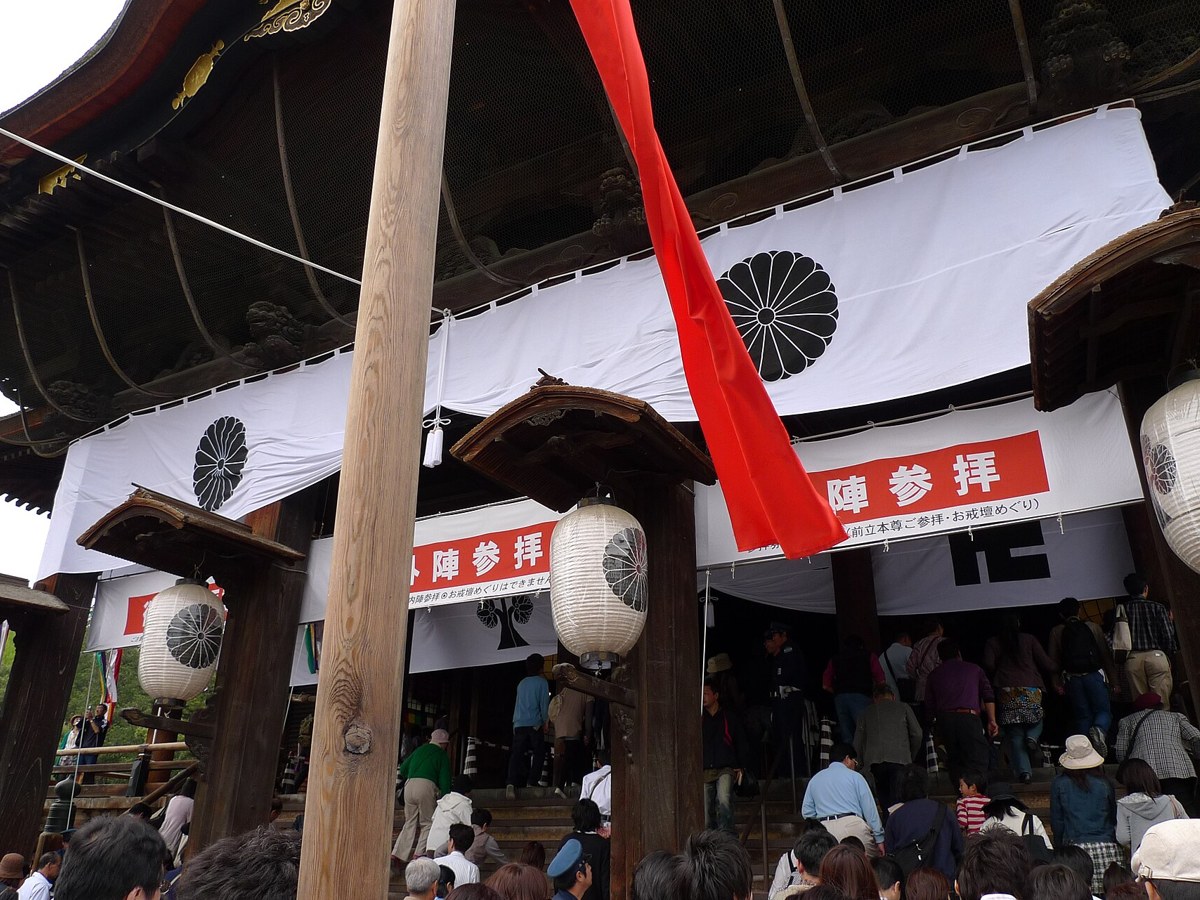
Pilgrims have been buying this spice on the same errand for nearly three centuries. Yawataya Isogoro's founder began selling shichimi togarashi — the seven-flavour chilli blend — in the grounds of Zenkoji, Nagano's great temple, in 1736. The house is now counted among Japan's three great shichimi makers, its little can is a fixture on noodle-shop tables, and the classic 14-gram tin costs ¥481.
1736: a temple-gate business
The maker's official history starts with the merchants of Nishiyama, northwest Nagano City, who travelled selling the area's hemp and paper and brought goods home to trade around Zenkoji. Among those goods was shichimi. Kan'emon, the founder, began selling it in the temple grounds in 1736 — a side line that outlasted the trades that funded it.
The blend localised itself: six of its seven ingredients could be produced in the Nishiyama hills — everything except the dried mandarin orange peel — and the house built its flavour on that Shinshu base. The temple did the marketing: shichimi became the souvenir of the Zenkoji pilgrimage, nicknamed in Edo times the 'passport' of the temple visit.
The seven, and the house style
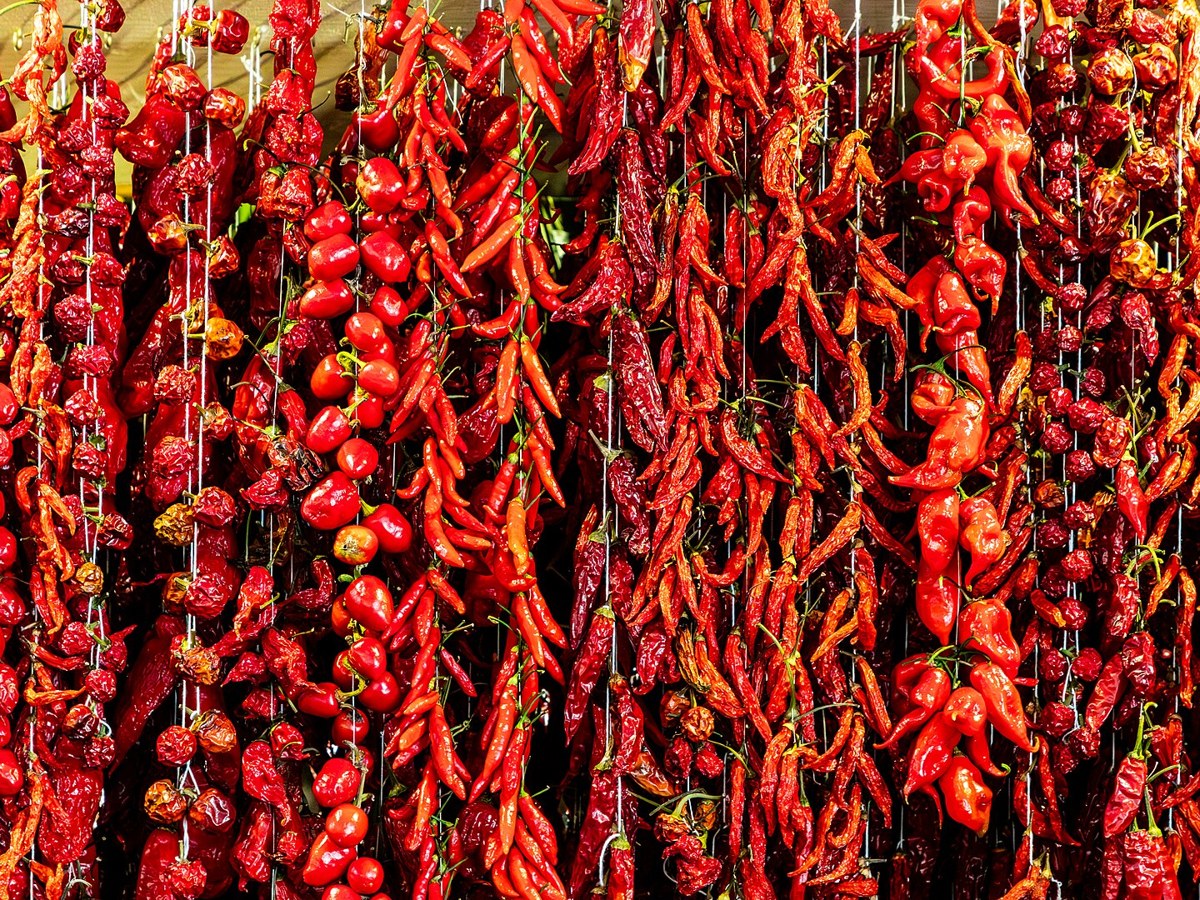
Yawataya's seven are chilli pepper, sansho, ginger, hemp seed, black sesame, dried orange peel and shiso. Against the other great houses — Tokyo's Yagenbori and Kyoto's Shichimiya — the Nagano blend leans aromatic rather than purely hot: the sansho and shiso lift it, the sesame rounds it, and the heat arrives underneath.
It is made for the food of its mountains: soba first of all (Shinshu is soba country), then soup noodles, grilled dishes and the temple-town canteens where the can still sits on every table. The house now blends variants — yuzu, ramen, roasted ichimi — and will mix a custom blend at its main shop, but the red seven-spice can is the icon.
Practical details: prices, where to buy, online sales
Prices (checked 9 November 2026): the classic can of shichimi togarashi, 14 g, is ¥481 tax included at Yodobashi; the refill bag, 18 g, is ¥494. The connoisseur's version is the limited all-domestic-ingredient can — all seven ingredients Japanese-grown, 14 g in a presentation box at ¥972 tax included — sold since September 2026 only at the maker's own shops (the Zenkoji main store, MIDORI Nagano, Karuizawa and Aeon Mall Suzaka) while its limited run lasts.
Where to buy: the main store on the Zenkoji approach in Nagano City for the full range and custom blends; supermarkets and retailers nationwide stock the classic can, and the maker sells online. Type of edition: regional edition — a Nagano house blend since 1736; the limited can is shop-confined as stated.
The smallest souvenir in Nagano
A 14-gram can is the most portable souvenir in this collection: it weighs nothing, keeps for months, and actually gets used — a winter of soba and soups seasoned by a temple visit. Buy two: one for the kitchen, one still sealed for the shelf, because the can's design has barely changed and looks it.
At the main store, the custom-blend counter is worth the queue — your own ratio of the seven, mixed in front of you, is the version of this souvenir nobody else's kitchen has. That, and the limited domestic can if the run is still on, are the Nagano-only ways to buy a nationally sold spice.
Scope: what 'limited' means here
Yawataya Isogoro's shichimi is documented as a Nagano City house blend sold at Zenkoji since 1736; the classic can's nationwide retail is stated, and the all-domestic limited can is confined to the maker's own Nagano-area shops as documented. Checked 2026-11-09. Other houses' shichimi are different blends.
Sources — checked 9 November 2026
- Yawataya Isogoro official site: History of Yawataya Isogoro
- Yodobashi: Yawataya Isogoro shichimi togarashi can 14 g — retail price and ingredients
- Foods Channel (maker release): Yawataya Isogoro limited all-domestic-ingredient shichimi can
- SushiSushi: Taste of Japan — Yawataya Isogoro, one of the three biggest and oldest shichimi in Japan
Original prose and official links only; no source text or maker media reproduced. Photos are credited Creative Commons works, not product photographs.
Editorial review 2026-11-09