Leather is soft; lacquer is hard. Koshu Inden spends four centuries proving they belong together. In Kofu, the old castle town of Koshu province, artisans dye deerskin until it is supple as cloth, then lay patterns onto it in lacquer — stencilled, smoked, printed in colour — until the surface carries waves, dragonflies and cherry blossom in a fine raised relief. It decorated samurai armour for the Takeda clan. It now decorates the wallet in your pocket, by the same secret methods, in the same city.
Three secret techniques on one skin
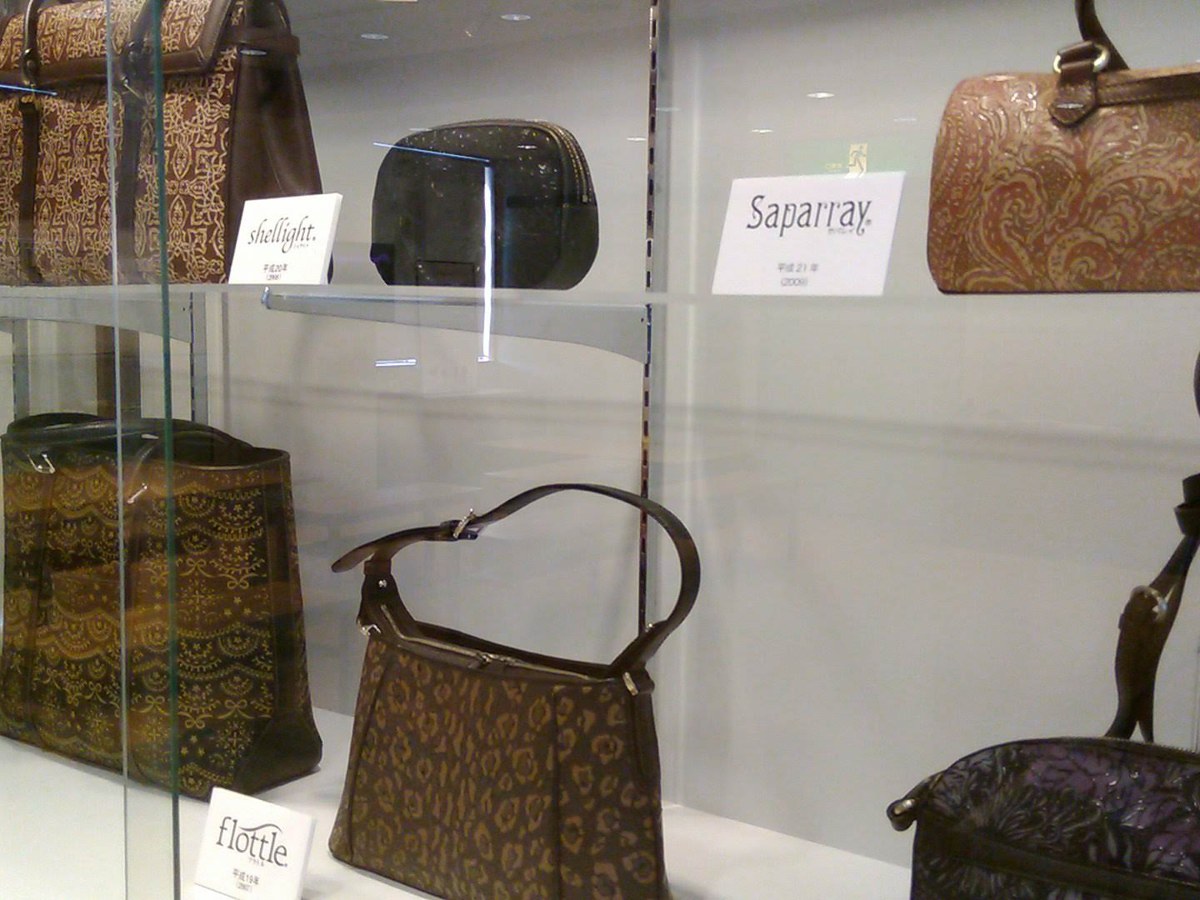
The JR East craft account, written for the TRAIN SUITE SHIKI-SHIMA's own Inden stationery boxes, names the grammar: Inden is a technique invented in Koshu — today's Yamanashi — in the mid-Edo era, its name said to mean 'transmitted from India', after the decorated leathers that once arrived from overseas. The treasured techniques are three, and they have been passed down as a company secret: fusube, smoke patterning, which colours the skin with smoke; urushi-zuke, the application of lacquer itself; and sarasa, colourful stencilled printing. As many as 300 traditional patterns are used — tiny cherry blossoms, waves, dragonflies — each laid onto the soft skin until it sits, as the Japan Travel account notes, in a subtle raised relief.
The labour is not decorative shorthand. The Shiki-Shima account records that a single stationery box in this craft takes artisans roughly six months to complete. That is the honest scale of the form: deerskin must be tanned, dyed, patterned and lacquered by hand, the lacquer itself a living material whose behaviour changes with the weather — which is why the craft's knowledge lives in people, in one city, and not in a manual anyone could copy.
1582: armour leather for the Takeda
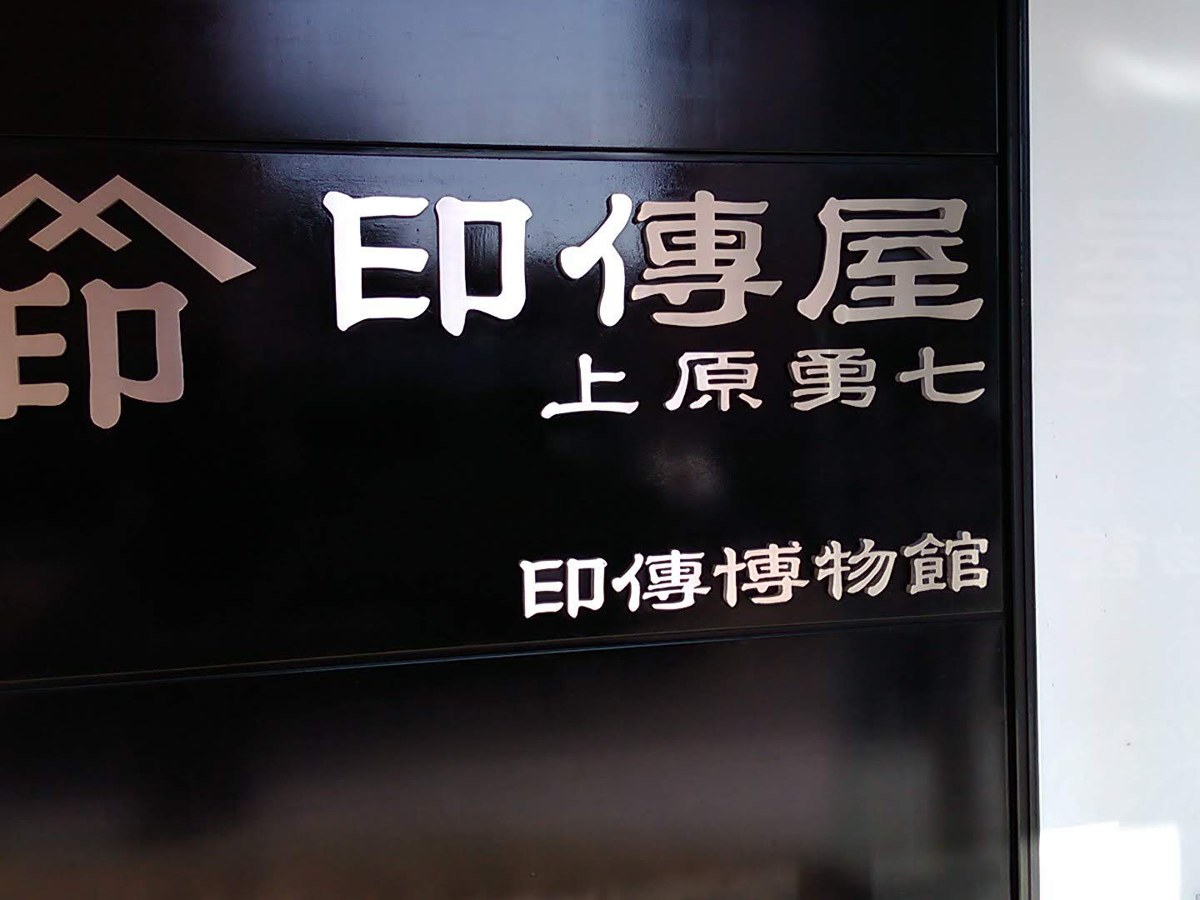
The founding house's account, as the checked sources carry it, begins in war. In 1582 — before the Edo period even opened — Uehara Dekibei, a hired retainer of the powerful Takeda clan, the warlords of Koshu, began producing leather pieces for samurai armour; decorated leather had served helmets, armour and saddlery for the fashion-conscious warrior class. When peace came, the same house turned the craft to civilian life: in the Edo period its head, Uehara Yushichi, developed the first Koshu Inden products by applying lacquer to deerskin, and the line shifted from armour to pouches, tobacco holders and the everyday goods of merchants.
The continuity since is the measurable marvel. The techniques were passed orally from generation to generation, never dispersed; a document published in 1854 records three Inden workshops in Kofu, of which the founding house eventually became the only one remaining; Koshu Inden was designated a Traditional Craft Product in 1987; and as of 2022 the company is led by the fourteenth generation of the Uehara family. Its main store still stands in Kofu, and its second floor is the Inden Museum, holding approximately 1,500 pieces of the craft's history.
What the genuine article costs
The price anchor this survey could verify first-hand is a collaboration piece with an unusually strict geography: Starbucks Japan's JIMOTO made Series KOSHU — a 296 ml cup with a Koshu Inden lacquer sleeve made with Kofu's Inden no Yamamoto, described in the checked report as Japan's only shop holding the official title to manufacture Koshu Inden — was priced at ¥8,200 before tax and sold only at eight Starbucks branches inside Yamanashi Prefecture. A prefecture-only cup, wearing the prefecture's own leather: the exclusivity of the craft and of the object in a single fact.
The founding house's own range, on the Japan Travel account, runs from affordable goods to luxury items — coin purses, bifold and long wallets, card and pass cases, key holders, book covers, pouches and bags — all handmade, soft, lightweight and durable, with repair services offered for long use; the deerskin itself is a by-product of the food industry, no deer killed for the craft. Yamanashi's standing stories are three foods — shingen mochi, hoto noodles and Koshu wine. Koshu Inden is the prefecture's first craft, and the oldest living business in this entire collection.
Reading a real Inden before you buy
Judge a piece by the three marks the accounts give you. The pattern should sit raised on the surface — lacquer laid on skin, not ink printed flat; the skin should feel soft and light, deerskin's own character; and the pattern should be one of the tradition's own — the waves of seigaiha, cherry blossom, dragonflies, Mount Fuji — or a modern design from the Kofu makers, who release new lines almost every year while holding the techniques unchanged. A flat, rubbery print on stiff leather is the substitute; the genuine article announces itself to the fingertips first.
Go to Kofu if you can. The main store and its museum put 1,500 pieces of the craft's four centuries in one building — armour-age leather above, today's wallets below — and the city adds the rest of Yamanashi's shelf around it: the wine of Katsunuma, a bowl of hoto, a Kikyo shingen mochi for the train. Few crafts anywhere let you hold a Sengoku-period technique in one hand and pay for a coffee with it in the other.
Sources — checked 11 November 2026
- Japan Travel: INDEN-YA — an over 400-year-old crafts business, Kofu, Yamanashi (checked account)
- JR East TRAIN SUITE SHIKI-SHIMA: Koshu Inden — the textures of deerskin and lacquer (checked craft account)
- MOSHI MOSHI NIPPON: Starbucks Japan to release Koshu Inden lacquer coffee cup sleeve in Yamanashi (checked report of the maker's announcement)
Original prose and official links only; no source text or maker media reproduced. Photos are credited Creative Commons works, not product photographs.
Editorial review 2026-11-11