Some noodle dishes are served in a pot. Hoto is finished in one — the thick, flat noodles go into the bubbling miso broth raw, and cook among the kabocha pumpkin and root vegetables until the whole iron pot arrives at the table still simmering. It is Yamanashi's defining dish, the old Koshu province's answer to a cold mountain evening, and this prefecture's second story in this collection. A classic bowl costs about ¥1,000 to ¥1,700, depending on whose house cooks it.
Noodles that cook in their own soup
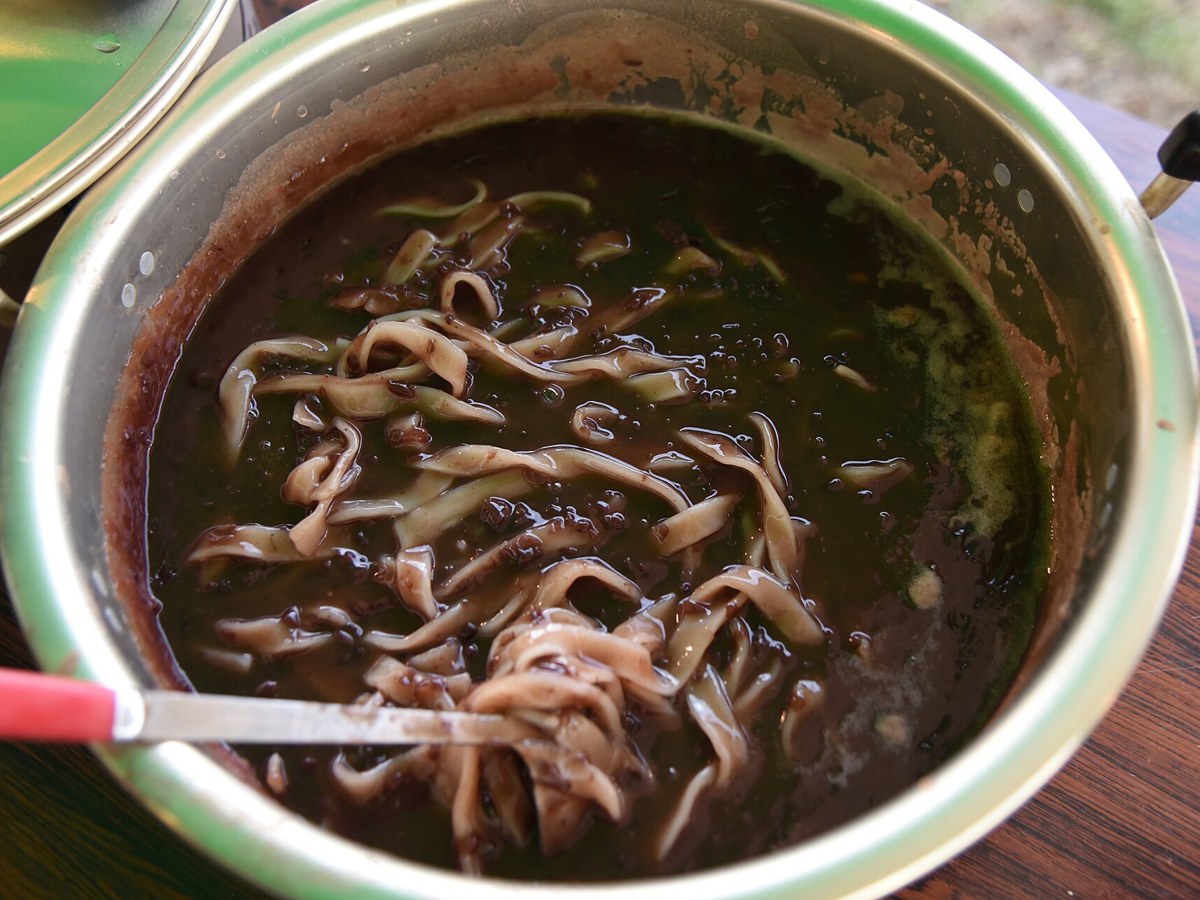
The method is the identity. Hoto noodles — flat, wide, udon-like ribbons of wheat — are not boiled separately and added to soup; they are simmered directly in the miso broth, so their starch thickens the pot as they soften. Into the same pot go the basin's winter stores: kabocha squash above all, with carrot, daikon, potato, taro, mushrooms and greens, and in heartier versions pork or chicken.
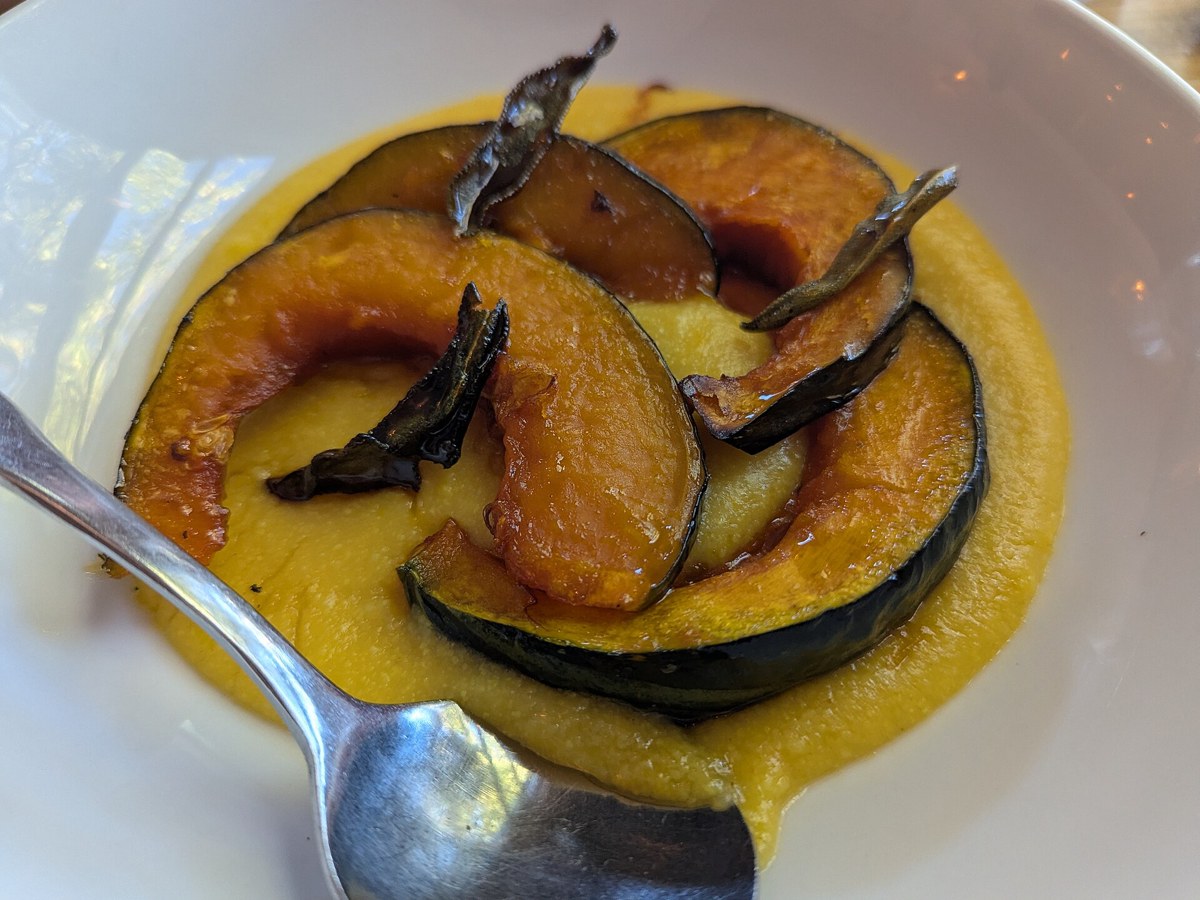
The pumpkin is not garnish. As it cooks down it sweetens and enriches the miso, until the broth sits somewhere between a soup and a stew — which is why hoto is eaten with a spoon as much as chopsticks, and why the pot, not a bowl, is the serving vessel. Around Kofu and the Fuji Five Lakes, the dish is simply what the province is called in food form: Koshu hoto.
Two houses, two broths
Visitors meet hoto through two names. Hoto Fudo, with several branches around Kawaguchiko and Fujiyoshida, cooks the lighter, saltier broth and is the easiest first bowl — most branches open around 11:00 and close by early evening. Kosaku, Yamanashi's most famous hoto chain, cooks thicker and richer, with generous portions and big dining rooms in Kawaguchiko, Fujiyoshida and Kofu that take groups without drama.
Kofu, the prefectural capital, is the local alternative: smaller family-run houses around the station lean more rustic — thicker noodles, plainer presentation, the same iron pot. Regulars have a house, not a preference, and will tell you the other one's broth is wrong with complete sincerity. Both are right about their own; the traveller's job is to eat both and acquire a loyalty.
Practical details: prices by house
Budget on the dish, not the prefecture. A standard kabocha hoto at Hoto Fudo or a small Kofu shop runs roughly ¥1,000–1,300. Kosaku's classic pumpkin hoto is roughly ¥1,300–1,700, and heartier versions — pork, mushrooms, the special mixed vegetable — run closer to ¥1,800–2,000. Kofu's family shops sit between, generally ¥1,200–1,700.
The same houses stretch the form carefully — Kosaku lists a sweet azuki hoto at ¥1,400, eaten like a dessert, and a duck hoto reported at ¥1,900 — but the pumpkin bowl stays the standard. Practical cautions are few but real. The pot arrives genuinely bubbling and stays hot long past politeness — pace yourself. Portions are mountain-sized; the half-finished pot is a recognised traveller's outcome, not a failure. And hours shift seasonally at the lake branches, so a late lunch wants a check of the current schedule rather than a hungry walk.
A basin's harvest, in one pot
Read the ingredient list as an agricultural map. Wheat where rice grew poorly, pumpkin and roots that store through winter, miso from the province's own fermenting tradition — hoto is the Koshu basin feeding itself from what keeps. Even the technique is thrift: cooking the noodles in the soup keeps the starch, and the starch makes the soup a meal.
That is why the dish carries a province's name rather than a maker's. No single house invented hoto; the basin did, winter by winter, and the famous chains are its custodians rather than its owners. The iron pot on your table in Kawaguchiko, with Fuji somewhere out the window, is a very old piece of household engineering wearing a restaurant's clothes.
Scope: what 'limited' means here
The claim is place and method: flat noodles simmered in miso with pumpkin, in Yamanashi, in the pot. Dried hoto noodles travel, home kits exist, and noodle stews of other names are cooked in other provinces — none of that is disputed here. What stays in Yamanashi is the dish's home ground, its houses, and the iron-pot standard by which the copies are judged.
Sources — checked 9 November 2026
- Japan Trove: Hoto noodles — Yamanashi's miso pumpkin noodle soup and where to try it
- Tripadvisor: Koshu Hoto Kosaku, Yamanakako — menu, prices and reviews
Original prose and official links only; no source text or maker media reproduced. Photos are credited Creative Commons works, not product photographs.
Editorial review 2026-11-09