Of Japan's six ancient kilns, Echizen is the one that never learned decoration. No painted designs, no applied glaze, no colour that did not arrive as ash on the wind of the kiln: just iron-rich clay from the hills behind Echizen Town, fired hard until the surface sealed itself, wearing whatever yellowish-green film the wood ash left as it melted. The district has kept this up for about 850 years, since the end of the Heian period — long enough to become, by the late Muromachi age, the largest pottery-producing area on the Sea of Japan side of Japan. This article follows the ware from coil-built storage jars to the ceramic village that now gathers its potters, and ends, as the jars' descendants should, with a pair of beer mugs at ¥5,934.
The plainest of the six
Echizen ware belongs to a named set: the Six Ancient Kilns of Japan — Seto, Tokoname, Shigaraki, Tanba, Bizen and Echizen — a grouping the government's Highlighting Japan notes was coined around 1948 by the ceramic historian Koyama Fujio for the kilns that had fired continuously since medieval times, and which was recognised as Japan Heritage in 2017. Echizen's contribution to the set is the northern, Sea-of-Japan line: its production area began at the end of the Heian period, roughly 850 years ago, adopting techniques from the Tokai region's kilns, Tokoname's among them.
The ware is yakishime — high-fired, unglazed stoneware. The craft record states the functional point plainly: fired without glaze, the pieces come out hard and durable, and their only surface colour is the kiln's own accident, wood ash that melts during the firing into a natural glaze of yellowish green. Where the other five kilns are also yakishime traditions, Echizen's record emphasises scale as much as surface: jars, large storage vessels and mortars made it, by the end of the Muromachi period, the biggest pottery centre on the Japan Sea side.
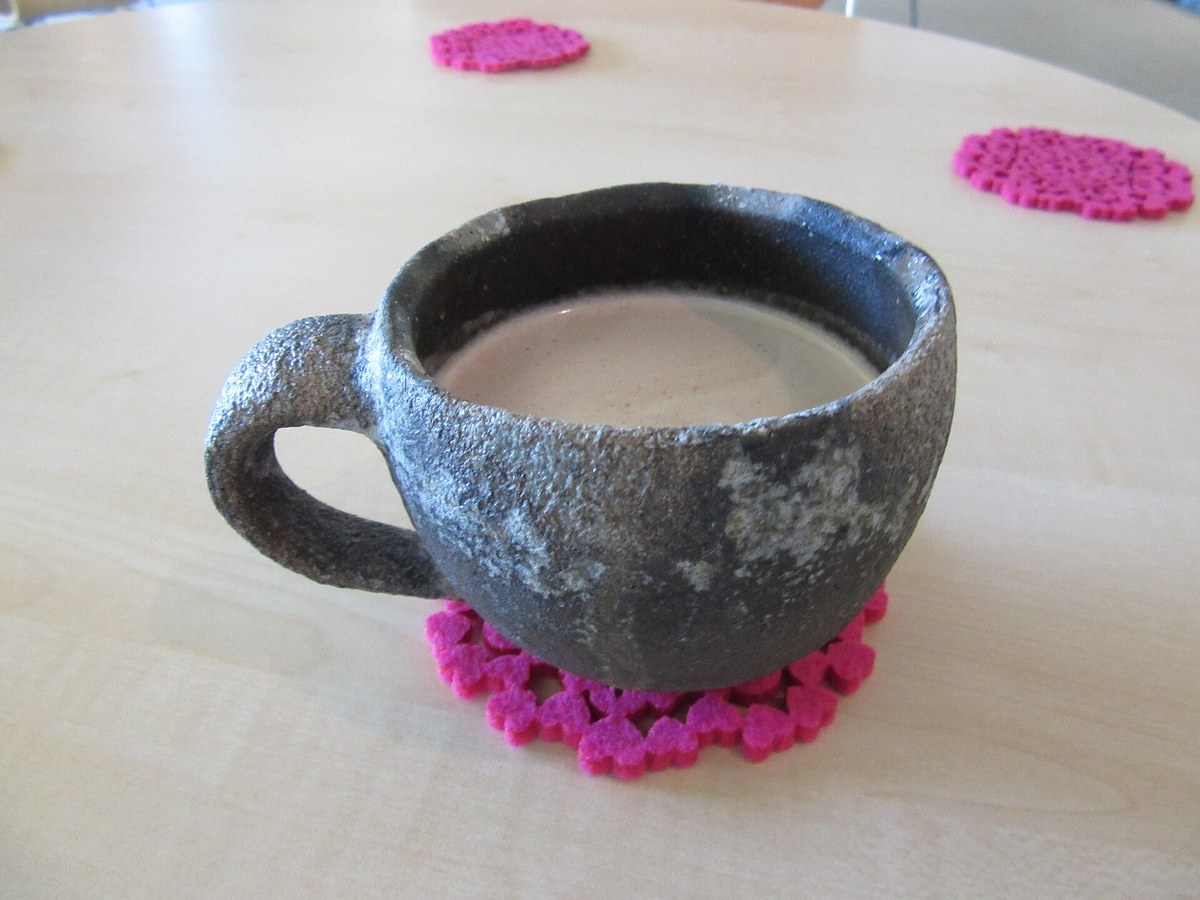
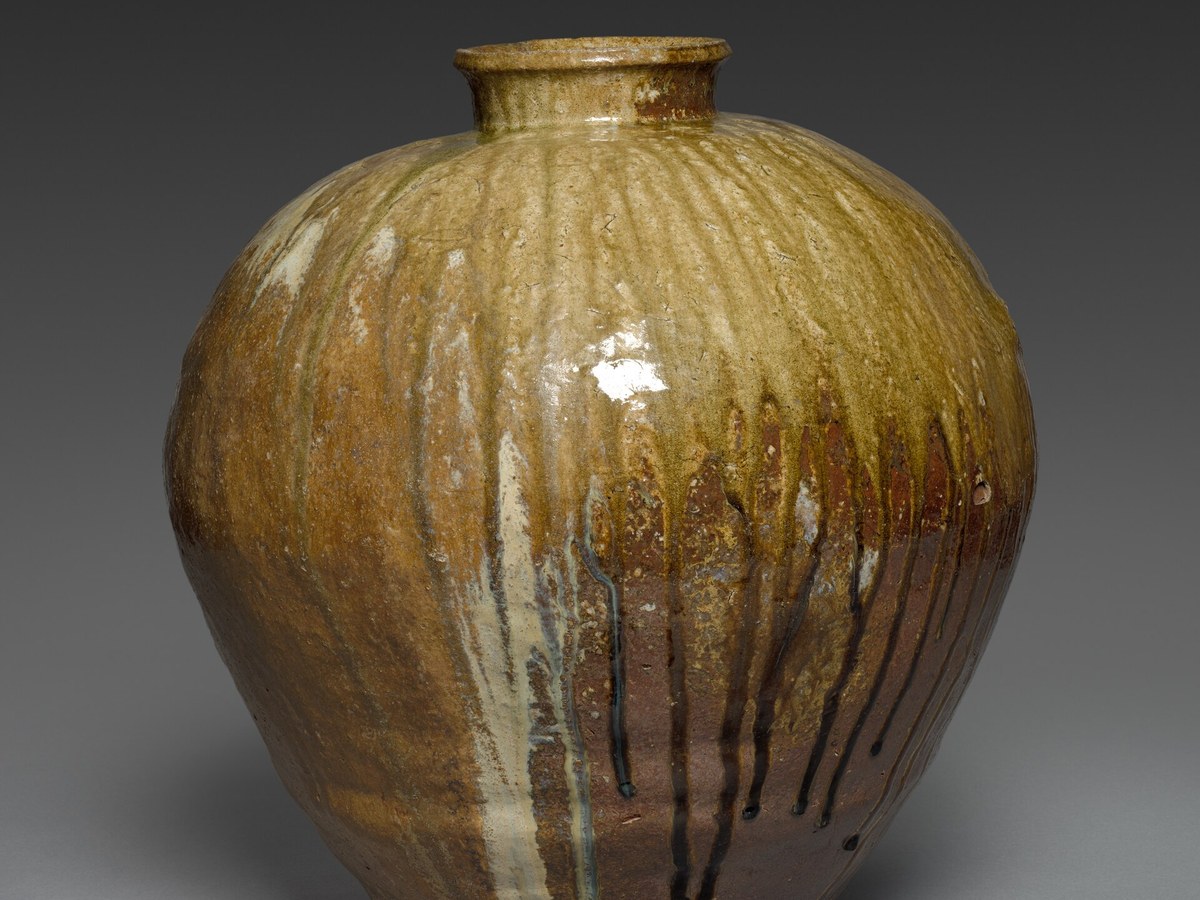
Coils and ash
The forming has a local signature. In the Kamakura period Echizen's potters developed nejitate — building a vessel by stacking and joining ropes of clay — the technique behind the great jars that were the district's staple: storage for grain, water and fermenting foods in a snowy northern province that needed containers able to outlast generations. A jar built by coils and fired to stone asks nothing of paint or glaze; its beauty is the record of its making, rings and all.
The clay closes the argument. The craft record describes Echizen's clay as iron-bearing, highly resistant to fire and well vitrifying — it seals tight at high temperature — with surface colours running from blackish grey to reddish brown under the ash film. The government's kiln survey says the same in shorter form: simple, sturdy textures created by clay and natural ash glazes, on iron-rich, refractory earth suited to large storage jars. Colour, strength and size all come out of the one hillside material.
Named, designated, gathered
The modern honours arrived in sequence. Around 1948 the district took its place in the Six Ancient Kilns grouping; in 1971 the Echizen Ceramic Village was established, gathering kilns, workshops and exhibition space in the production town itself; in 1986 Echizen ware was designated a Traditional Craft by the Minister of Economy, Trade and Industry; and in 2017 the six kilns together were recognised as Japan Heritage. Few entries in this catalogue carry all four kinds of recognition — scholarly, municipal, national-industrial and heritage — for the same unbroken making line.
Designation has not frozen the output. The craft record notes that since the late 1960s many potters have settled in the Echizen area, drawn by the clay and the kilns, and that alongside the historic forms the district now produces tableware, flower vases and other contemporary work — the ancient kiln as a living village rather than a museum label, which is what the final section's purchase looks like.
The village today
The buying centre is Echizen Ceramic Village in Echizen Town, where the district's kilns show and sell current work and visitors can handle the weight difference between a storage jar's descendant and ordinary pottery. The prefecture's own craft shop gives the online reference point checked here: a pair of Echizen ware beer mugs — the 'Ekubo' cups from the Hikari kiln, 6.5 centimetres across and 11.5 high, gift-boxed at ¥5,934 — with the shop's practical note that the stoneware's fine surface texture makes beer foam finer and creamier.
That mug is the honest modern Echizen article: unglazed, ash-toned, made to be used daily, and priced as a working craft object rather than an antique. Antique jars in the photographs accompanying this article are museum pieces — the Kamakura and Muromachi vessels that state the line's age — but the continuity they advertise is real and purchasable at village-shop prices. The pair was sold out at the check; the village's own shops are the in-season answer, and the prefectural shop restocks the kiln's lines.
Sources — checked 11 November 2026
- Takumi Meguri — Echizen-yaki (craft record)
- Highlighting Japan (Government of Japan), March 2026 — Japan's Six Ancient Kilns (read via search)
- Kauche (Fukui Prefectural Federation of Societies of Commerce and Industry) — Echizen ware beer mug 'Ekubo', pair (checked 11 November 2026)
Original prose and official links only; no source text or maker media reproduced. Photos are credited Creative Commons works, not product photographs.
Editorial review 2026-11-11