Fukui entered this collection with paper fifteen centuries old. Its second story is the paper's neighbour and opposite: Echizen uchihamono, forged blades hammered in Takefu for about seven hundred years — kitchen knives with the dark kurouchi skin of the forge still on them, sold where they are made, in a village built so you can watch.
Seven hundred years at the anvil
The tradition is dated to about 1337, which makes Echizen one of Japan's old blade countries: a forging centre in the hills of what is now Echizen City, Fukui, whose smiths made swords first and farm and kitchen blades as history asked. In 1979 the work was designated a national Traditional Craft Product, covering knives, sickles and shears made by hand-forging and water-grinding.
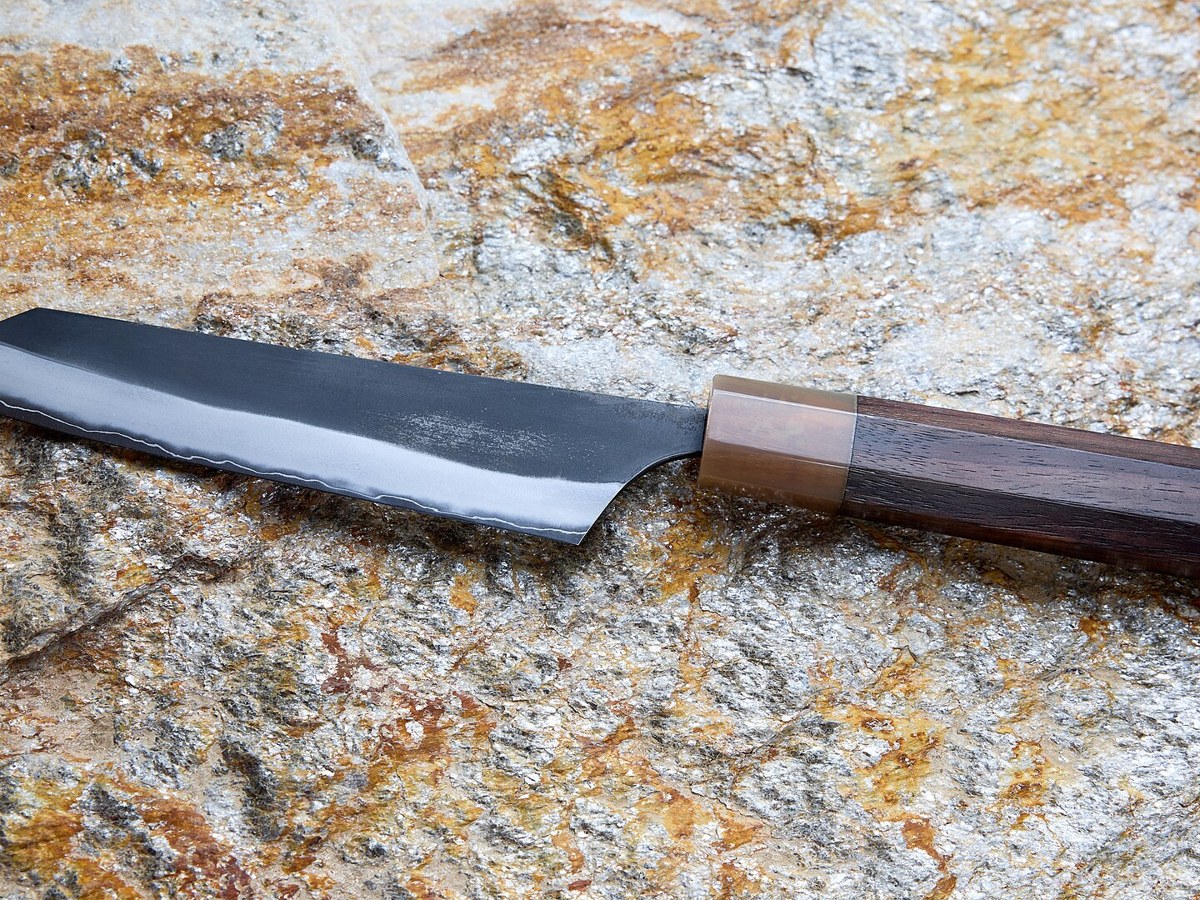
Today Echizen is Japan's second-largest knife region after Sakai, and its smiths — Takamura, Yoshimi Kato, Saji Takeshi and their peers — are names chefs argue about internationally. The signature look is kurouchi, the dark, textured surface the forging leaves on the blade: an Echizen knife does not hide that it was hammered.
Takefu Knife Village: watch, buy, forge
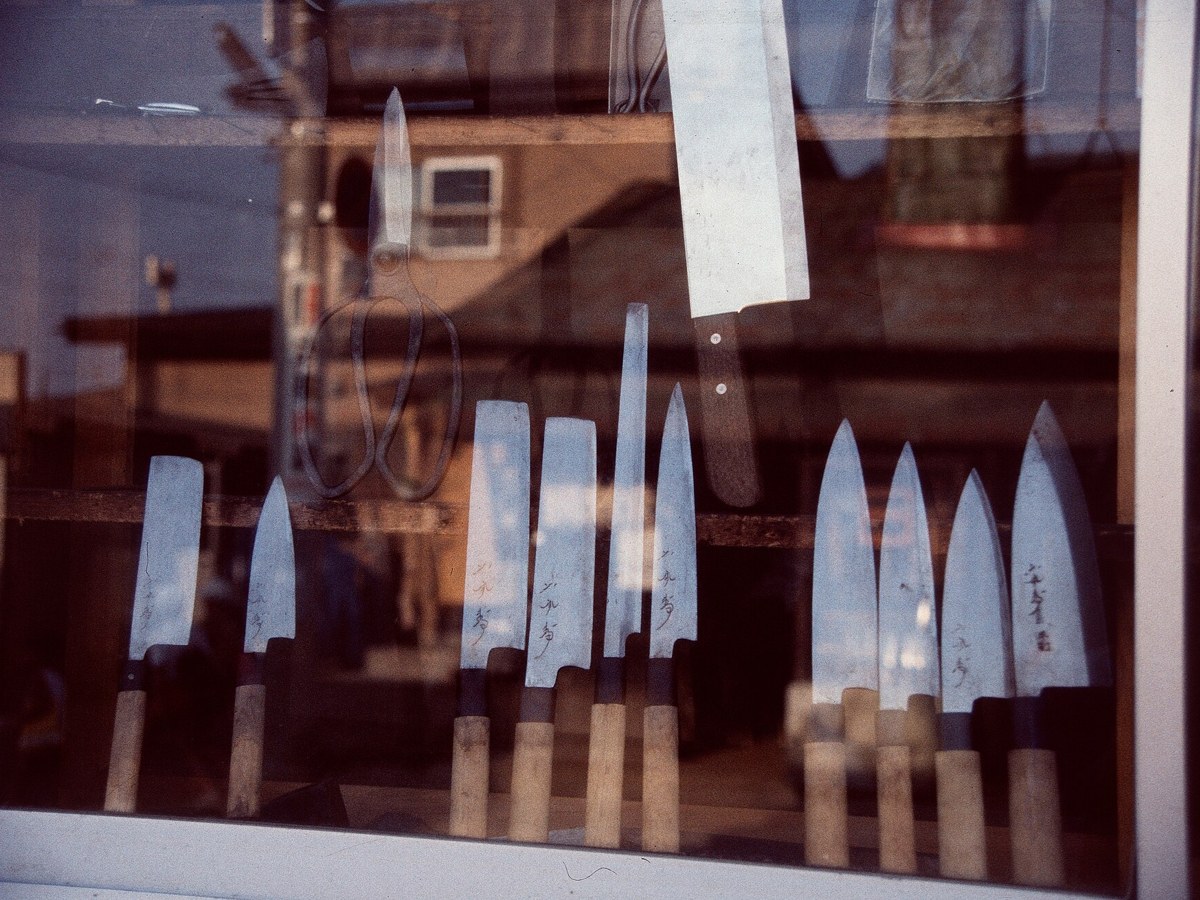
In 1993 thirteen workshops founded the Takefu Knife Village cooperative, a working factory with a public forge: visitors stand close enough to hear the hammers and feel the heat, then buy in a showroom that sells each workshop's knives directly — often from the person who made yours. A separate hall, the Echizen Uchihamono Hall, exhibits the tradition officially.
You can also make one. The village's checked course list offers a six-hour knife-making class at ¥20,000 — forge, quench, sharpen, engrave your name and fit the handle — a one-to-two-hour sharpening class at ¥12,000, and a course for overseas visitors at ¥35,000 including the interpreter. All are reservation-only and for ages 18 and up.
Practical details: what the blades cost
The Echizen cutlery cooperative's own catalogue lists general-purpose kitchen knives from ¥3,630 to ¥104,170 including tax — hand-forged and Damascus pieces at the upper end, each workshop setting its own prices. That range is the honest shape of the craft: an everyday santoku and a master's showpiece carry the same village name.
For one named anchor: Saji Takeshi, a third-generation Takefu smith and designated Traditional Craftsman, lists his SRS13 powdered-steel santoku (180 mm) at ¥35,300. And a Fukui travel writer's deba, bought at the village from a designated craftsman, cost a little over ¥12,000 — village-direct buying at working prices, not gallery prices.
Paper valley, blade valley
Echizen City holds two of this collection's crafts within a short drive: the washi paper valley and the knife village, both designated, both still working. The pairing is not a coincidence of tourism. A region that kept its water-powered crafts — grinding, washing, hammering — kept the workshops that depended on them.
Buy the knife where the hammering is audible if you can. An Echizen blade bought online is the same steel, but the village sells you the provenance with your own eyes: the forge, the smith, the dark skin left on the blade to prove both.
Scope: what 'limited' means here
The edition is the designated Takefu tradition: blades forged in Echizen by its workshops under the Echizen uchihamono name, a 1979 Traditional Craft designation. Dealer sales abroad do not dilute that claim — the forging is the edition, and it happens in one city in Fukui.
Sources — checked 9 November 2026
- Japanese Knife Lab: Echizen, Fukui — 8 best knife shops, 700 years of forging tradition
- Japan Mono: Saji Takeshi Echizen santoku SRS13 — buyer's guide
- Discover Fukui (official travel guide): Buy Echizen blades at Takefu Knife Village
Original prose and official links only; no source text or maker media reproduced. Photos are credited Creative Commons works, not product photographs.
Editorial review 2026-11-09