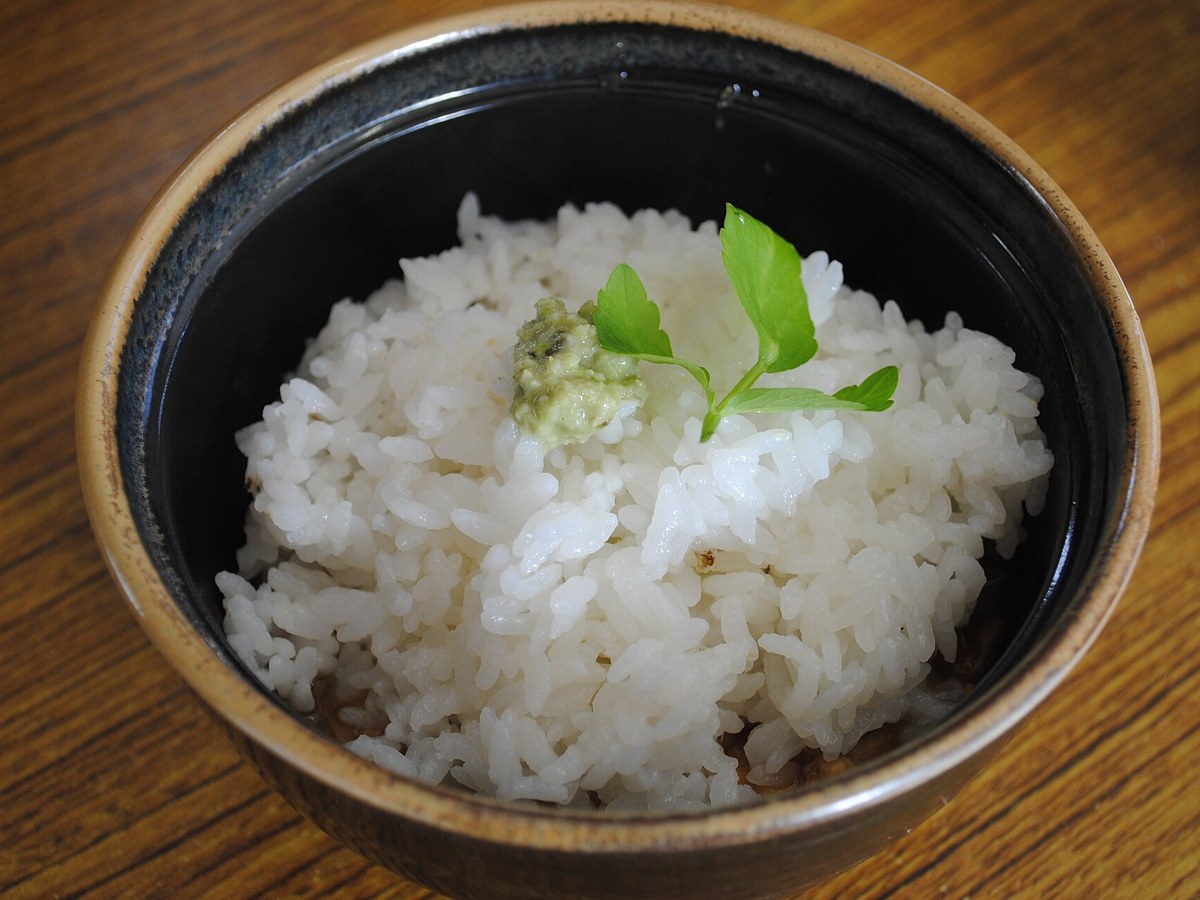
It looks like the plainest bowl in Japan: white rice, a dab of wasabi, a sprig of mitsuba. Then the dashi goes on, you dig, and the treasure surfaces — carrot, kamaboko, freeze-dried tofu, shiitake and burdock, chopped small and buried under the rice. Uzume meshi, 'buried rice', is one of Japan's five great rice dishes and the signature of Tsuwano, Shimane's preserved castle town. Whether the hiding began as Edo-period frugality or as hospitality for honoured guests, the reveal is the meal.
The rice dish with a secret underneath
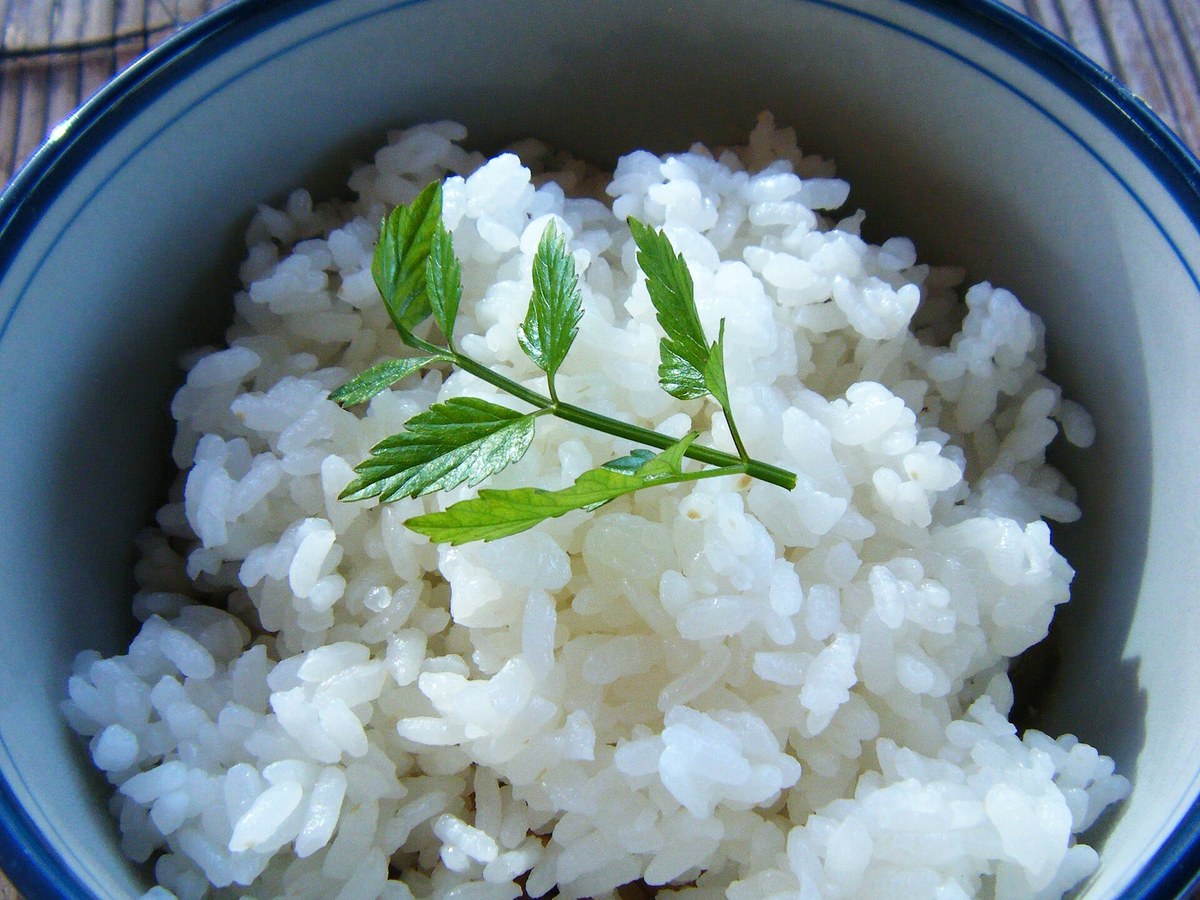
Uzume meshi means 'buried rice', and the bowl keeps its promise: what you see is plain white rice, but buried underneath are the ingredients — carrot, kamaboko fish cake, takano-dofu (freeze-dried tofu), shiitake mushrooms and burdock root, all chopped small (Food in Japan, description sourced to Japan's agriculture ministry, MAFF). It is one of Japan's five great rice dishes, the go-dai meihan, and it belongs to Tsuwano, the castle town in western Shimane often called a little Kyoto of the San'in.
Why hide good food? The leading theory is Edo-period frugality: sumptuary rules pressed commoners to eat plainly, so anything that looked like a luxury went under the rice (Food in Japan). Another telling links it to hospitality — the best ingredients saved out of sight for honoured guests. Either way, the reveal is the dish: plain rice that turns out to be a feast.
How it is eaten
The bowl arrives looking like ochazuke's plainer cousin, topped with wasabi, mitsuba and chopped nori. Hot dashi is poured over, and as you dig in, the buried ingredients surface mouthful by mouthful — simmered vegetables and tofu soaked in the seasoned broth under the rice (Food in Japan). Despite the dashi, it is not ochazuke: the toppings are cooked into the dish, not sprinkled on it, and a large bowl comes to a modest 308 kcal.
In Tsuwano it is winter and celebration food: eaten to warm up on cold nights and served as a hospitality dish at the New Year Spring Kagura, the town's sacred dance season (Food in Japan). The Hidden Japan Guide calls it the town's signature dish and the lunch to build a Tsuwano day around.
Where to eat it in Tsuwano, with prices
On Tonomachi-dori, the town's main historic street, Sarashiki serves uzume-meshi with cold Sekishu soba — the local buckwheat noodle — for 2,000 yen, no reservation needed, with lunch service until about 14:30 (Hidden Japan Guide, 27 October 2026). Shointei, set in a former retainer's residence and garden, offers kaiseki-style lunches from 3,600 yen and will change the rice to uzume-meshi for an extra 300 yen plus tax; reservations are required there.
Food in Japan's Tsuwano list adds Kyodo Ryori Yuki, five minutes from Tsuwano Station, whose uzume-meshi set comes with simmered dishes, vinegared-miso konjac and yuba (open 11:00–15:00, closed Thursdays), the casual Furusato Shokudo, Saranoki Honten, and meals at the inn Tsuwano no Yado Yoshinoya. Minoya, near the station, is the easy first bowl.
Why uzume meshi is Tsuwano-only
Rice bowls with hidden ingredients are rare anywhere; uzume meshi is a named, ministry-documented tradition of one town, counted among Japan's five great rice dishes and served as Tsuwano's signature at its Kagura season. The burying technique, the ingredient set and the dashi pour are fixed by local custom, not by any chain.
Tsuwano protected its heritage carefully — a preserved samurai district, a famous heron dance — and uzume meshi is the edible part of that same instinct: nothing showy on the surface, everything of value underneath.
Sources — checked 13 November 2026
- Food in Japan — Uzume Meshi (updated 9 November 2026)
- Hidden Japan Guide — Tsuwano Travel Guide (published 27 October 2026)
Checked 13 November 2026 (stored links re-fetched and judged per product): reserved where the page says so, with an editorial review note kept per product. Press, PR and travel use stays outside the grant.
Editorial review 2026-11-13