Japan's seventh-largest lake keeps its treasure in the shallows, in shells the size of a thumbnail. Lake Shinji's Yamato shijimi are the most famous of the lake's Seven Delicacies and the only one the fishers take all year — raked from the brackish bottom at dawn, graded by the millimetre, and registered, since November 2025, under a Geographical Indication of their own. Eaten as shijimi-jiru, they make Shimane's third story: a soup whose ingredient now has a legal name.
A brackish lake and its clam
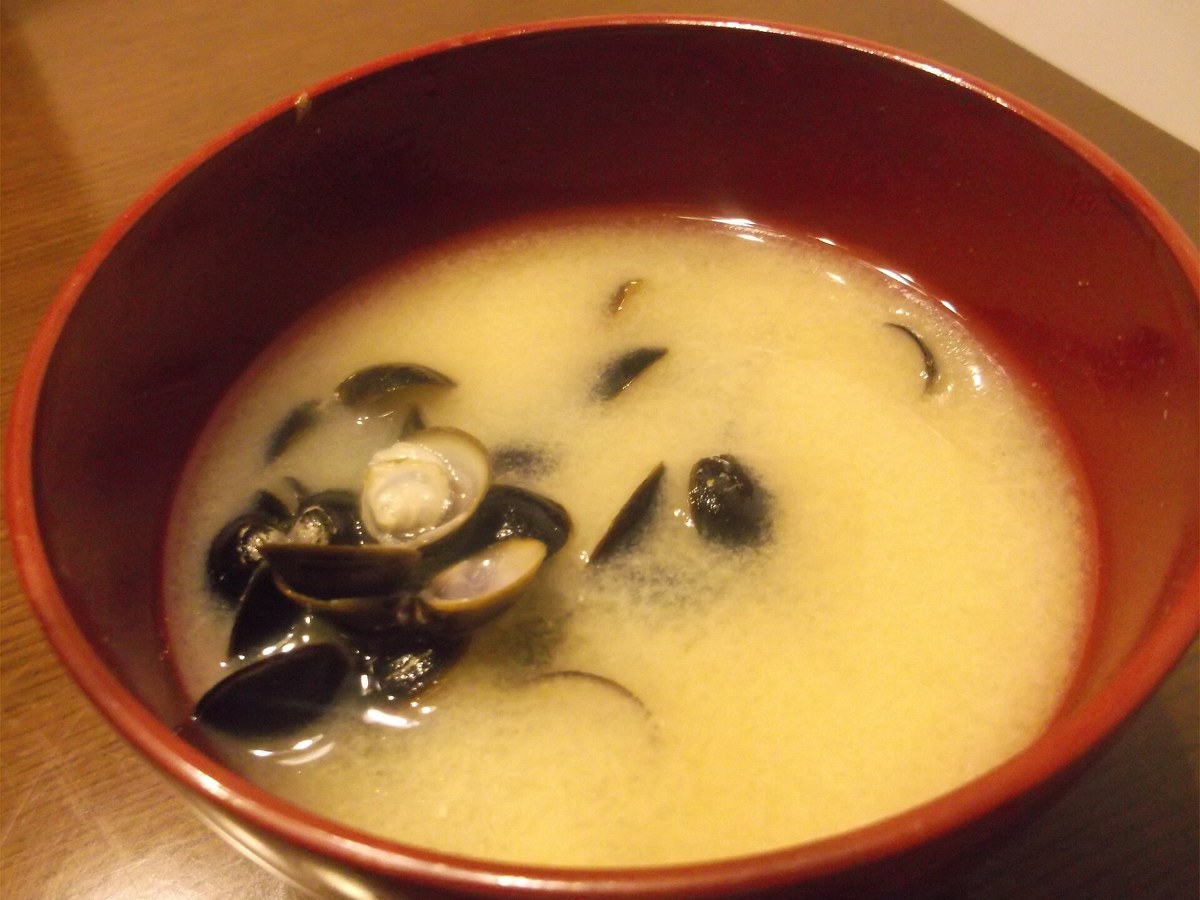
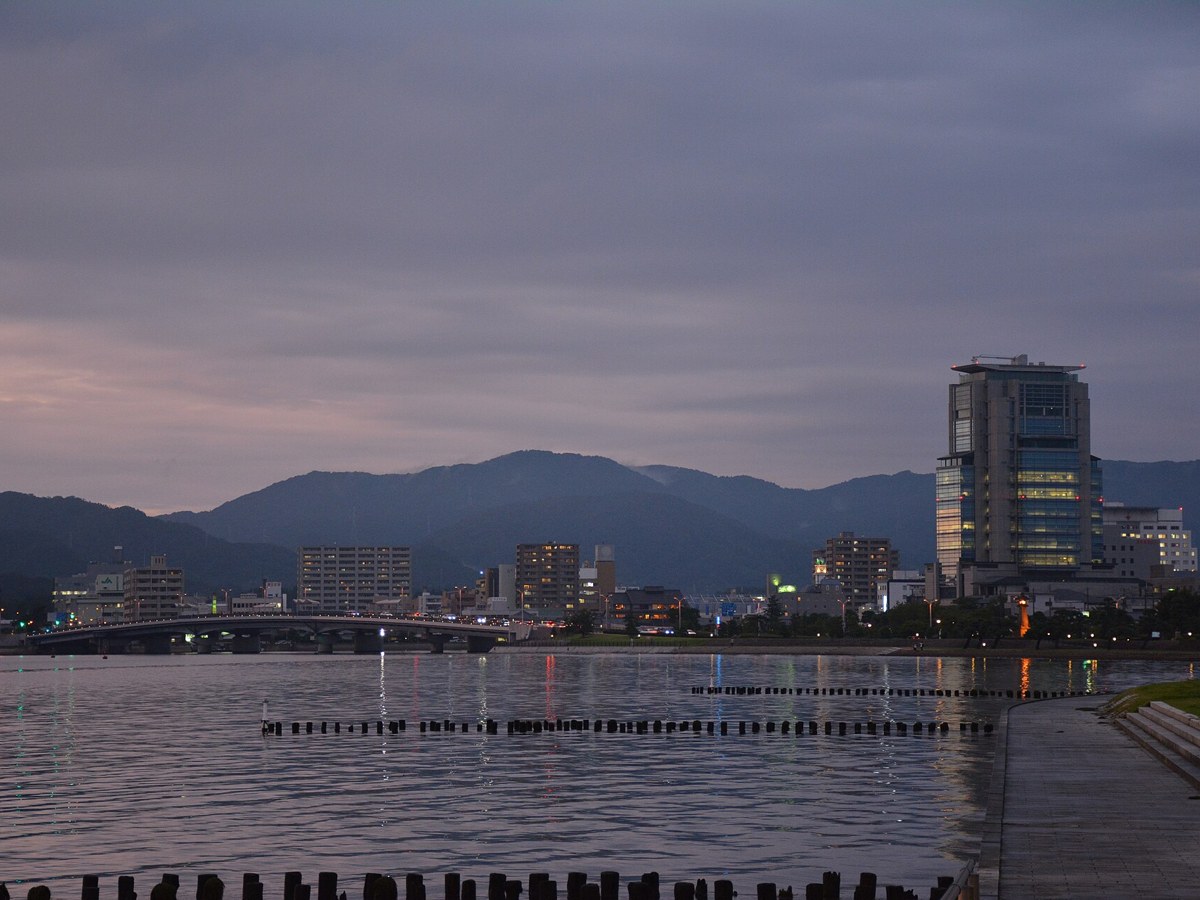
Lake Shinji is a lake of two waters. River water fills it from the west, and seawater reaches it from the east through Lake Nakaumi, so the whole 45-kilometre circumference — Japan's seventh-largest lake, sixteen kilometres east to west — is brackish, at roughly a tenth of the sea's salinity. Together with Nakaumi it is a Ramsar wetland, a great wintering ground for waterfowl; under the surface, the shallow shelf grows the phytoplankton that Yamato shijimi eat, and the clams grow larger there than other shijimi, black-shelled and meaty, well suited — Matsue's official tourism guide says plainly — to miso soup.
The fishery is old, visible and precisely ruled. Early on Monday, Thursday and Friday mornings the white boats go out and the fishers work the joren, a rake tethered to a basket, taking one of the largest shijimi hauls in Japan — about 6,000 tons a year on the city's count. The modern rules are the cooperative's: the GI specification records management tightened step by step since 1973, with daily time limits by method and size rules at shipping. This is a wild clam under careful management, not a farmed one.
Seven delicacies, two soups
The lake's catches are remembered as a set: the Shinjiko Shicchin, the Seven Delicacies of Lake Shinji — whitebait in spring, shijimi and eel in summer, shrimp in autumn, bass, smelt and carp in winter. Six of the seven are seasonal. The shijimi alone is harvested all year, which is why it, of all the lake's foods, became the everyday one: the soup on the breakfast tray at Matsue and Tamatsukuri inns, and the bowl Matsue households buy more of than any city in Japan.
The soup itself keeps two forms, divided by the calendar. Shijimi-jiru in summer is traditionally a clear sumashi broth, lightly seasoned so the clam speaks first, made with the fat midsummer clams called doyo shijimi; in winter it becomes miso soup, built on the firm mid-winter kan shijimi. The farm ministry's own recipe, from a local dietary group, is a model of restraint — for four: 300 grams of clams, 600 millilitres of water, a square of kombu and a tablespoon of miso, the clams started in cold water and stopped soon after the shells open. Izumo's saying, recorded by the ministry, is the whole method: shijimi from cold water, just one boil.
GI No. 171: the clam gets a legal name
On 17 November 2025 the clam's name became law. 'Lake Shinji Brackish Water Clam' was registered as Geographical Indication No. 171 — the GI covers the clam itself, not the soup — joining this collection's small class of products whose regional scope is fixed by the register rather than by custom, alongside Tokushima's sudachi (No. 129). The cooperative grades what the joren brings in by shell thickness: S at 10 to 12 millimetres, M at 12 to 14, L at 14 and up, the large grades the ones a diner can pick from the shell with chopsticks.
The register's caution is part of the story. The clams are wild, the stock is watched, and recent surveys have found small adult clams at their lowest recorded level — the fishery that supplies Japan's most famous shijimi soup is managed like something that can be lost. Shimane's reported catch for 2018, 3,980 tons, was over forty per cent of the national total: one modest brackish lake, carrying two-fifths of a country's clam.
Seeing the fishery, tasting the soup
The practical way in is from the water. The Lake Shinji Pleasure Cruise runs one-hour tours from the Ohashi River piers in Matsue — boarding ¥2,000, or ¥1,800 with the international discount — including the sunset cruise, over the same shallows the boats rake at dawn. On the north shore, in Shinjiko Onsen, the Shijimi Centre sells the clams and their products beside a free foot bath; the fisheries cooperative's own direct-sales shop in Matsue (6-9 Sodeshi-cho, weekdays 9:00 to 16:30) sells the graded catch itself, and its retort pack of ready-to-cook lake clams is the traveller's version.
Order the soup where the lake is visible and you will get the local argument for free: clear or miso, summer clam or winter clam, eat the meat or leave it (there is no rule — the larger grades reward the picking). Shimane's standing stories here are a soba and a tea-ceremony sweet; the shijimi gives the prefecture its soup, and its most managed wild food. No claim is made here that it cures anything: it is a warm, savoury, deeply local bowl, and that is enough.
Sources — checked 10 November 2026
- Visit Matsue (Matsue City official tourism): Lake Shinji
- MAFF, Our Regional Cuisines: Shimane (shijimi-jiru listing)
- Shijimi Jiru: Shimane's Lake Shinji Clam Soup (checked guide citing MAFF and the GI specification)
Original prose and official links only; no source text or maker media reproduced. Photos are credited Creative Commons works, not product photographs.
Editorial review 2026-11-10