Before sushi meant vinegar and a chef's knife, it meant this: a whole carp, buried in salt and rice, left to ferment until its bones go soft. Funazushi has been made around Lake Biwa since the Heian period, from a fish that lives nowhere else on Earth. It gives Shiga its third story — beside a tanuki mug and a famous beef, the prefecture's oldest and strangest plate.
The fish that lives in one lake
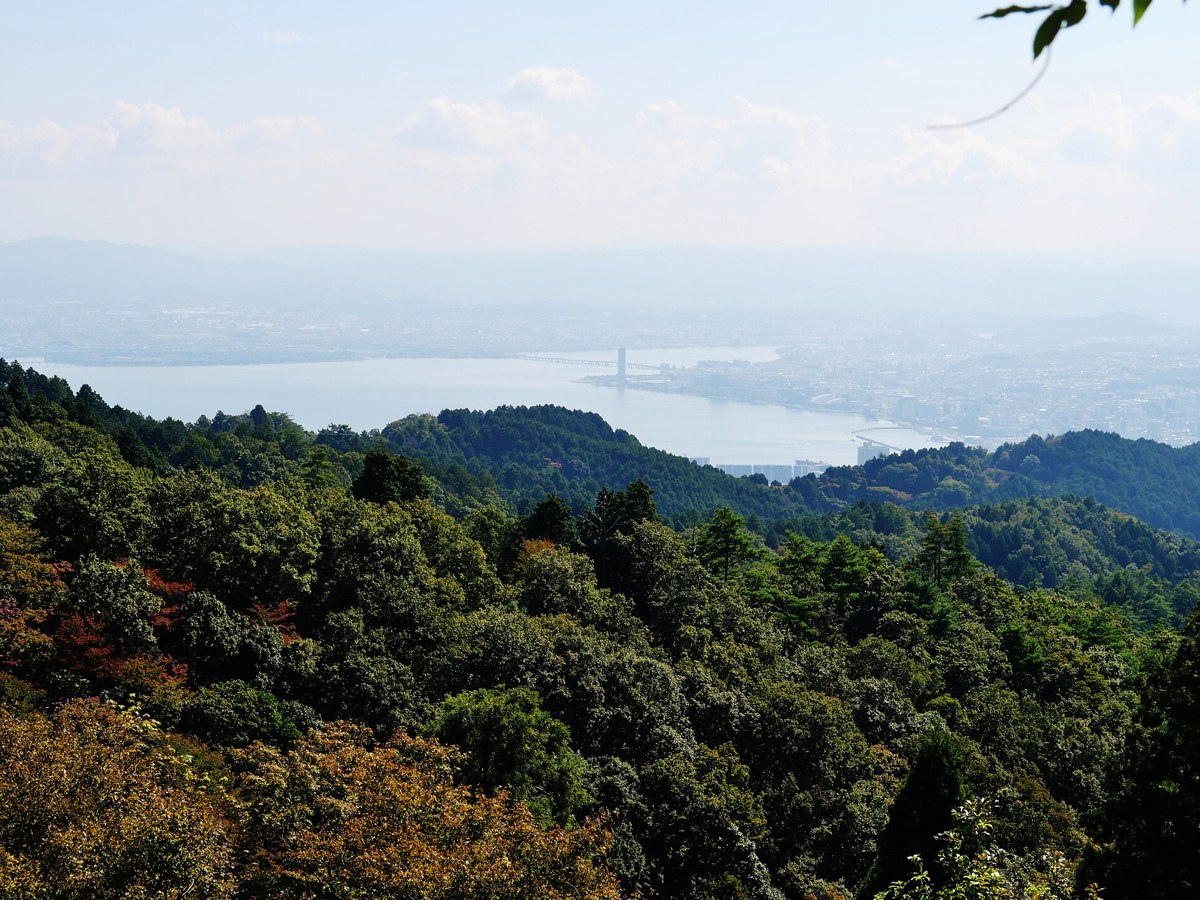
The Japan Tourism Agency's account of funazushi begins with the fish, because the fish is the scope. The dish is made from the round crucian carp — nigorobuna, Carassius auratus grandoculis — 'a species of fish that lives only in Lake Biwa and its connected waterways'. The females, carrying their orange roe, are the prize. A food whose raw material is endemic to a single ancient lake cannot migrate: funazushi is Shiga's by biology before it is Shiga's by tradition.
The tradition is long enough to be the origin of a cuisine. Funazushi, the Agency records, has been served in Omi Province — present-day Shiga — since the Heian period, from 794 to 1185. It is a narezushi, fermented fish, 'the oldest form of sushi': for most of sushi's history, this is what the word meant, and the vinegared nigiri of modern counters is the latecomer. Shiga recognised its own in 1998, designating funazushi-making one of the prefecture's Intangible Folk Cultural Assets.
Salt, rice, and years
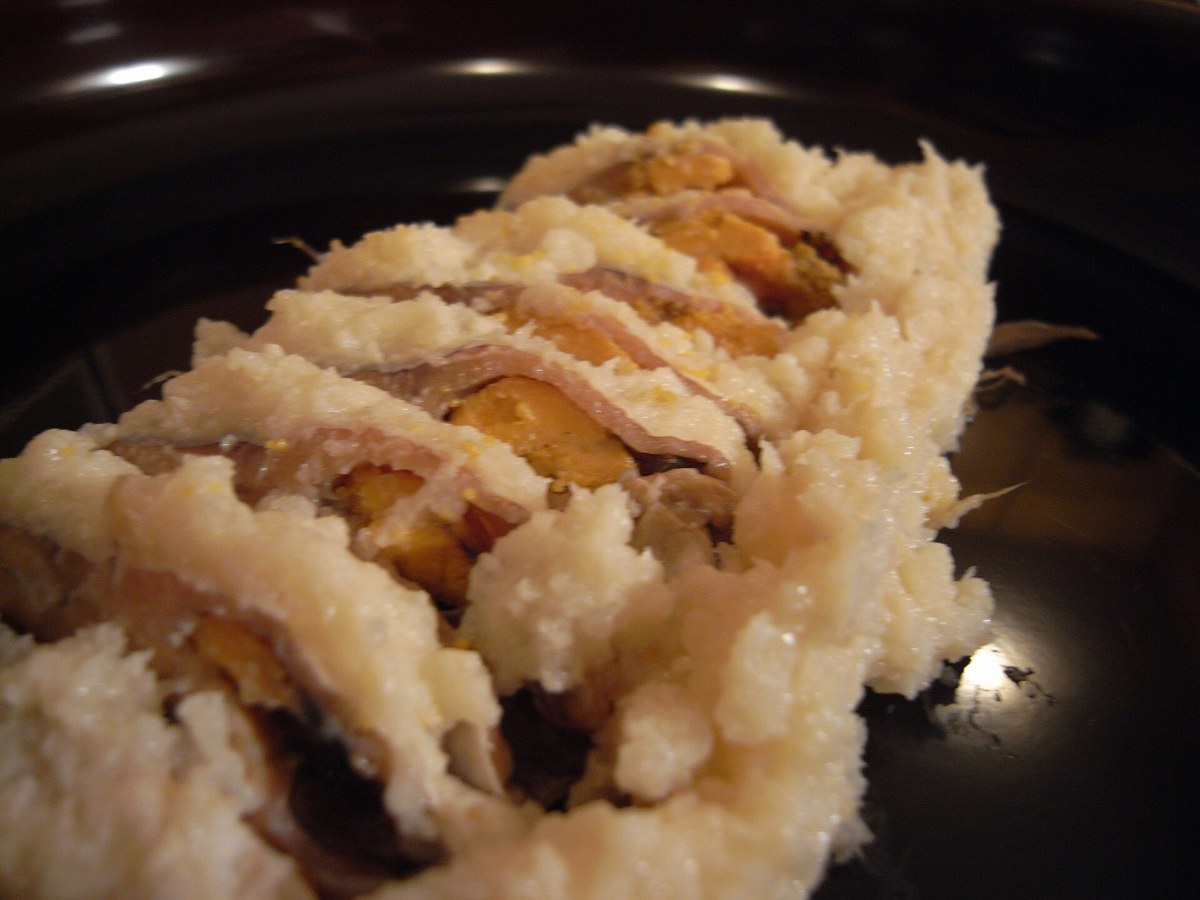
The process the Agency describes has remained unchanged for hundreds of years. The fish are scaled and cleaned but left whole, their bodies and bones intact; they are filled with salt to preserve the meat and aged for a few months. Then the salt is replaced with cooked rice, and the fish are stacked together in large containers of it. Lactic acid bacteria in the rice do the rest — dissolving the bones and fermenting the fish, turning a preservation technique from the days before refrigeration into a cheese-deep flavour no shortcut reproduces.
At the great houses the calendar stretches further. Kitashina of Takashima, founded in 1619 and a funazushi specialist for over four hundred years, salt-cures its roe-carrying nigorobuna for two years, then ferments them a further one to two years in Omi-grown rice in wooden barrels — three to four years from lake to plate. Uoji, an old house of 1784, runs a shorter cure for its Honzuke: three months in salt, then nearly two years in the rice. Either way, the funazushi you eat this winter was swimming when the decade was young.
How it tastes, honestly
The Agency does not protect the newcomer: seeing the entire fish, head included, laid out on a plate 'can be quite surprising', and the sharp, acidic smell is the first thing anyone notices. The fish is served cold, cut into pieces, its body stuffed with its own roe. The taste runs in sequence — a strong vinegar-like tartness first, then the salt, then the subtler flavours of the egg — over a texture gone soft in a way no fresh fish is. Kitashina's signature Iizuke is packed with bright orange roe and has, in the verified directory's words, a bold, cheese-like richness.
The eating is ritual, not challenge. Funazushi is eaten by itself as an accompaniment to sake, the Agency notes, or served over rice with hot water poured over it — a fermented chazuke. The same account makes the comparison every taster eventually makes: the strong flavour pairs with alcohol 'much like blue cheese and wine'. For the cautious, Kitashina keeps a beginner's door open — its Omizo Kanrozuke, the fish re-marinated in sake lees until the funk mellows.
What four years costs
Time is the ingredient, and the price shows it. Kitashina's verified directory entry gives its shop budget as ¥2,000 to ¥7,000 — the range from a first taste to a whole roe-laden fish — at its shop at 1287 Katsuno in Takashima City, about eight minutes on foot from JR Omi-Takashima Station, open 10:00 to 18:00 and closed Thursdays. The products are souvenirs, not a restaurant: nothing is eaten in-store, everything needs refrigeration, and the peak demand runs November to February, when the fish is ordered as a New Year treat.
One caution belongs in the record. The nigorobuna itself is scarcer than it was: reed-bed and spawning-ground losses have thinned the fish, households making funazushi at home have dwindled, and the prefecture now releases young fish and works to conserve the lake's reed communities. A dish designated a cultural asset, made from a fish found in one lake, on a four-year clock: funazushi is the least scalable story in this collection, and very nearly the oldest.
Sources — checked 10 November 2026
- Japan Tourism Agency (MLIT): Funazushi
- GOOD LUCK TRIP verified directory: Souhonke Kitashina-rouho, Takashima
- GOOD LUCK TRIP verified directory: Uoji 'Funazushi Honzuke'
Original prose and official links only; no source text or maker media reproduced. Photos are credited Creative Commons works, not product photographs.
Editorial review 2026-11-10