Torihei’s Joshu Goyo Torimeshi is Gunma’s definitive bento: hot white rice flooded with a secret sweet soy tare, then paved without a gap with thin slices of chicken — breast only in the Take, breast and thigh together in the Matsu. The company that makes it, founded in Maebashi in 1953, sells some four million of its bentos a year, and in Gunma the box is not a souvenir but infrastructure: the food of meetings, sports days and train journeys.
A pavement of chicken
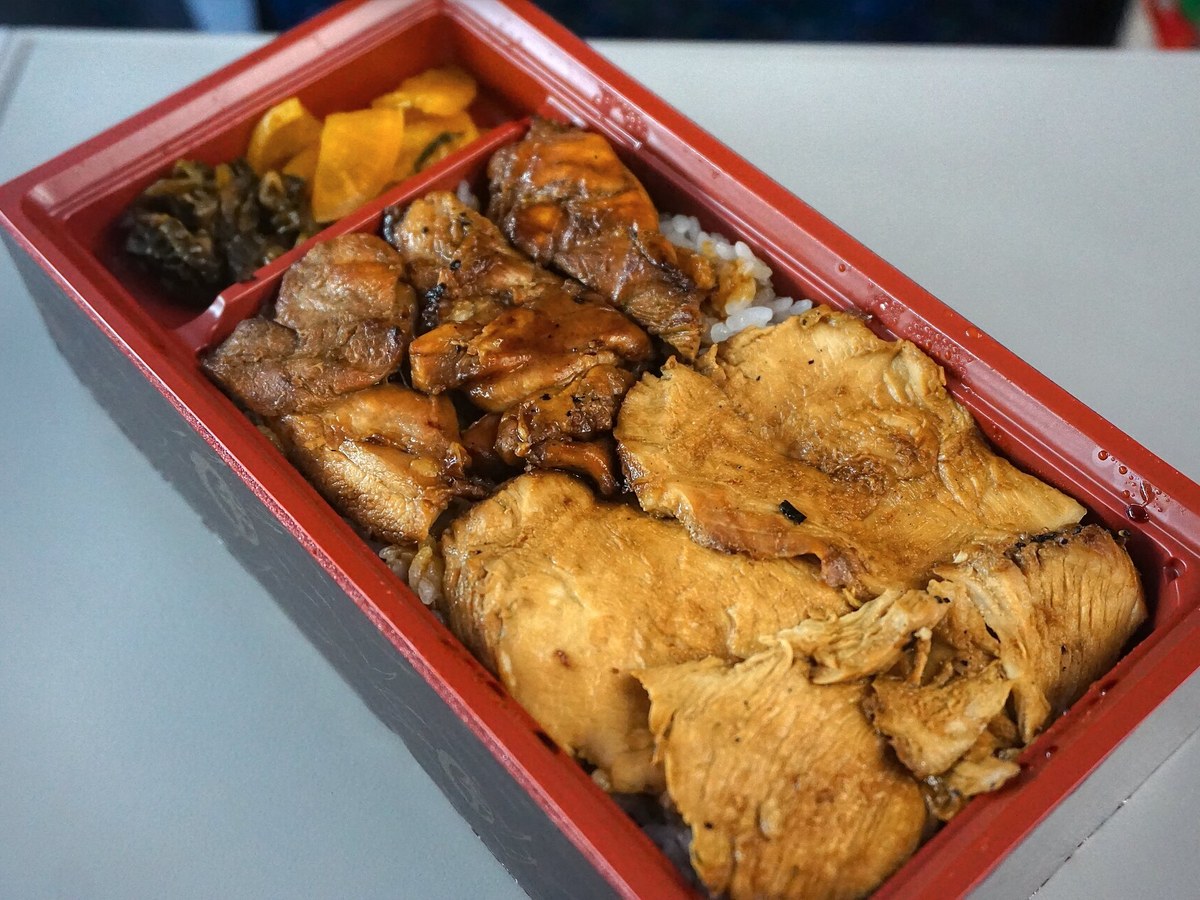
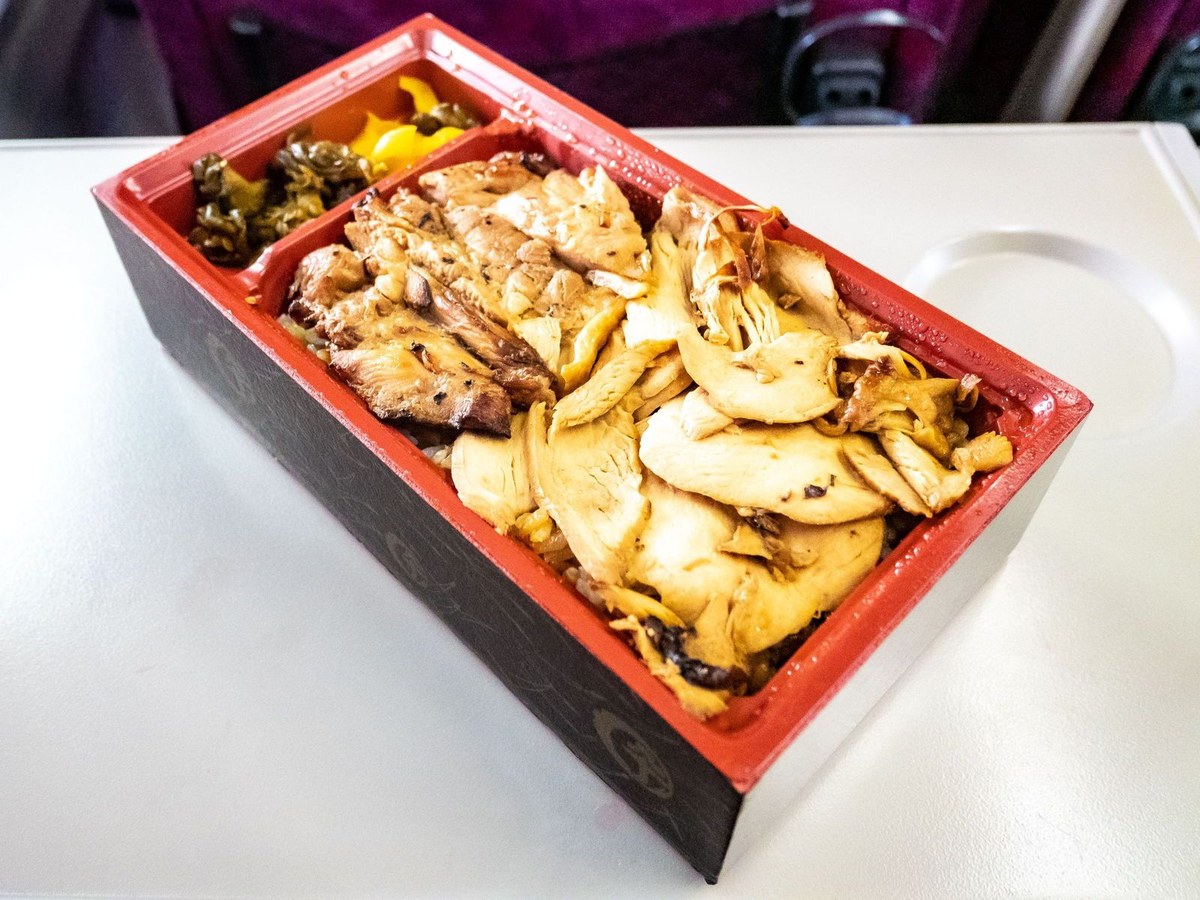
Both photographs show the same red-lacquered box from two journeys: rice you cannot see, because it is covered end to end with chicken. In the Matsu — the first photograph — pale slices of breast meat share the box with darker, grilled thigh; in the second, the standard box rides a train table. The construction underneath is fixed: white rice, a generous pour of the house tare — soy-based, sweet, the same sauce the house uses for unagi no kabayaki — and then the chicken laid over it hot, sliced thin so the sauce reaches everything.
There are two grades and the prefecture has opinions about them. The Take is breast meat only, and it is the best-seller: lean, even, soaked through with tare. The Matsu adds thigh meat beside the breast for those who want the richer cut. Everything else — the Torioi bento, the Joshu bento, the maker’s other boxes — orbits these two.
A Maebashi house since 1953
Torihei was founded in Maebashi in 1953, incorporated as a limited company in 1972 and as a stock company in 1977, and grew from a local kitchen into a central-kitchen operation able to supply ten thousand meals an hour, with some six hundred employees on the record. Its shops cover Gunma — Maebashi, Takasaki, Isesaki, Ota, Kiryu and a dozen more cities — with a small spill into northern Saitama, and its headquarters and order centre stay in Maebashi, where the company began.
The torimeshi went with it. The recipe for the tare is a house secret, replenished and carried forward since the founding, and the bento settled into the prefecture’s calendar: the record describes it, without much exaggeration, as indispensable to local gatherings and school sports days — the box that is simply assumed to be there.
Four million boxes a year
The house’s bentos sell about four million meals a year, and the torimeshi leads them. That volume is the context for the style: this is not a chef’s signature but a prefecture’s staple, engineered to be eaten cold or warm, in a meeting room or a train seat, exactly as good at four in the afternoon as at noon. The thin slicing, the sauce that doubles as a preservative of flavour, the red box — all of it serves the bento’s real job of feeding Gunma away from home.
The company is enough of a prefectural institution to have been dramatised: a fiftieth-anniversary television drama, “Joshu Torihei: the fifty years of the tare keepers”, told the founding family’s story on J:COM and Gunma TV in 2023. Its athletics club, Torihei AC, has sent runners to the Seville and Osaka world championships — the bento company as sporting patron, in the Gunma manner.
Buying the box
The standing order prices, from the Gunma Travel Center’s Torihei order form (April 2025 edition): the Joshu Goyo Torimeshi Take is ¥800 tax included, the Matsu ¥950 — prices that explain the volume. Buy at any Torihei shop across Gunma, at the Takasaki Station outlets (the Commons photographs were taken at the Takasaki Monterey shop and on a train out of the prefecture), or order ahead through the house’s delivery centre for group events.
Eat the Take if you want the prefecture’s own favourite — eight in ten locals, on the travel guides’ telling, point at the cheaper box — and the Matsu if you want the thigh meat’s char against the breast’s softness. Either way, the rule of the box is the tare: open it, and the rice is already seasoned before the first slice of chicken moves.
Sources — checked 14 November 2026
- Torihei — encyclopedia record (the company, the torimeshi, the tare)
- Torihei bento order form — Gunma Travel Center (April 2025 edition)
Checked 14 November 2026 (stored links re-fetched and judged per product): reserved where the page says so, with an editorial review note kept per product. Press, PR and travel use stays outside the grant.
Editorial review 2026-11-14