Some noodles belong to a prefecture. These belong to a street. Below Ikaho Onsen in Gunma, the approach to Mizusawa Kannon Temple has served the same glossy, chewy udon to pilgrims for more than four hundred years — a noodle so rooted in one short road that the road is now named for it. It gives Gunma its third story, beside a lucky daruma and a station lunch cooked in a clay pot.
The noodle of the temple approach
The Gunma prefectural tourist guide introduces Mizusawa udon as one of Japan's three great udon varieties, alongside Sanuki of Kagawa and Inaniwa of Akita — company this collection knows well from the Sanuki side. Its noodles are glossy, with an almost translucent appearance, thick and chewy, made with the pure spring water that flows through the Mizusawa district; the technique of making them is said to have been passed down by the priests of Mizusawa Kannon Temple itself.
The temple explains the street. Mizusawa Kannon, founded around 1,300 years ago, enshrines the Eleven-Faced Kannon and has drawn worshippers for centuries; travellers to the mineral baths of Ikaho Onsen, a short bus ride away, made the same pilgrimage. For over 400 years, the prefectural guide records, restaurants along the approach have served bowls of the noodles to those worshippers — warmth and sustenance on the way to prayer or to the baths. The noodle is the edible souvenir of a journey that was already old when the oldest shop opened.
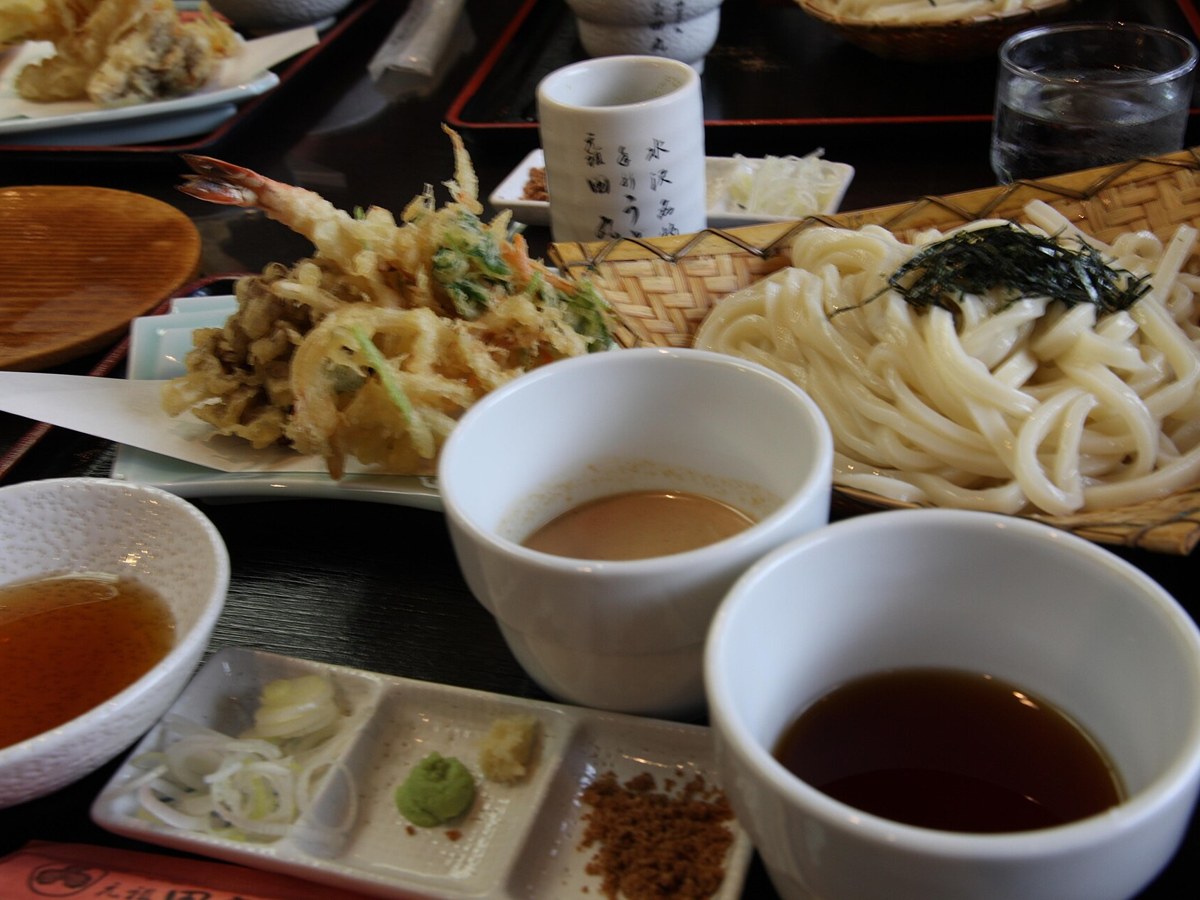
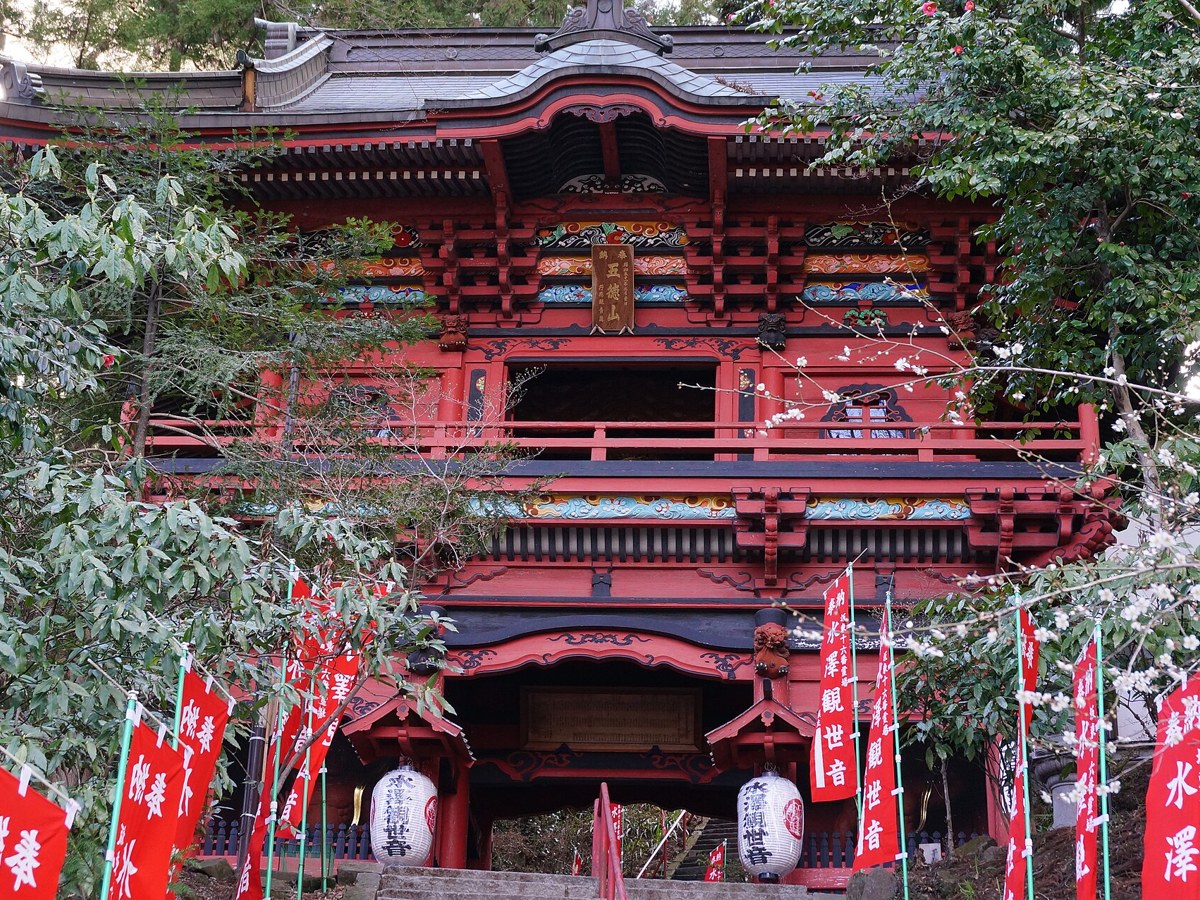
One street, a dozen kettles
The best way to taste it, the guide says, is Mizusawa Udon Street — a stretch near the temple lined with more than a dozen family-run restaurants specialising in the noodles, each with its own style. Some serve the noodles in a delicate broth; others emphasise the dipping sauces, a soy-based tsuyu or a rich sesame blend. Thickness differs from shop to shop, and the comparing is the pleasure the street was built for.
Two shops frame the street's range. Tamaruya traces its roots to 1582: flour, salt and water from the clear Mizusawa stream, a blend of three flours including Gunma-grown Akagi no Kaze, the dough kneaded, rested and cured at about 600 metres of elevation, where the cool air suits the work. Osawaya, the relative newcomer founded in 1970, follows a 27-step process from start to serving, its dough proofed and kneaded over two days from flour and salt alone. Both shops recommend the same first taste: the noodles chilled, as zaru udon, so the wheat's own sweetness arrives undressed.
Zaru first, then the sides
Cold is the connoisseur's order here, and both of the guide's shops argue for it in the same words: chilled udon lets you experience the inherent sweetness and umami of the noodle itself, its firm texture and smooth glide. In winter the street heartens up — Tamaruya's square noodles, Osawaya's thick kamaage served straight from the pot, curry udon on extra-thick noodles. The standard companion is tempura, its crisp lightness against the noodles' chew, and the local speciality inside the tempura is maitake mushroom, grown in Gunma and fried whole and fragrant.
Prices stay pilgrim-friendly. Osawaya's verified directory listing puts its zaru udon — the recommended form — at ¥770, its sesame-soup udon at ¥880 and its maitake mushroom tempura at ¥880, with sides such as miso oden at ¥330. The group runs four shops in Gunma, and the first shop stands at 125-1 Ikahomachimizusawa in Shibukawa, about twenty minutes by bus from Shibukawa Station. Timing matters more than money: most restaurants on the street open around 10:30 and may sell out before closing, so the prefectural guide's advice is to arrive early for lunch.
Take the street home
The street sells its own afterlife. Many of its restaurants — Osawaya, Tamaruya and Manyotei among them, on the prefectural guide's account — sell packs of fresh and semi-dried udon noodles with soup stock, so the Mizusawa taste can be recreated in a home kitchen. The noodle that began as fuel for pilgrims now travels as luggage, four centuries on, in the same direction the pilgrims went: home.
Set it on the collection's noodle shelf and the family is instructive. Sanuki udon built an empire on one prefecture's chew; Togakushi and Izumo made soba into mountain and shrine rituals; Kitakata turned ramen into breakfast. Mizusawa's claim is the oldest and the narrowest: one temple, one spring, one street, four hundred years. In a collection about things that exist in exactly one place, a noodle that never left its road is the purest case of all.
Sources — checked 10 November 2026
- Gunma Official Tourist Guide: Mizusawa Udon — Discover Gunma's Famous Noodles
- GOOD LUCK TRIP directory: Osawaya's First Shop, Mizusawa
Original prose and official links only; no source text or maker media reproduced. Photos are credited Creative Commons works, not product photographs.
Editorial review 2026-11-10