Kagawa already holds Shodoshima's olive oil in this collection. Its second story is bigger than any single product: Sanuki udon, the thick, springy noodle that gave Japan's smallest prefecture its second name — Udon Prefecture. More than 700 shops serve it, a plain bowl costs less than a vending-machine coffee, and eating your way through ten shops in a day is called, without irony, a pilgrimage.
Eight hundred years of chew
Sanuki is Kagawa's old provincial name, and udon has been produced under it for at least 800 years. The beloved origin account credits the monk Kukai — Kobo Daishi, born in Sanuki and founder of the Shikoku Pilgrimage — with bringing noodle technique from Tang China in the Heian period; the checked guides present that story as the popular account, and this page does the same.
What is documented in every bowl is the method: wheat flour, salt and water, the dough kneaded — traditionally by foot — until it yields the firm, elastic bite called koshi. The noodles are cut thick with square edges, and the broth is a light dashi of iriko, dried sardines from the Seto Inland Sea, with soy sauce and mirin — cleaner and paler than Tokyo's darker stocks.
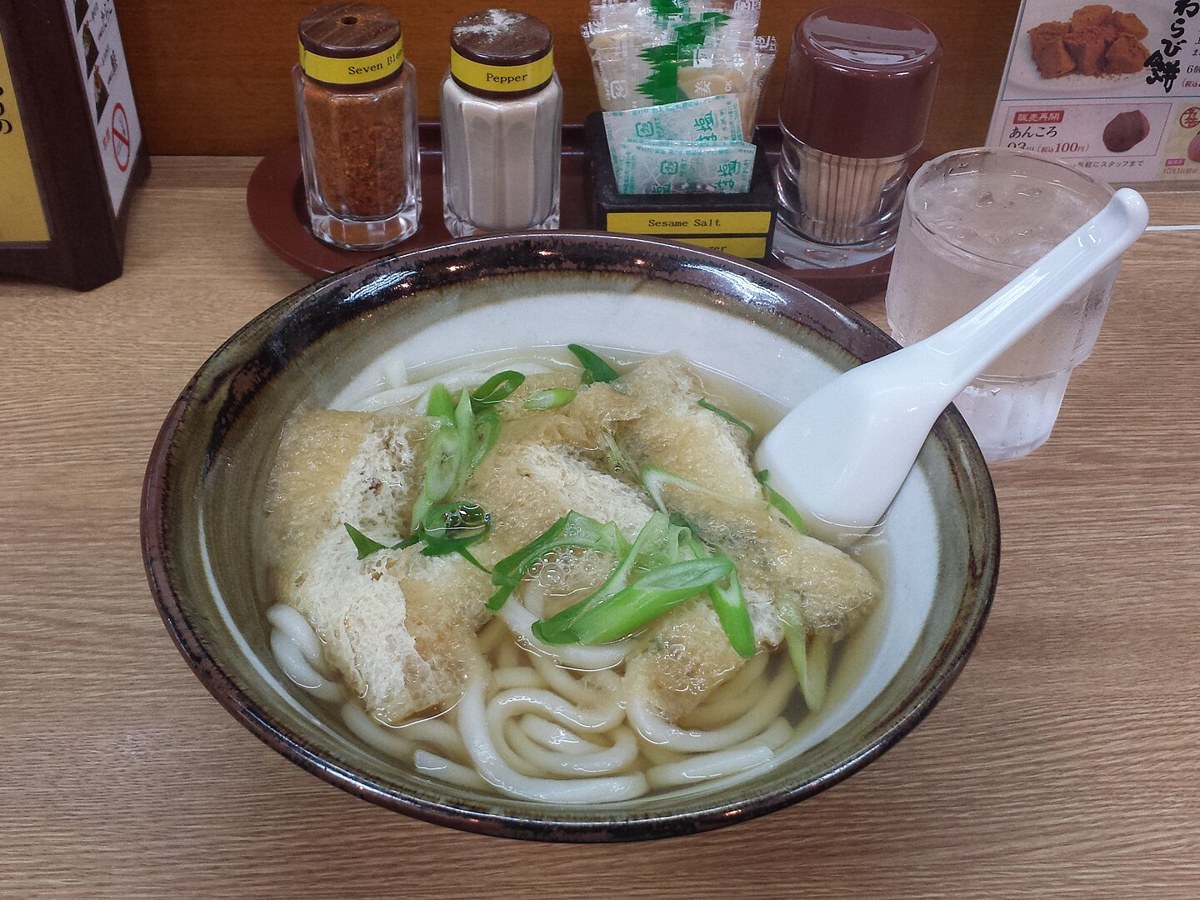
Self-service, three sizes, your own broth
The Kagawa format is half the culture. In a self-service shop you order by size — sho (small, about 200-250 g), nami (medium) or dai (large) — take the noodles on a tray, add broth from the tap yourself, then choose tempura and toppings from the counter and pay at the end. Regulars have a shop for breakfast, and the small size exists precisely so a second shop can follow within the hour.
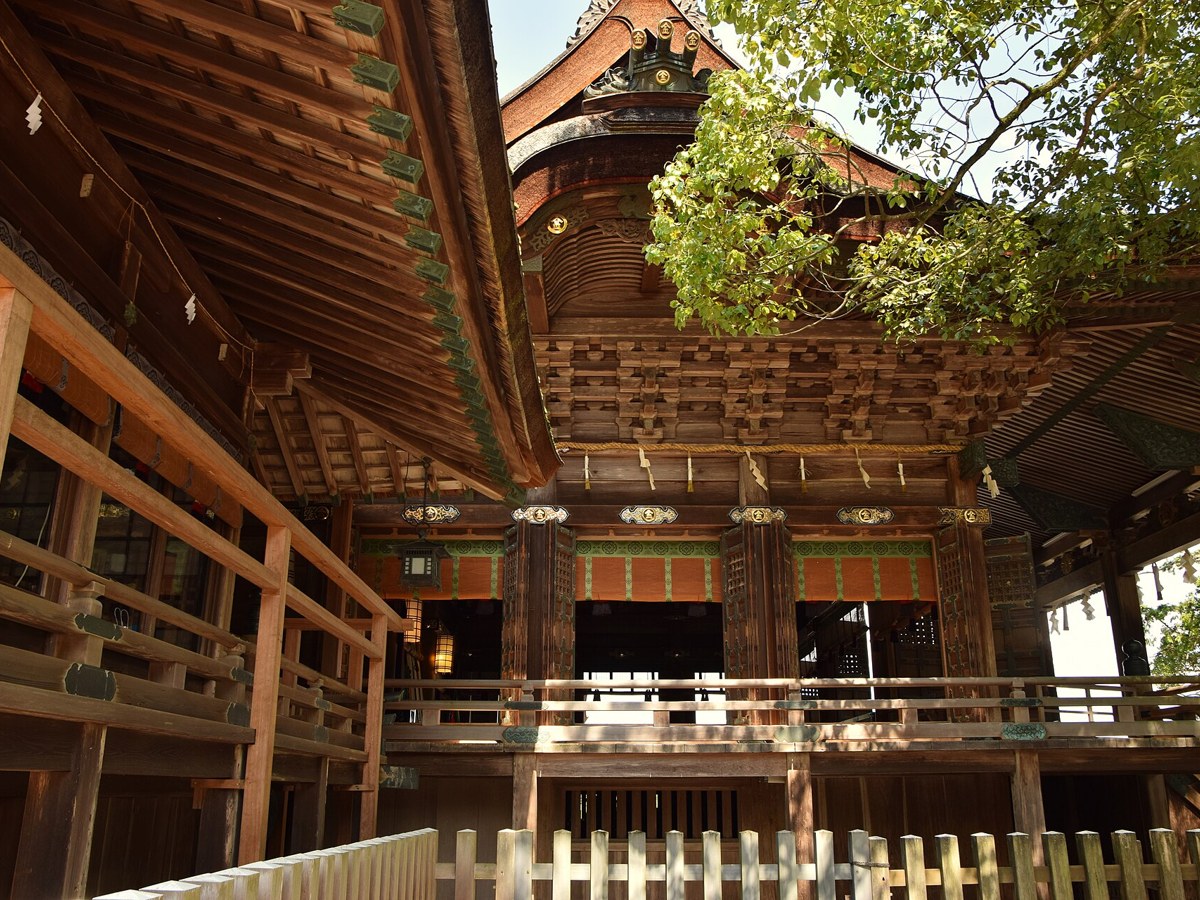
That system built the pilgrimage: from the 1990s, enthusiasts began systematically visiting every udon shop in Kagawa and writing about them, and the multi-shop day became the prefecture's famous food sport. Along the approach to Kotohiragu Shrine in Kotohira — the cradle of udon shop culture in the official tourism account — the counters line the pilgrim road as they have since the Edo period.
Practical details: the cheapest famous bowl in Japan
Prices are the legend's proof. A plain kake bowl — noodles in hot dashi with spring onion — runs about ¥200-300 in Kagawa in the checked guides' comparison, with named examples at ¥250 for a small kake and ¥180 at one tiny, queue-forming shop; a typical bowl with toppings lands between ¥300 and ¥800. Four small bowls across a pilgrimage day budget at roughly ¥800-1,400 before tempura.
To make your own, the Nakano Udon School in Kotohira runs its noodle-making class at ¥1,760 per person, minimum two participants. Go early either way: the best shops open at dawn, close when the dough runs out, and treat lunch as a late sitting.
Why Kagawa, why not everywhere
Sanuki udon is served in every Japanese city now, which makes Kagawa's claim easy to misunderstand. The prefecture's edition is not the noodle — it is the density: hundreds of shops, dawn queues, breakfast bowls, a noodle school by the shrine, and prices held at pocket-change level by a whole local wheat-and-salt economy. Copying the recipe copies the dish; it does not copy the prefecture that eats it three times a day.
Order the kake first, as the guides insist — the plainest bowl is the standard every shop is judged by. If the koshi and the sardine broth convince you at ¥250, the pilgrimage explains itself.
Scope: what 'limited' means here
The claim is place and culture, stated plainly: this page documents Sanuki udon in Kagawa — its shops, format and prices — not a claim that Sanuki-style noodles are unavailable elsewhere. The Kukai story is labelled a popular account, and the 800-year figure is the checked guides' 'at least' figure.
Sources — checked 9 November 2026
- Japan Real Guide: Kagawa udon pilgrimage guide — Sanuki noodles, best shops, how to eat
- Japan Activity: Sanuki udon in Kotohira — a guide to Kagawa's soul food
- HWLIB Taste Lab: A complete guide to Sanuki udon — history and distinctive features
Original prose and official links only; no source text or maker media reproduced. Photos are credited Creative Commons works, not product photographs.
Editorial review 2026-11-09