One town makes four out of every five daruma in Japan. Takasaki, in Gunma, produces over 80% of the country's papier-mâché wish dolls — round, red, hollow, with blank white eyes waiting for a goal. Japan's national tourism board tells the story: a Toyooka-village dollmaker, Yamagata Tomogoro, started the craft two centuries ago, and the town around Shorinzan Daruma-ji temple has been painting faces on luck ever since.
Eighty percent of Japan's luck
The numbers belong to official Japan, which is why this page can print them plainly: JNTO, the national tourism board, states that Takasaki produces over 80% of Japan's daruma; the Foreign Ministry's Web Japan adds about 1.6 million dolls a year made by roughly 100 households. The dolls honour Bodhidharma, the monk who meditated facing a wall for nine years — the round body that always rights itself is the point: fall seven times, rise eight.
The craft began as winter work in a silk-farming district, where households already shaped papier-mâché in the agricultural off-season. Shorinzan Daruma-ji is remembered as the birthplace; dollmaker Yamagata Tomogoro of Toyooka village turned the temple's charm into a trade some 200–220 years ago, and the trade concentrated in the Toyooka and Yawata districts of what is now Takasaki.
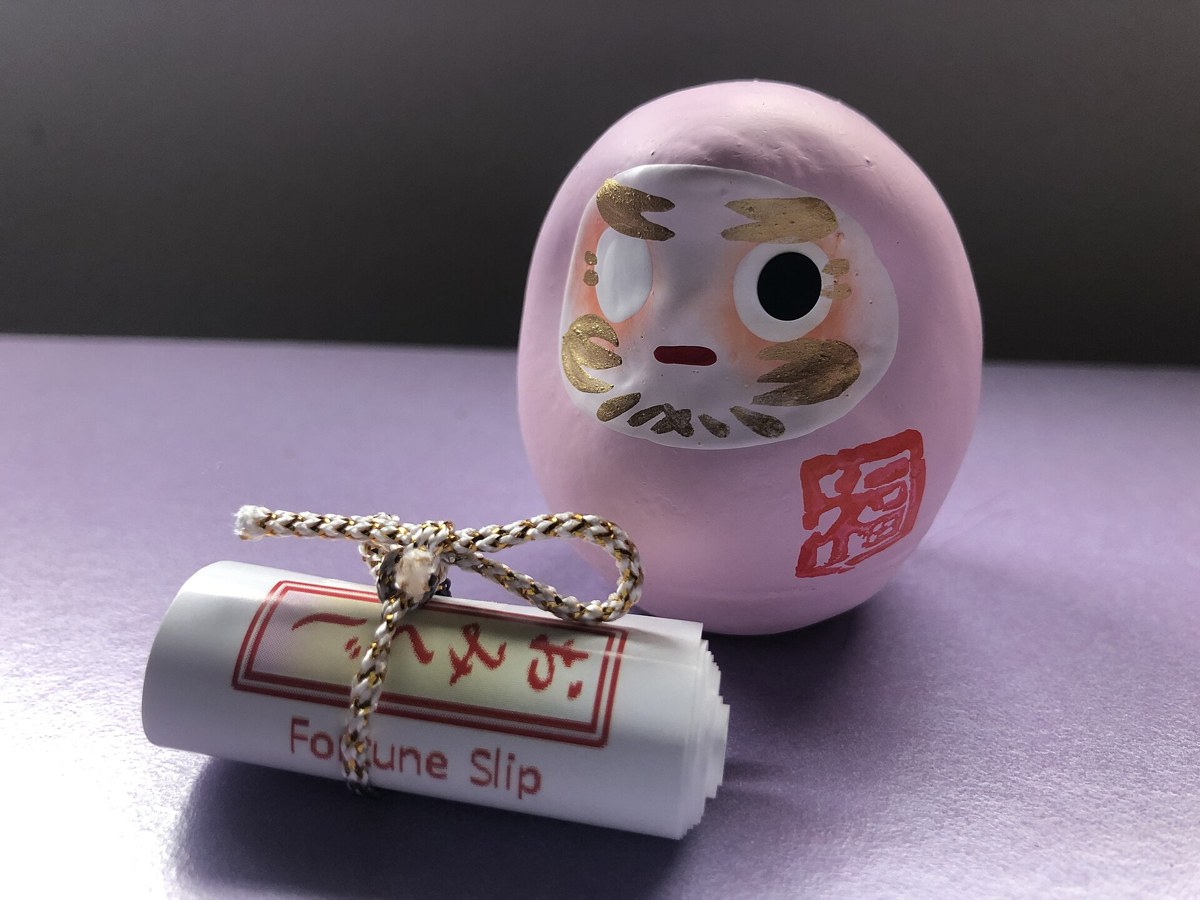
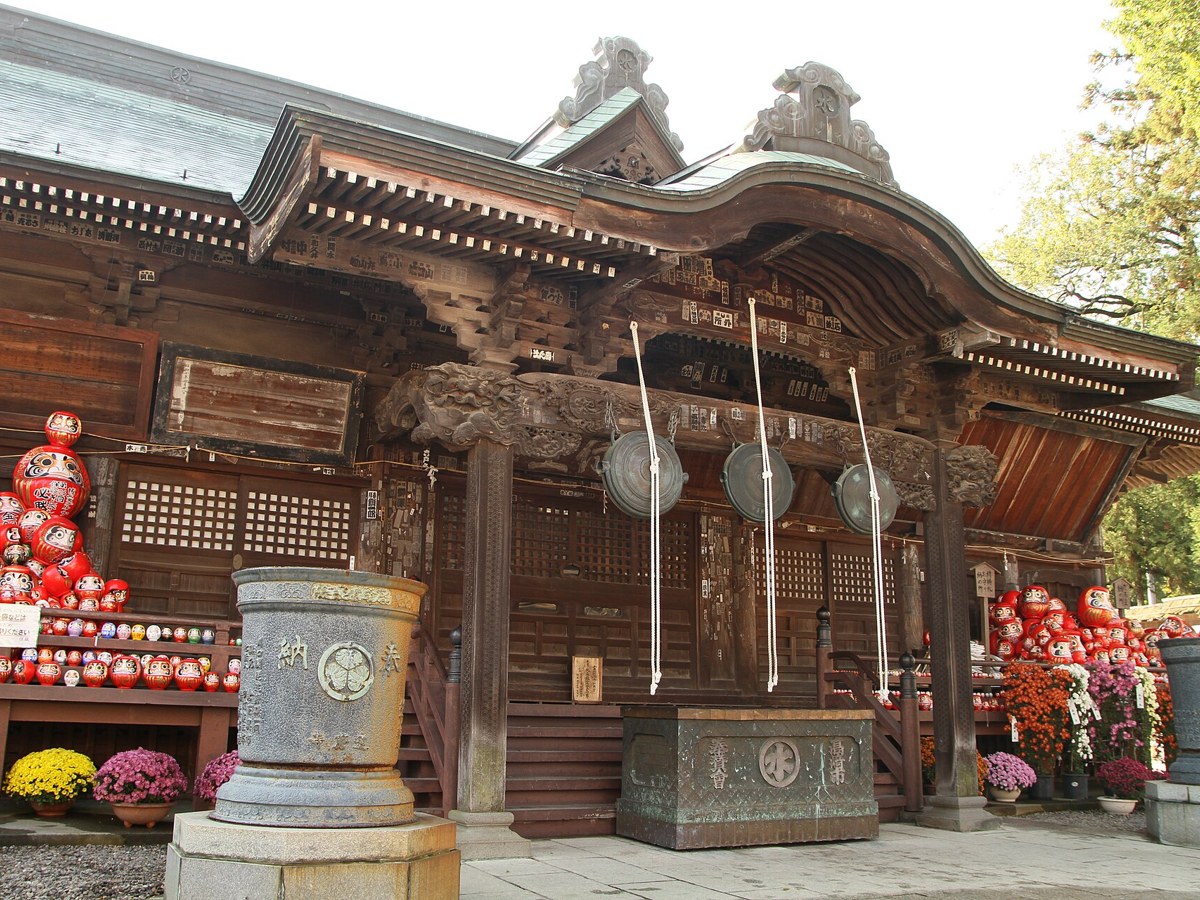
How to read a daruma's face
A daruma is a checklist disguised as a doll. The eyes are sold blank: you paint the left one when you set a goal, the right one when you achieve it — so an unfinished daruma on a shelf is a promise being kept, not a defect. The eyebrows are drawn as cranes and the beard as a turtle, the two animals of longevity; patterns on the body add gold pine, bamboo and plum for resilience. Colour carries meaning too: red for luck and success, others for health, study, safety or love.
And the doll has an ending. After about a year — goal met or not — many owners return their daruma to a temple for otakiage, ceremonial burning, and start again with a fresh face. It is a souvenir designed to be given back, which keeps Takasaki's workshops permanently busy replacing the nation's wishes.
Practical details: prices, sizes, where to buy, online sales
Price: there is no single price, and this page will not invent one — Takasaki daruma are sold by size (a few centimetres to well over half a metre) and by maker, from small charms upward. The one documented hands-on price: at Daimonya, a Takasaki daruma workshop, painting your own costs ¥800 for a 12 cm doll in the workshop's published guide (confirm current prices when booking). The buying season peaks at New Year, when Takasaki's Daruma Festival fills the station-front streets on 1–2 January.
Where to buy: daruma workshops and sellers in Takasaki — makers cluster in the Toyooka/Yawata districts, with Imai Daruma Naya among the established names — plus station and souvenir shops in the city. Official online sales: individual makers sell their own dolls online; there is no single official shop, and Takasaki-made dolls are the claim to check, not the seller's location. Type of edition: regional edition — a place-defined craft with an 80% production share.
Buying luck in the town that makes it
There is a right way to do this, and it is not ordering the biggest red cylinder on a marketplace. Go to Takasaki, pick a colour by meaning rather than décor, choose a size you can look at daily, and paint the first eye somewhere you will remember. If painting matters, Daimonya and other workshops let you draw the face yourself — eyebrows, beard, wish — which turns a mass craft into the only one of its kind.
The town's scale is the reassurance: with 100 households and 1.6 million dolls a year, Takasaki daruma are not 'rare', and this site values them for the opposite reason — a regional craft so dominant that the generic word for the product and the town's name have nearly merged. That is a different, sturdier kind of exclusive.
Scope: what 'limited' means here
Takasaki Daruma are documented as a place craft: over 80% of Japan's daruma production, centred on Takasaki's Toyooka and Yawata districts (JNTO; Web Japan). Daruma sold elsewhere may or may not be Takasaki-made; the maker's town is the check. Checked 2026-11-09. Prices vary by maker and size; the ¥800 figure is a workshop guide price for painting a 12 cm doll.
Sources — checked 9 November 2026
- JNTO (Japan National Tourism Organization): 'Try Your Luck with Takasaki Daruma'
- Web Japan (Ministry of Foreign Affairs): Atlas of Japan — Daruma, Takasaki
- Japan Travel: Takasaki Daruma Dolls Painting Workshop (Daimonya)
Original prose and official links only; no source text or maker media reproduced. Photos are credited Creative Commons works, not product photographs.
Editorial review 2026-11-09