Pick up a Naruko kokeshi and turn its head: it squeaks. That small wooden voice is the signature of the oldest kokeshi lineage, made in the hot-spring town of Naruko Onsen in Miyagi — a limbless, hand-painted doll whose head is fitted into its body with a craftsman's trick. New traditional dolls of about 15 cm start at roughly ¥1,540 bought direct from the maker, and the town keeps a museum of some 5,000 kokeshi to prove the lineage's depth.
The doll that squeaks
Kokeshi are Japan's folk wooden dolls — a rounded head, a simple trunk, no arms or legs, painted faces and floral bodies — and they are not one craft but a family of eleven or twelve regional lineages across the Tohoku mountains, each with its own silhouette and painting grammar. Naruko is considered the oldest of them, the place the form began, and its diagnostic feature is mechanical: the head is turned to fit the body so precisely that twisting it makes a small squeak, the 'crying' joint that collectors test first.
The Naruko look follows from its lathe work: a body with thin ring lines at the waist and shoulders, chrysanthemum or narcissus painted boldly up the trunk, and a face framed by the lineage's characteristic hair lines. Woods vary — dogwood, cherry, maple — and each brings its own weight and grain to what is, at heart, a doll turned from a single piece of the local mountain forest.
An onsen town's souvenir, a nation's collection
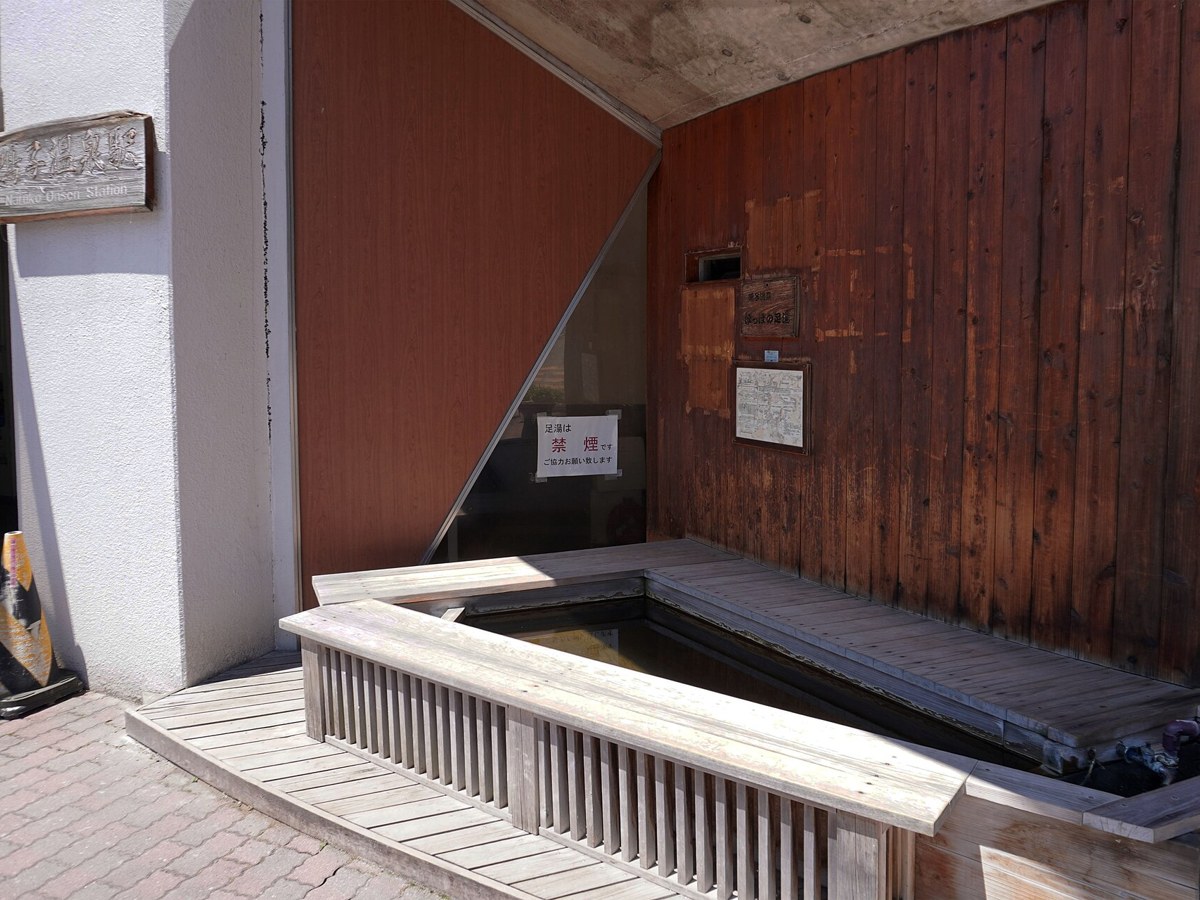
Naruko is first a hot-spring town — one of Miyagi's famous Naruko Onsen villages, where the cure brought visitors for weeks at a time. Wood turners (kijishi) who made bowls and trays for the inns began turning dolls for the guests' children and as keepsakes, and each onsen town's turners developed their own style. In Naruko the style became a school, then an industry, and the town's dolls were designated among Miyagi's five traditional kokeshi lineages under the national Traditional Crafts framework.
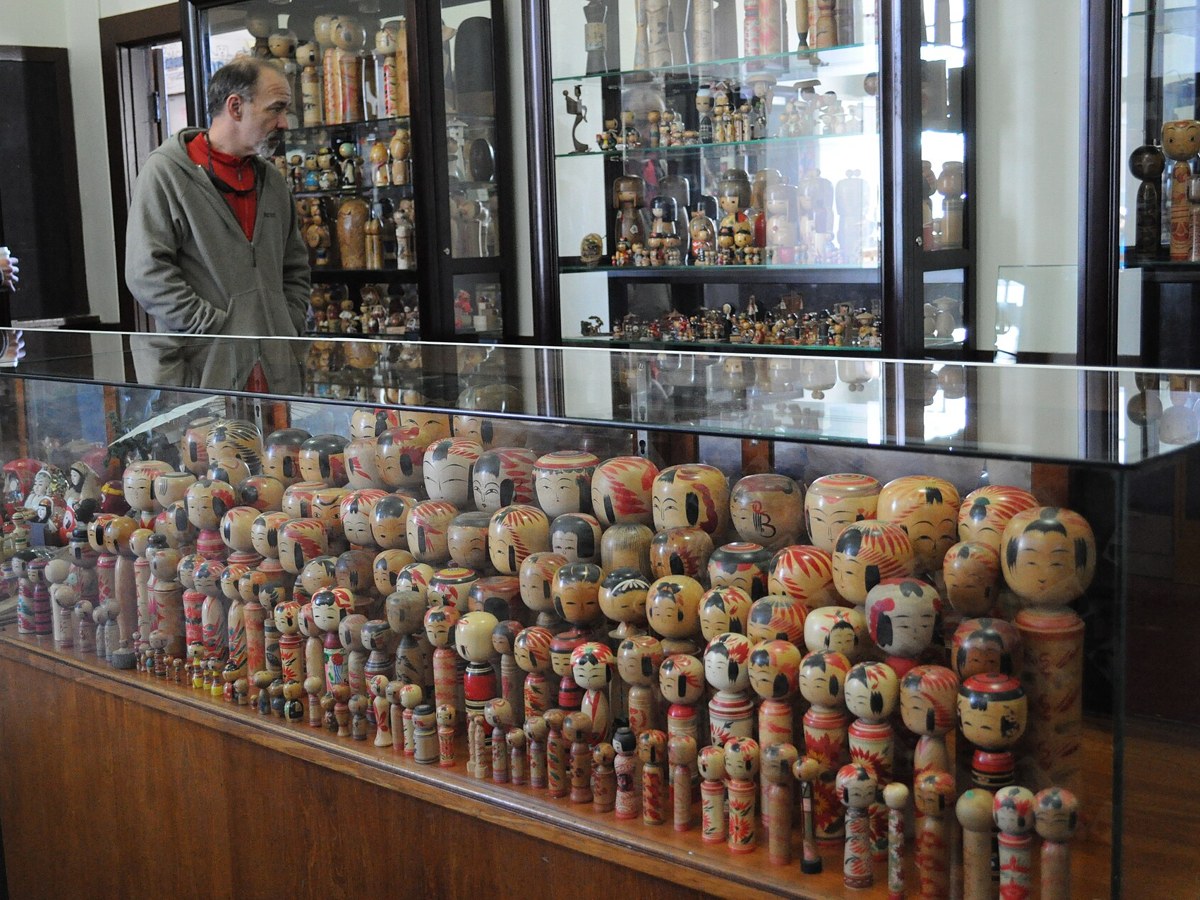
The town keeps the memory institutionally: the Japan Kokeshi Museum, opened in 1975 in Naruko Onsen, displays thousands of dolls from all lineages — about 5,000 by the airline's travel-planner account — alongside workshops where visitors paint their own. Naruko also hosts kokeshi festivals and competitions that keep the turners' pecking order public. Few souvenirs graduate to having their own museum; kokeshi did.
Practical details: prices, sizes, where to buy, online sales
Price (checked 9 November 2026): a maker's guide to buying traditional kokeshi puts a new Naruko doll of about 15 cm from about ¥1,540 when bought direct from the maker; prices rise with size (traditional dolls run roughly 5–30 cm) and with named makers, and painted or festival pieces cost more. Vintage Naruko dolls are a separate, collector market — this page's prices are for new work.
Where to buy: kokeshi makers' workshops and souvenir shops in Naruko Onsen, Osaki City, Miyagi — and the Japan Kokeshi Museum shop in the town, which also offers a doll-painting experience. Official online sales: individual makers sell their own dolls online; there is no single Naruko shop, so the check is the maker and the lineage. Type of edition: regional edition — the Naruko lineage of a Tohoku craft family.
Collecting a lineage, not a shape
The beginner's mistake is buying 'a kokeshi'. The craft's pleasure is comparative: a Naruko doll beside a Sendai-lineage or a Tsugaru-lineage doll shows three towns' ideas of a face, and Naruko's squeaking neck is the party trick that makes the difference physical. Start in Naruko itself, turn a few heads in the museum shop, and buy the one whose painting you keep returning to — the traditional price (about ¥1,540 for 15 cm) is deliberately reachable, because these began as dolls, not as investments.
Handle the claim the way collectors do: 'Naruko' names where and by whom it was turned, and honest makers mark their work. A doll bought in Naruko from its maker is the documented thing; the same silhouette in a distant antique shop is a research project, and priced like one.
Scope: what 'limited' means here
This page covers Naruko kokeshi: dolls of the Naruko lineage made in Naruko Onsen, Miyagi, one of the nationally designated Miyagi kokeshi lineages and regarded as the form's oldest production area. Other lineages are different products. Checked 2026-11-09. Prices vary by maker and size.
Sources — checked 9 November 2026
- OneMall Magazine: Kokeshi dolls buying guide (updated 2026-10-27)
- GOOD LUCK TRIP directory (maker-confirmed): Japan Kokeshi Museum, Naruko
- ANA Japan Travel Planner: Japanese Kokeshi Doll Museum (Naruko)
Original prose and official links only; no source text or maker media reproduced. Photos are credited Creative Commons works, not product photographs.
Editorial review 2026-11-09