Most ekiben are boxes. This one is a pot — a rough, unglazed clay pot of seasoned rice and chicken that you eat on the train and then, in kitchen after kitchen across Japan, keep for the rest of your life as a planter, a pen pot, a weight. Oginoya's Toge no Kamameshi has been sold at Yokokawa Station in Gunma since the late 1950s, and it remains the ekiben by which all others are judged. A standard pot costs about ¥1,080 to ¥1,200.
An inn, a new station, and a slow pass
Oginoya began as an inn beside the Kirizumi hot springs, on the road over the Usui Pass. When Yokokawa Station opened in 1885, the innkeeper read the future correctly, moved down to the town and opened a kiosk at the station. For seventy years the business fed railway travellers in the ordinary ways — until the pass itself suggested something better.
The climb over Usui was the slow, hard leg of the journey between the Kanto plain and Nagano, and passengers faced it hungry. In 1957 Oginoya created the Toge no Kamameshi — kettle rice of the mountain pass — a warm, substantial meal designed for exactly that leg. Some accounts date its launch to 1958; either way, it became one of the most iconic station bentos of all time.
What's in the pot — and why the pot matters
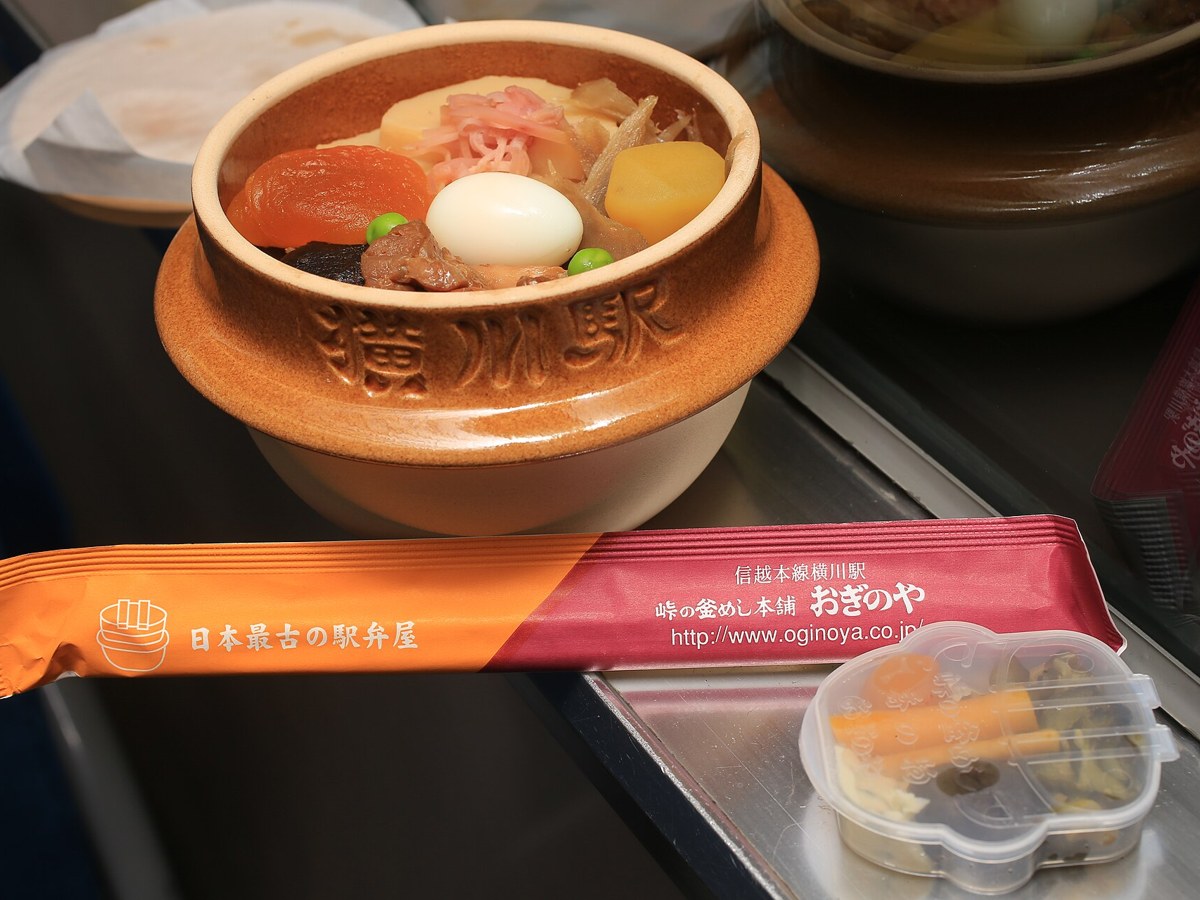
Kamameshi means rice cooked in a kama, a pot, and Oginoya's version lays chicken, a quail egg, shiitake mushroom, bamboo shoot, burdock root, green peas, a chestnut, pickled ginger and a dried apricot over rice cooked in a soy-sauce-based seasoning. The arrangement is so fixed that regulars can read a pot at a glance — anything missing would be noticed, and written about.
The vessel is half the invention. Instead of the iron kama of tradition, Oginoya chose an unglazed Mashiko-ware clay pot: rustic, light enough to sell, and far too useful to throw away. Kept pots colonise Japanese homes as planters and kitchen weights, and Oginoya takes the circle seriously — old pots donated back are repurposed, most notably recycled into local paving.
Practical details: prices and where to buy
A standard chicken kamameshi runs about ¥1,080–1,200, with the budget band of ¥900–1,100 quoted for Yokokawa service area and Takasaki Station sales. The most reliable hot shelf for drivers is the Yokokawa service area on the Joshinetsu Expressway, typically selling from around 8:00 to 19:00, hours varying by outlet.
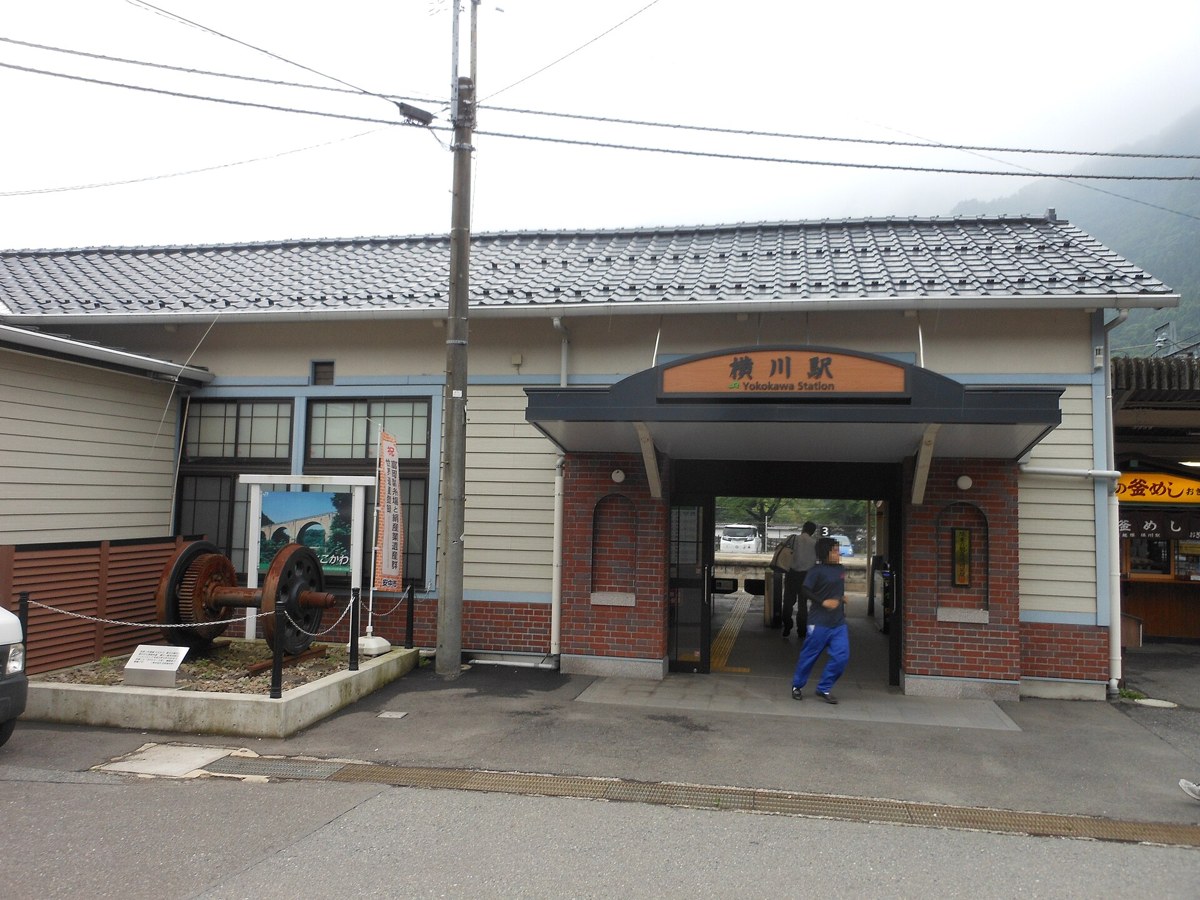
At Yokokawa itself, buy at the old station site by the Usui Pass Railway Heritage Park; Oginoya also sells through expressway service areas on the Kan-etsu and Joshinetsu routes and department stores around Tokyo and Gunma. The maker periodically issues special-colour pots and collaboration versions — the rice inside is the regular kamameshi unless stated, so you are collecting the pot, not a new recipe.
The ekiben that became furniture
Every famous ekiben has a flavour; this one has an afterlife. The Mashiko pot turned a disposable lunch into a permanent object, and the object became the advertising: a kamameshi pot on a kitchen shelf in Osaka or Fukuoka is a small monument to a Gunma mountain pass most of its owners crossed once, half asleep, in 1974.
That is also why the recipe barely dares to change. Nine toppings, one seasoning, one pot — the product is a memory standard, and Oginoya's seasonal energy goes into the pot's colour and the hanging paper instead. Eat it warm on the pass if you can; eat it anywhere, and keep the pot either way.
Scope: what 'limited' means here
The edition is a maker's product with a home ground, stated plainly: Oginoya sells beyond Yokokawa today, and this page does not claim otherwise. What is documented is the original — the pass, the station, the pot — and the standard chicken version at its home prices. Collaboration pots are the same meal in a different vessel, and are described as such.
Sources — checked 9 November 2026
- Japan Trove: Kamameshi — Japan's clay-pot rice ekiben and the stations famous for it
- Atlas Obscura: Oginoya's kettle rice pottery, Annaka
- Oginoya (maker): products & menu information
Original prose and official links only; no source text or maker media reproduced. Photos are credited Creative Commons works, not product photographs.
Editorial review 2026-11-09