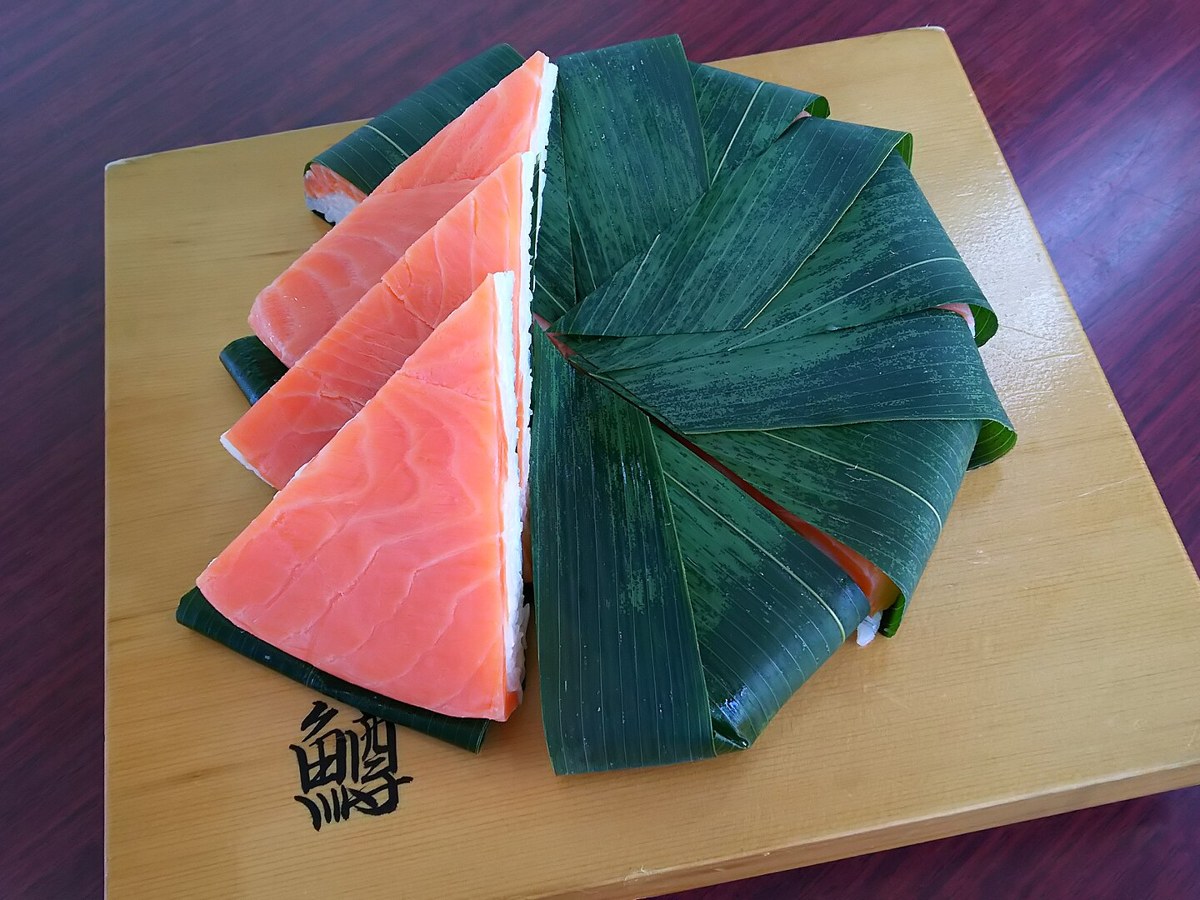
Japan's most beautiful packed lunch comes in a round wooden box, sealed with two bamboo sticks, and is cut like a cake. Masuzushi — Toyama's pressed sushi of vinegar-cured cherry salmon laid over vinegared rice on a bed of bamboo leaves — was created, by the accepted account, in 1717 for the lord of Toyama and praised by the shogun himself. It became the Hokuriku line's defining ekiben, and a single tier from Toyama's old houses costs ¥2,000.
1717: a samurai, a lord and a shogun
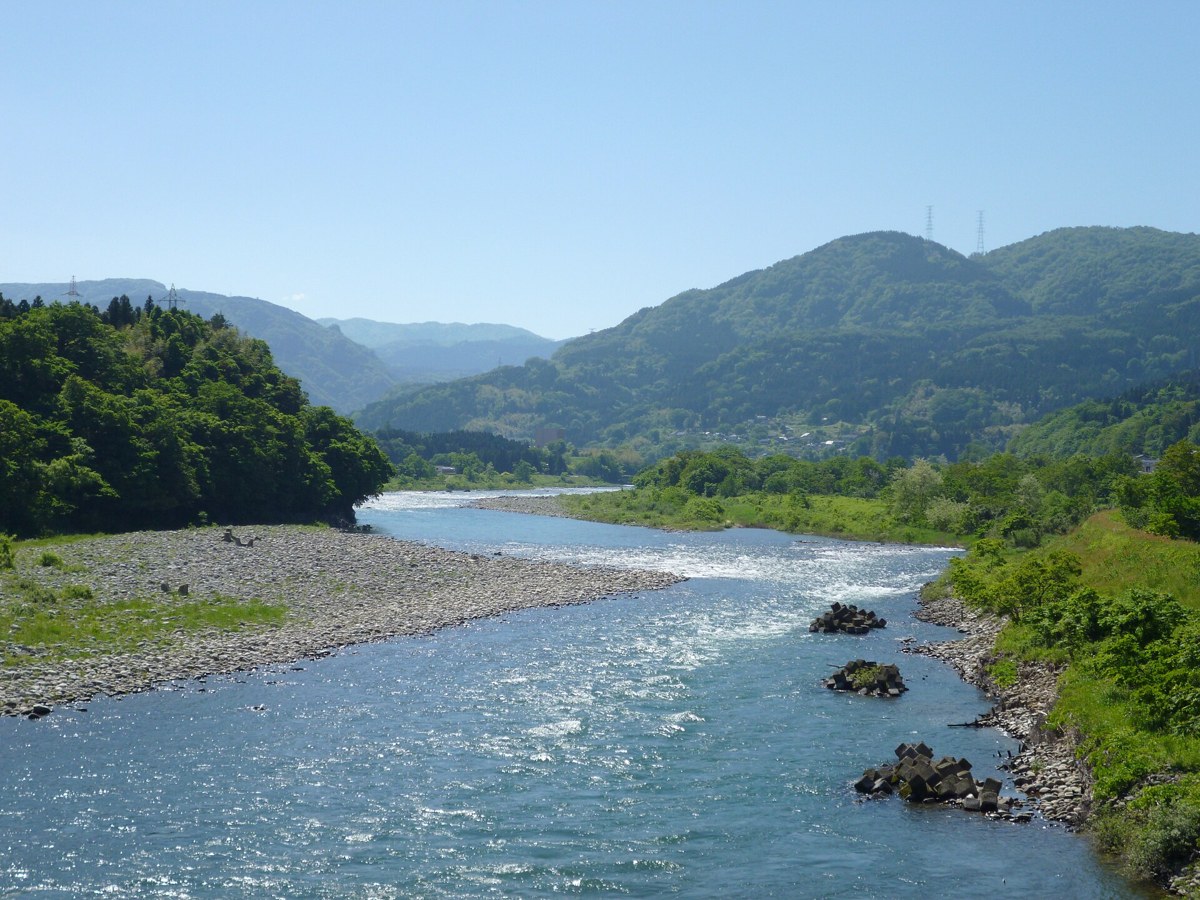
The Ministry of Agriculture's traditional-foods record tells the founding story plainly. In 1717 the Toyama-domain samurai Yoshimura Shinpachi prepared a pressed sushi of ayu sweetfish from the Jinzu River with Toyama rice and offered it to Maeda Toshioki, the domain's third lord; it was then presented to Tokugawa Yoshimune, the shogun — a man known for his palate — and made a strong impression.
Over time the spring cherry salmon that runs up the Jinzu replaced the ayu, and the modern form — salted, vinegar-cured trout pressed on rice in the bentwood box — settled between the end of the Edo period and early Meiji. When the Hokuriku railway opened in the Taisho era, the box went on sale as a station bento, and Toyama's specialty became a travelling one.
Pressed, leaf-lined, and better on day two
The making is a small architecture: bamboo leaves are laid radially in the round mage-wappa box, vinegared rice is spread over them, thin slices of cured trout are arranged on top, the leaves are folded over, and the lid is pressed and pinned with bamboo sticks. The pressing marries fish and rice into a single firm disc that slices cleanly — which is why the box includes a plastic knife and is eaten in wedges, like a cake.
It keeps three to four days, even in summer, and the makers say the flavour is richest on the second day, as the cure settles into the rice. There are single-layer and double-layer boxes, and more than thirty producers in Toyama City alone, each guarding its own balance of salt, vinegar and sweetness — the tasting map the local cooperative publishes exists because no two houses taste alike.
Practical details: prices, where to buy, the museum
Prices (checked 2026-11-09): at Kawakami Masuzushi, founded 1923, the one-tier trout sushi is ¥2,000; Chitose's single layer is likewise ¥2,000. The famous maker Minamoto even sells its masuzushi from a vending machine at ¥1,500 (reported 2022) — fresh boxes, restocked daily, two-day life. The Masu-no-Sushi Museum in Toyama City is free to enter, and its hands-on masuzushi-making experience costs ¥2,000.
Where to buy: Toyama's specialist shops first, then JR Toyama Station's ekiben counters, and station and department-store souvenir floors along the Hokuriku line and beyond. Official online sales: the larger makers ship chilled boxes. Type of edition: regional edition — Toyama's pressed sushi in its home form, sold as an ekiben since the Taisho era.
Buy two boxes, eat them on different days
Masuzushi rewards the patient traveller twice: once on the train, cut into wedges as the Hokuriku line runs under the Tateyama foothills, and again the next day, when the second box has matured into the richer flavour the makers promise. Few souvenirs improve in the fridge; this one is designed to.
For a first box, buy a single tier from one of the old Toyama houses — Kawakami or Chitose — and taste the house style neat. Then you have a benchmark, and Toyama's thirty makers become a collection to work through rather than a shelf to guess at.
Scope: what 'limited' means here
Masuzushi is documented as Toyama's pressed trout sushi — its 1717 Toyama origin account, its bentwood-box form and its ekiben history — as recorded by MAFF and the Toyama makers. Nationwide souvenir sales are stated. Checked 2026-11-09.
Sources — checked 9 November 2026
- MAFF Traditional Foods in Japan: Masu-zushi (trout sushi wrapped in leaves), Toyama
- Toyama City Tourism Association: Kawakami Masuzushi Shop — trout sushi 1 tier ¥2,000, founded 1923
- Umami Information Center: Masuzushi — local cuisine of Toyama
- SoraNews24: Eating sushi from a vending machine — Toyama's masuzushi (Minamoto, ¥1,500)
Original prose and official links only; no source text or maker media reproduced. Photos are credited Creative Commons works, not product photographs.
Editorial review 2026-11-09