Torichuka is the ramen a soba shop invented by accident of employment: Chinese noodles lowered into the soba shop’s own wa-fu dashi, with chicken, tenkasu and nori on top. It began as the staff meal at an 1861 soba house in Tendo, leaked to the onsen drinkers as an off-menu whisper, and ended up Yamagata’s beloved hybrid — a bowl that is neither ramen nor soba and entirely itself.
The staff meal that escaped
Every torichuka road leads to one kitchen: Teuchi Suisha Nama Soba in Tendo, a soba house founded in 1861 — the first year of Bunkyu — beside the Tendo onsen town. On the record, the dish began there as makanai, the staff meal: the kitchen fed itself by putting Chinese noodles into the soup it already had, the wa-fu dashi of a working soba shop, and topping the bowl the soba way.
A staff meal in an onsen town does not stay secret. The women serving drinks in the neighbouring hot-spring inns heard of it and asked; the bowl went out the back door as an ura-menu, an off-menu favour for those who knew to ask, and only afterwards was it written onto the menu in daylight — by which time the prefecture had adopted it. The record adds the competitive footnote: the dish has placed as high as sixth in a national B-grade gourmet contest.
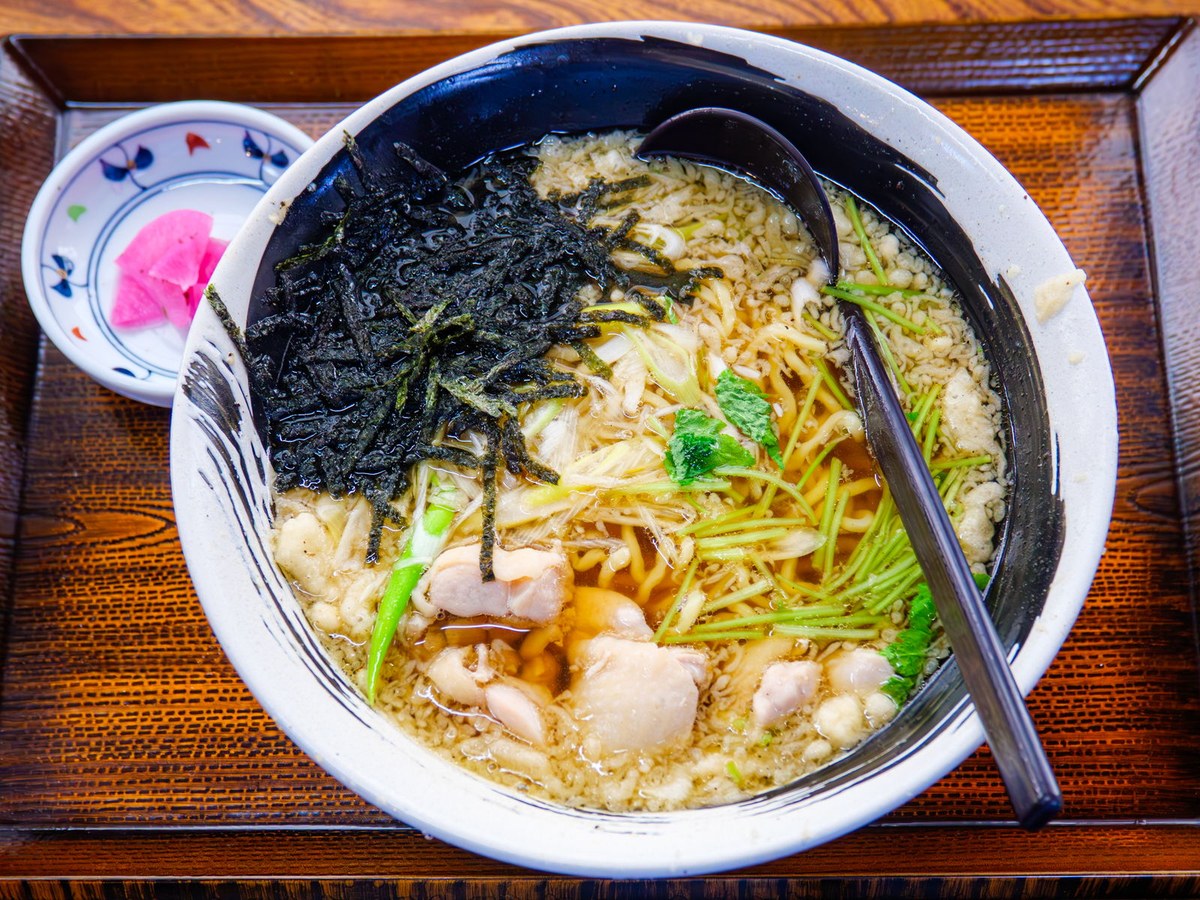
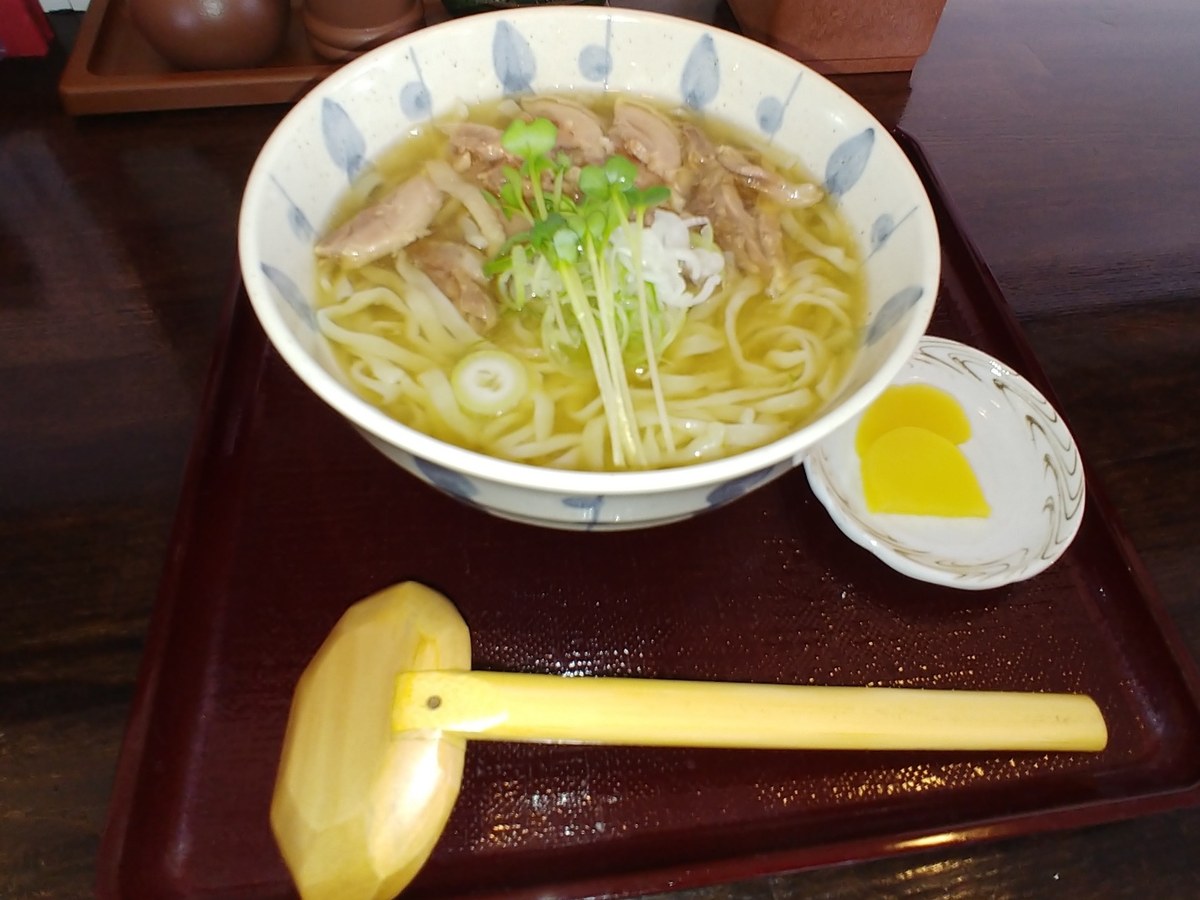
Soba soup, ramen noodles, no apology
The construction is the whole idea, and it is stated without ornament: a soup of wa-fu dashi — the bonito-led broth a soba shop builds for its soba — carrying ramen’s Chinese noodles, topped with chicken, tenkasu and nori. Nothing in the bowl is borrowed from ramen except the noodle itself; the broth, the toppings and the hand that makes it are a soba shop’s.
That is why the flavour sits where it does: lighter than a ramen-ya’s bowl, deeper than a bowl of soba, with the tenkasu melting its oil into the dashi and the chicken keeping it a meal. Soba shops across Yamagata serve their own torichuka now — the dish belongs to the trade that invented it, not to one menu — but the grammar never changes: soba soup first, noodle second.
From back door to cup noodle
The surest measure of a local dish is what industry does with it. Torichuka has been productised thoroughly: Miura Foods, a Yamagata noodle maker, sells it as bag noodles — “Yamagata soba-ya no chuka Torichuka, wa-fu soba-tsuyu flavour” — and the cup-noodle makers arrived in a procession: Yamadai’s New Touch in 2019, Sanyo and Acecook in 2022, Toyo Suisan’s Maruchan in 2024, and a Sanyo CupStar edition supervised by Miura Foods in 2026.
None of that displaces the original. The cups travel; the bowl stays in Tendo, in a hand-made soba house that mills its own flour with a waterwheel and stone mill — the same kitchen discipline that produced, as a by-product of feeding its own staff, the prefecture’s favourite ramen.
Eating it at the 1861 house
Order it where it was invented. On the published menu record read for this story, Suisha Nama Soba crowns exactly two dishes with its “Ganso” (originator) title — the ita soba at ¥1,800 and the Ganso Torichuka at ¥980 — and the torichuka is the one the queues discuss. The house is Tendo’s most-reviewed soba address by a wide margin and pours until late by local standards.
Eat it as the onsen drinkers first got it: hot, unadorned, and without deciding whether it is ramen or soba. It is the staff meal of a great soba house, and after a century and a half the staff clearly knew what they were doing.
Sources — checked 14 November 2026
- Torichuka — encyclopedia record (Suisha Nama Soba, the staff meal, the products)
- Tendo soba record — Suisha Nama Soba menu (Ganso Torichuka)
Checked 14 November 2026 (stored links re-fetched and judged per product): reserved where the page says so, with an editorial review note kept per product. Press, PR and travel use stays outside the grant.
Editorial review 2026-11-14