Some dishes are cooked. Imoni is convened. Every autumn in Yamagata, groups of friends, colleagues and whole school classes carry a pot, a burner and sacks of taro down to the riverbank, and simmer the prefecture's stew in the open air: satoimo taro, torn konnyaku, long onions and beef in a broth of soy sauce, sake and sugar, sweet and dark. The party is called an imonikai, the tradition is reckoned at more than three hundred years old, and once a year Yamagata City scales it to absurdity — a cauldron more than six metres across, an excavator for a ladle, and 30,000 servings in a day.
Taro first, everything else after
The name is the recipe: imo, the taro, and ni, simmering. Satoimo is the non-negotiable centre — denser and stickier than potato, it thickens the broth as it softens and turns the pot silky. Around it the standard inland set is fixed: beef, hand-torn konnyaku that drinks the seasoning, long onions, and a broth built on soy sauce sweetened with sugar and sake until it sits somewhere between a soup and a light sukiyaki. Mushrooms join in mushroom country; the pot is finished, in many groups, by stirring udon noodles — or even curry roux — into the leftover broth for a second course.
What the pot is not is uniform. Travel west to the Shonai coast, around Tsuruoka and Sakata, and the same name covers a different stew: miso-based, with pork instead of beef, and fried tofu among the additions. The Okitama district in the south puts Yonezawa beef in a soy pot touched with miso; the Mogami north cooks soy and pork with plenty of mushrooms. Yamagata argues about imoni the way other prefectures argue about ramen — by district, with feeling — and the argument itself is the proof of ownership.
Boatmen on the Mogami
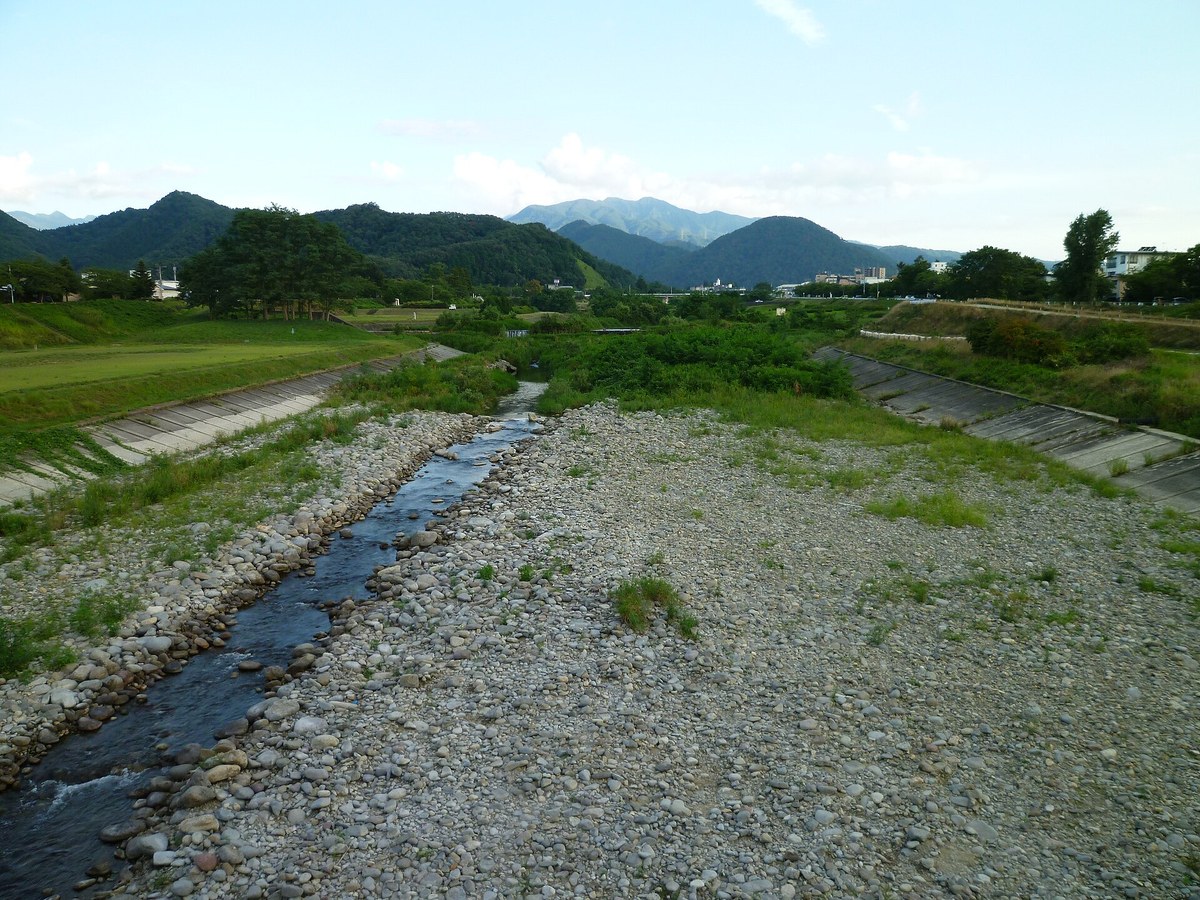
The Japan Tourism Agency's account puts the dish's roots in the Edo period, on the banks of the Mogami River. The Mogami was Yamagata's trade artery, carrying goods down to the port of Sakata and up from the Kamigata — the Kyoto-Osaka world. The boatmen who worked it, the record says, boiled local taro together with dried codfish on the riverbank: cargo food, cooked where the boats stopped. Over the centuries the cod gave way to meat — beef in the inland towns from the early Showa era on the local accounts — and the boatmen's bankside pot became the whole prefecture's autumn gathering.
The gathering is the dish's real form. Imonikai run from September through November, when the taro harvest lands: supermarkets and hardware stores rent out the big pots and burners, groups book their patch of riverbank, and the cooking is the social event itself, done slowly around one vessel. The Food in Japan record puts the tradition at more than three hundred years — older than the beef, older than the festival, and still the way most Yamagata people actually eat imoni.
Thirty thousand servings, one excavator
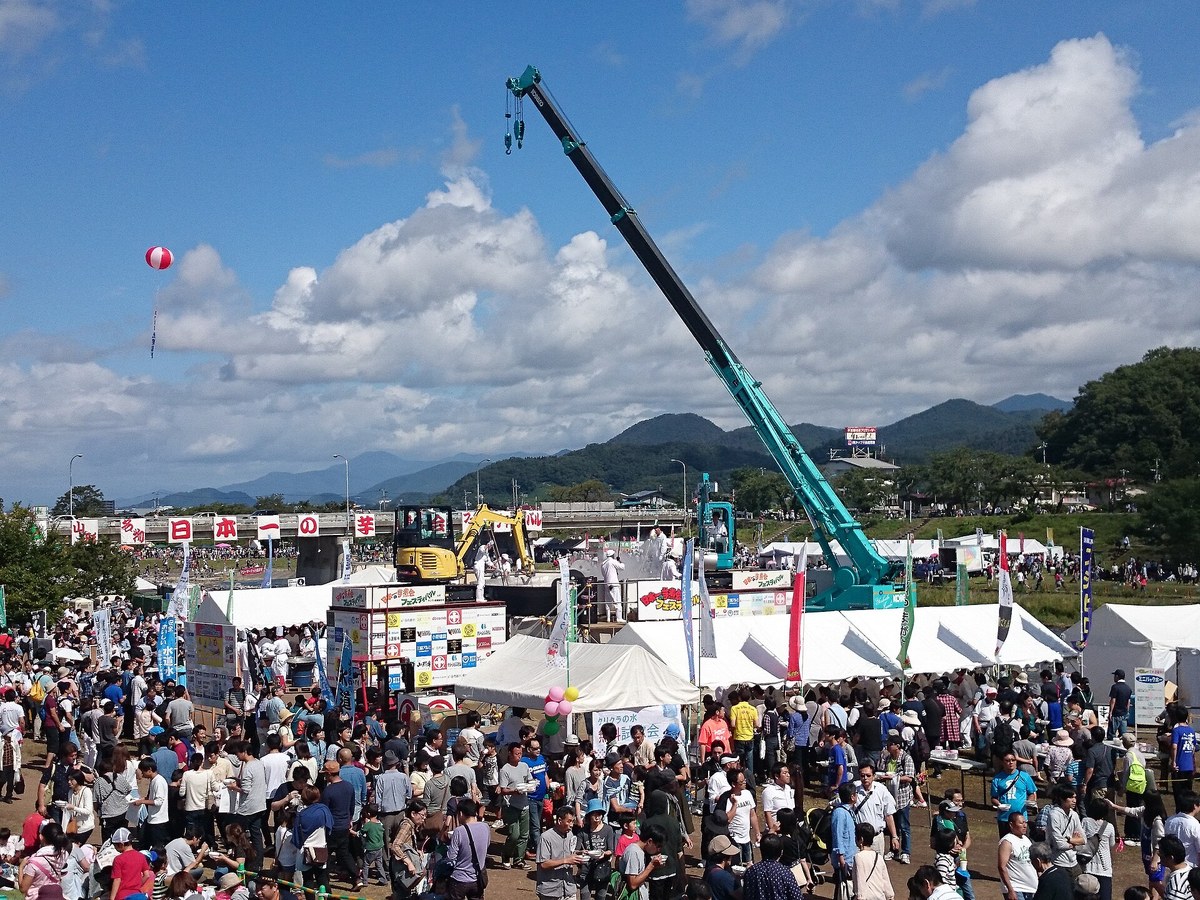
Since 1989 Yamagata City has held Japan's biggest Imoni Festival each September on the banks of the Mamigasaki River. The numbers in the Tourism Agency's record read like a catering fever dream: a previous year's pot took 3 tons of taro, 1.2 tons of beef, 3,500 sheets of konnyaku, 3,500 stalks of long onion, 200 kilograms of sugar, 5 tons of water, 700 litres of soy sauce and 63 litres of sake, simmered for over three hours and served out to smaller pots with an excavator standing in for a ladle.
The pot has a name and a lineage: Nabetaro. The second of its generations, Nabetaro II — 1.6 metres tall, 6 metres across, 3.2 tons — cooked at the festival from 1993 to 2018 and now rests along the Tachiya River near Yamadera, retired like an athlete. For the 38th festival, scheduled for Sunday, September 20, 2026, about 30,000 servings were planned again, by the festival guide's August 2026 check — advance electronic tickets from a ¥600 contribution, same-day numbered tickets from ¥700, the serving line opening at 9:20 in the morning.
Eating it in Yamagata
Out of season, eat it in Yamagata City, where restaurants serve imoni all year. The Food in Japan record lists Yamagata Nagaya Sakaba, in front of JR Yamagata Station, whose main imoni is the classic style with plenty of beef, in a price range of ¥1,909–2,739, and Inokoya Yamagata, connected directly to the station, with prices from ¥950; the festival guide's citywide reading puts a sit-down restaurant meal at roughly ¥1,500–3,000. Order the Murayama style first — soy and beef — and save the Shonai miso-and-pork pot for the coast.
In season, the better advice is to get outdoors: join or watch an imonikai on a September or October riverbank, or time a trip for the festival's single September day and buy the advance ticket rather than queueing for a same-day number. Nothing about the riverside version travels — it is a place, a month and a crowd as much as a stew — and that is rather the point of it.
Sources — checked 12 November 2026
- Japan Tourism Agency (MLIT) — Nabetaro and the Yamagata Imoni Festival (checked 12 November 2026)
- Food in Japan — Imoni: Yamagata's taro and meat stew, restaurants and recipe (updated 9 November 2026)
- Japan Activity — Yamagata Imoni Festival and Dining Guide (facts checked 22 August 2026)
Original prose and official links only; no source text or maker media reproduced. Photos are credited Creative Commons works, not product photographs.
Editorial review 2026-11-12