A cherry can be famous, or it can be certified. In Higashine, Yamagata's cherry capital, the most famous cherry in Japan submits to a grading plate with holes in it — and only the fruit that passes through the right holes, coloured deep enough, may carry the protected name. It gives Yamagata, whose two stories so far are both crafts, its first food story in this collection.
A breeder, a name, and a king
Sato Nishiki was born in Higashine City in the early Taisho period, in the orchard of Eisuke Sato, a local fruit grower who spent years crossing cherries in search of a better one. The potential of his seedling was seen by Tosaku Okada, who named it Sato Nishiki — Sato, for its breeder; Nishiki, brocade, for its beauty — in 1928 and released it to the world. Both men were later made honorary citizens of Higashine, and a statue of Sato stands in the city he supplied with a century of income.
The cultivar conquered its prefecture first. Yamagata's cherry fields run to about 3,000 hectares, the largest area in Japan, in the brand association's figures, and Sato Nishiki makes up about seventy percent of them; Higashine is the country's top cherry-producing city inside the country's top cherry prefecture. The association's own page calls Sato Nishiki, without much argument from anyone, the top cherry brand — the king of cherries. What the GI added, ninety years after the naming, was a border around the crown.
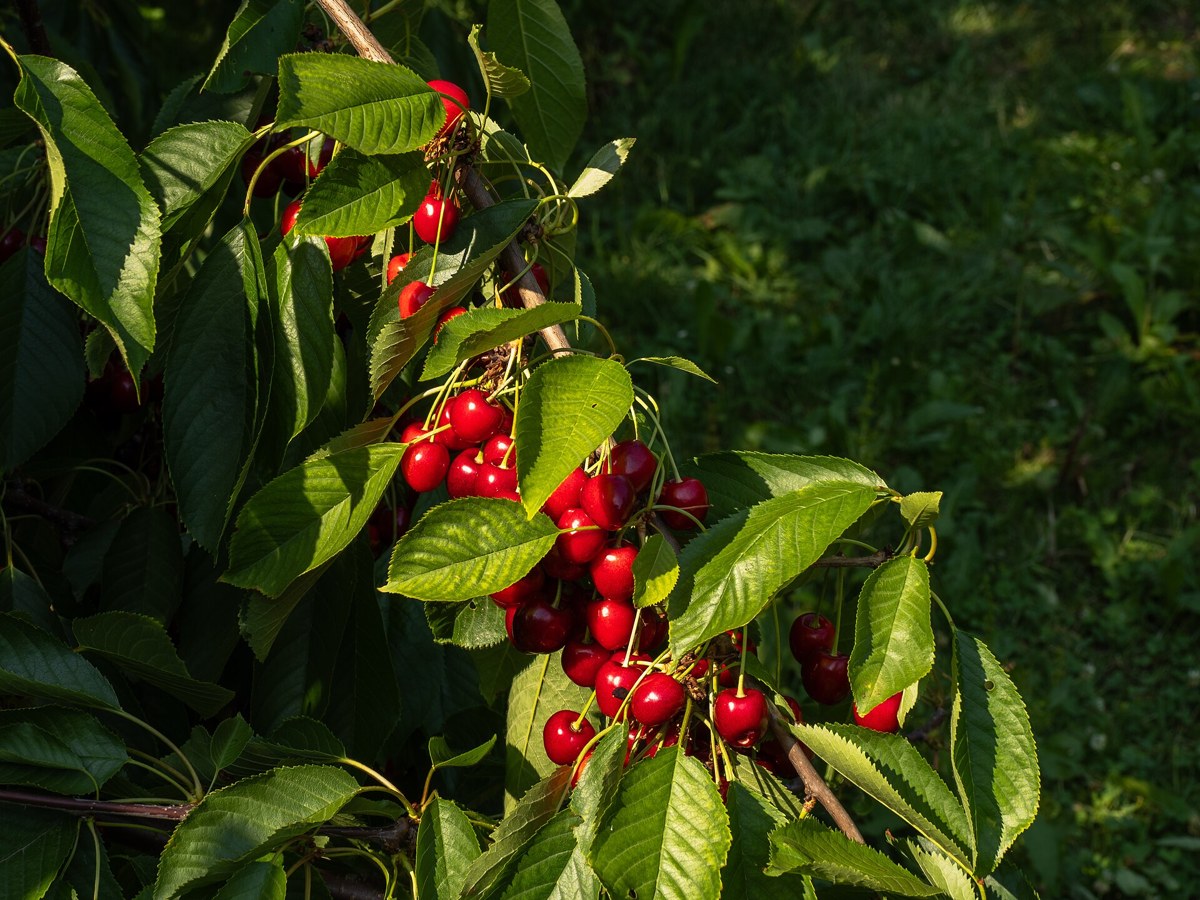
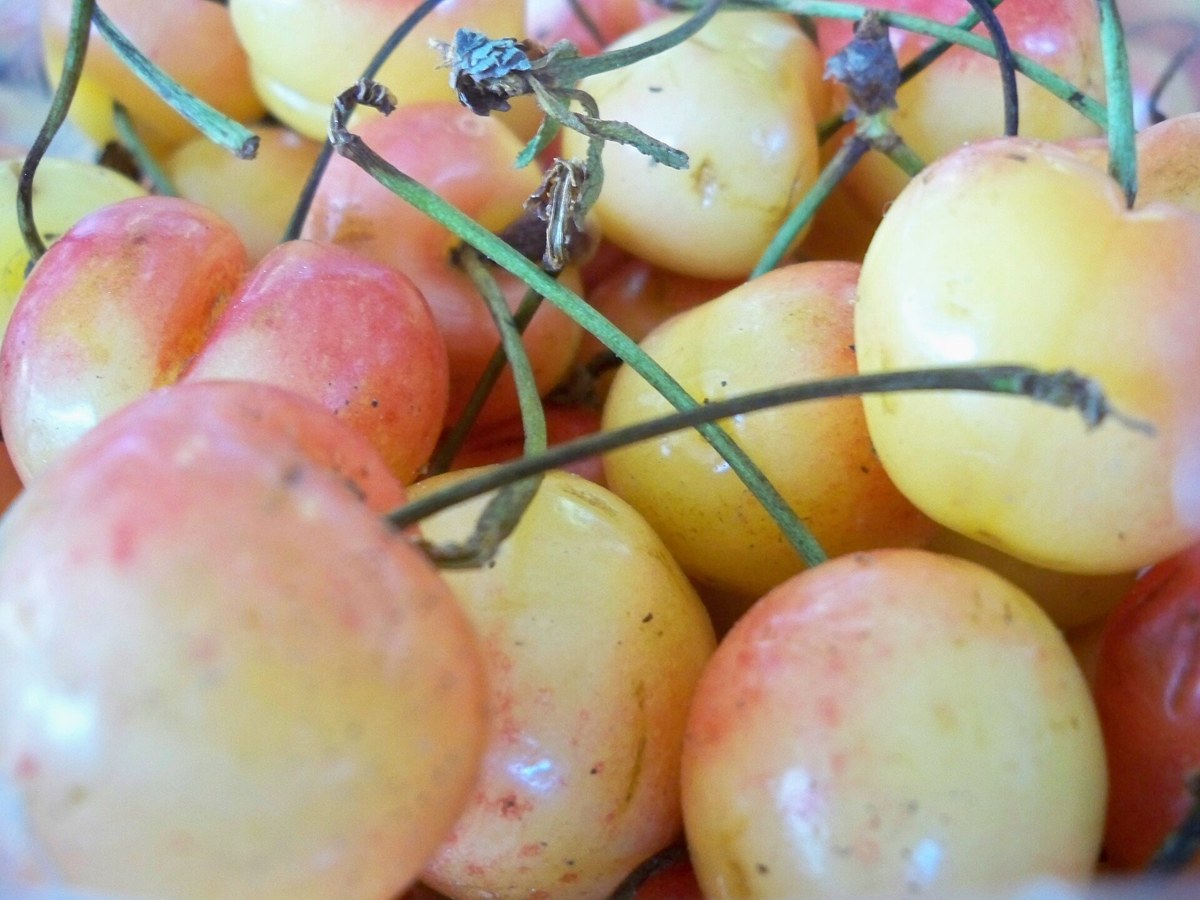
The GI border: two cultivars, one size, a colour line
Higashine Cherry was registered as a geographical indication on 21 April 2017 — No. 30 on the agriculture ministry's GI list — and the brand association publishes the criteria that police it. Cultivation is confined to Higashine City and select neighbouring areas, under stated rules: ten to fifteen trees per ten ares, weather-protection houses to keep the fruit from cracking in the rain, nets against birds, reflective sheets under the trees to push colour into the fruit, and a year's calendar of disbudding, thinning and leaf work, hour-counted per tree.
Shipping is where the name is won or lost. Only two cultivars may ship as Higashine Cherry: Sato Nishiki and the later Benishuho. Each cherry is sorted by colour — more than seventy percent of the surface must be coloured for Sato Nishiki, seventy-five for Benishuho — and by size, measured on a criterion plate of graded holes. Yamagata's floor for any fresh cherry is size M, nineteen millimetres; Higashine Cherry ships only size L, twenty-two millimetres — the diameter, the association notes, of a five-yen coin — or larger. Fruit that fails cannot be labelled Higashine Cherry at all.
Ten thousand yen a punnet, a million a kilo
At retail, in season — the open-field harvest runs June into early July — the honest anchor is Tokyo's luxury fruit trade: a checked tasting report bought its Yamagata Sato Nishiki at Shinjuku Takano, the famous fruit parlour, at ¥10,000 for a 300-gram punnet, roughly ¥200 for a single cherry. That is the price of the king cultivar at its graded best in the capital, and ordinary Yamagata Sato Nishiki, in season, in Yamagata, sells for a small fraction of it — a spread this page states rather than hides.
Above retail, the auction theatre takes over. In June 2022 a kilogram of premier Higashine Sato Nishiki — top-prize fruit from the Toyosu cherry fair — fetched ¥1,300,000, a record, in a sale the Higashine municipal government itself celebrated. In January 2026 the greenhouse-forced season, in which growers chill trees to fake a winter and harvest in midwinter, set the bar again: a box of Yamagata Sato Nishiki made ¥1,800,000 at a Tokyo first auction, and a 68-cherry box made ¥1,550,000 in Tendo, Yamagata's own auction town. These are ceremony prices. They are also the brand's advertisement, and the growers know it.
How to buy it, in season and out
Buy in season if you can: late June in Yamagata is one of Japan's great fruit weeks, and Higashine's tourist orchards let you eat Sato Nishiki off the tree at orchard prices. For the named, graded form, look for the Higashine Cherry label and the size mark: L or above, with the colour to match. A box labelled merely 'Sato Nishiki' may be excellent fruit from anywhere the cultivar now grows; the GI name is the one that promises Higashine ground, Higashine rules.
Out of season, the January greenhouse fruit exists precisely so that the name never leaves the market — at first-auction prices no mortal pays, then at gift prices some mortals do. Either way, the grading plate in Higashine is the quiet hero of this story: a board with holes, deciding which cherries are allowed to be the most famous cherries in Japan.
Sources — checked 10 November 2026
- Higashine Cherry (brand association): Cherries — Fruit Kingdom Higashine
- Higashine Cherry (brand association): Cultivation and shipping criteria
- Higashine Cherry (brand association): Sato Nishiki — King of Cherries
- The Mainichi: 1 kg of premier Sato Nishiki cherries fetches record-high ¥1.3 million
- SoraNews24: Do expensive ¥10,000 cherries taste better? (Shinjuku Takano tasting)
- The Straits Times (Kyodo): Premium cherries fetch over $14,000 a box in first auctions of 2026
- MY10 Japan guide: Sato Nishiki cherries
Original prose and official links only; no source text or maker media reproduced. Photos are credited Creative Commons works, not product photographs.
Editorial review 2026-11-10