Almost every shogi game played in Japan is played with pieces from one small Yamagata city. Tendo makes more than 95% of the country's shogi pieces — the wedge-shaped wooden tiles whose two-character faces decide the world's most complex chess variant. The craft began as samurai relief work in the late Edo period, was designated a national traditional craft in 1996, and still spans a ¥4,000 everyday set to hand-carved boxwood pieces at ¥180,000.
Samurai side work that ate a whole industry
In the late Edo period the Tendo domain was poor and its lower-ranking samurai poorer. The domain's answer was a cottage industry: encourage the samurai to carve shogi pieces at home. The wood was local, the skill spread house to house, and from the late Meiji period Tendo mechanised the blank-making while keeping the carving, inlaying and lacquering of characters in craftspeople's hands.
The result is a near-total production monopoly of the honourable kind: the craft association's figure is more than 95% of Japanese production, and the title-match pieces used by professionals — the engraved and raised-character sets of the great tournaments — are Tendo work.
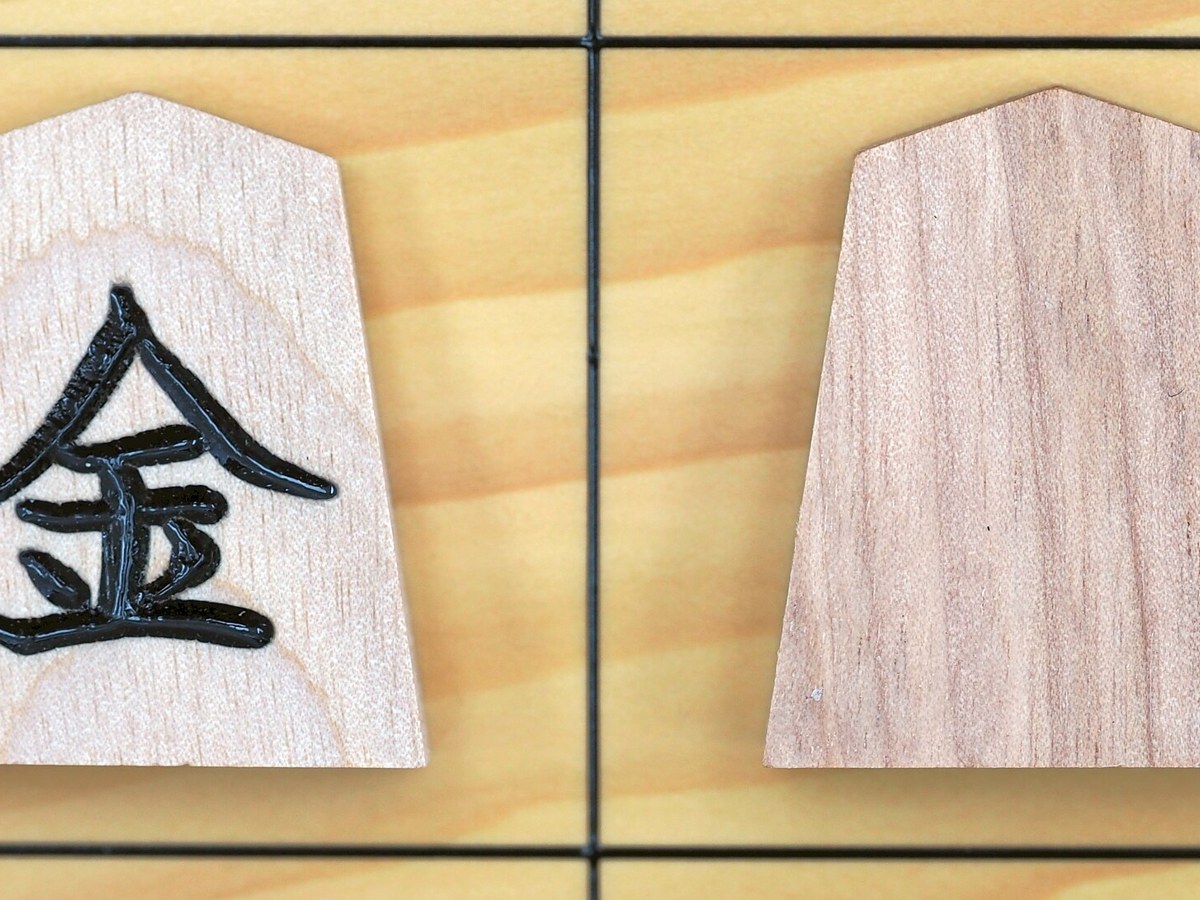
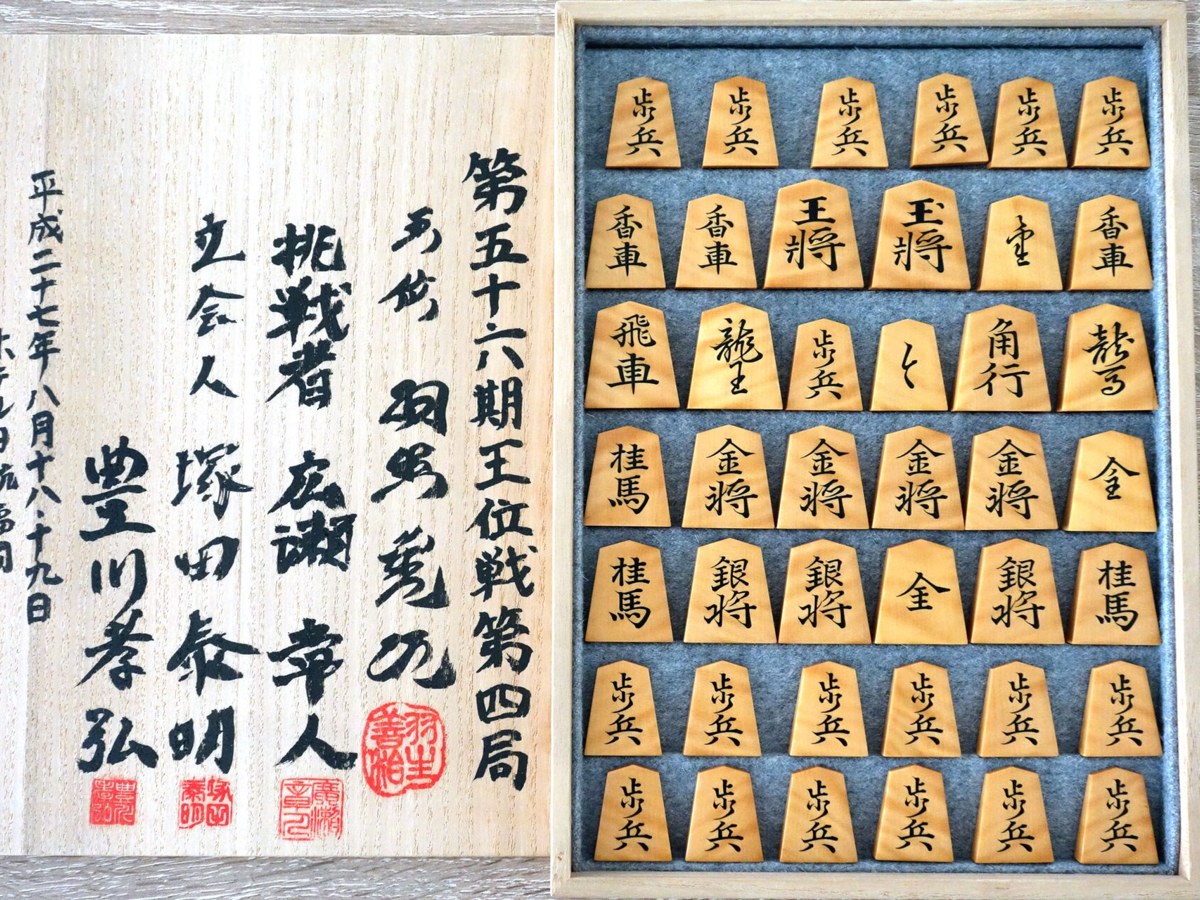
Five woods, three ways of writing
The designated craft fixes its materials: piece blanks of hoo, hakuunboku, itaya maple, mayumi or tsuge boxwood, with Mikurajima boxwood the fine grade. What you pay for is the combination of wood and calligraphy method — characters printed or lacquer-written at the everyday end, engraved and filled (horiume) in the middle, and hand-carved with raised lacquer characters (moriage) at the top.
Specialists are blunt about the ladder: a plastic set is about ¥1,000, machine-engraved wooden sets sit in the low tens of thousands, and a named craftsman's hand-engraved boxwood set runs to around ¥100,000. The name of the piece-maker is part of the value, as with a potter's mark.
Practical details: prices, where to buy, online sales
Prices (checked 9 November 2026; the Yamagata export catalogue of Tendo maker Nakajima Seikichi Shoten, prices excluding tax): a maple set with lacquer-written characters in a paulownia box is ¥4,000; a Mikurajima boxwood set is ¥35,000; a hand-carved Mikurajima boxwood horiume set is ¥180,000. The maker has specialised in shogi pieces for four generations and works every process in-house from log to finished piece.
Where to buy: Tendo's own piece shops and the Shogi Museum shop in Tendo itself for the full ladder and the makers' names; go and shogi specialists nationwide and online for Tendo sets at every grade. Official online sales: maker-by-maker. Type of edition: regional edition — a place-defined national traditional craft with a 95%-plus production share.
The town that plays its own product
Tendo leans into its monopoly charmingly: the City Shogi Museum sits on the first floor of Tendo Station (admission ¥320), piece-shaped monuments mark the streets, and each spring the town stages 'human shogi', with people in armour as the pieces on a giant board under the cherry blossom.
For a traveller the honest souvenir is the low end done properly — a lacquer-written maple set in its paulownia box, bought in Tendo, is a working game, a piece of craft history and the town's whole story for the price of a good lunch. Players will know what they are holding; everyone else can learn on it.
Scope: what 'limited' means here
Tendo shogi pieces are documented as a place craft of Tendo, Yamagata — nationally designated, with a production share above 95% as recorded by the traditional-craft association. Retail is nationwide and stated. Checked 2026-11-09. Pieces carved elsewhere exist and are different products.
Sources — checked 9 November 2026
- Kinobo column: What wood are shogi pieces made from? — Tendo craft, designation, 95% share, the five woods
- Yamagata Export catalogue: Nakajima Seikichi Shoten (Tendo shogi maker) — product prices
- Kuroki Goishi: Value and price of shogi pieces
- Neft (Yamagata guide): Why shogi became Tendo's specialty — museum and town
Original prose and official links only; no source text or maker media reproduced. Photos are credited Creative Commons works, not product photographs.
Editorial review 2026-11-09