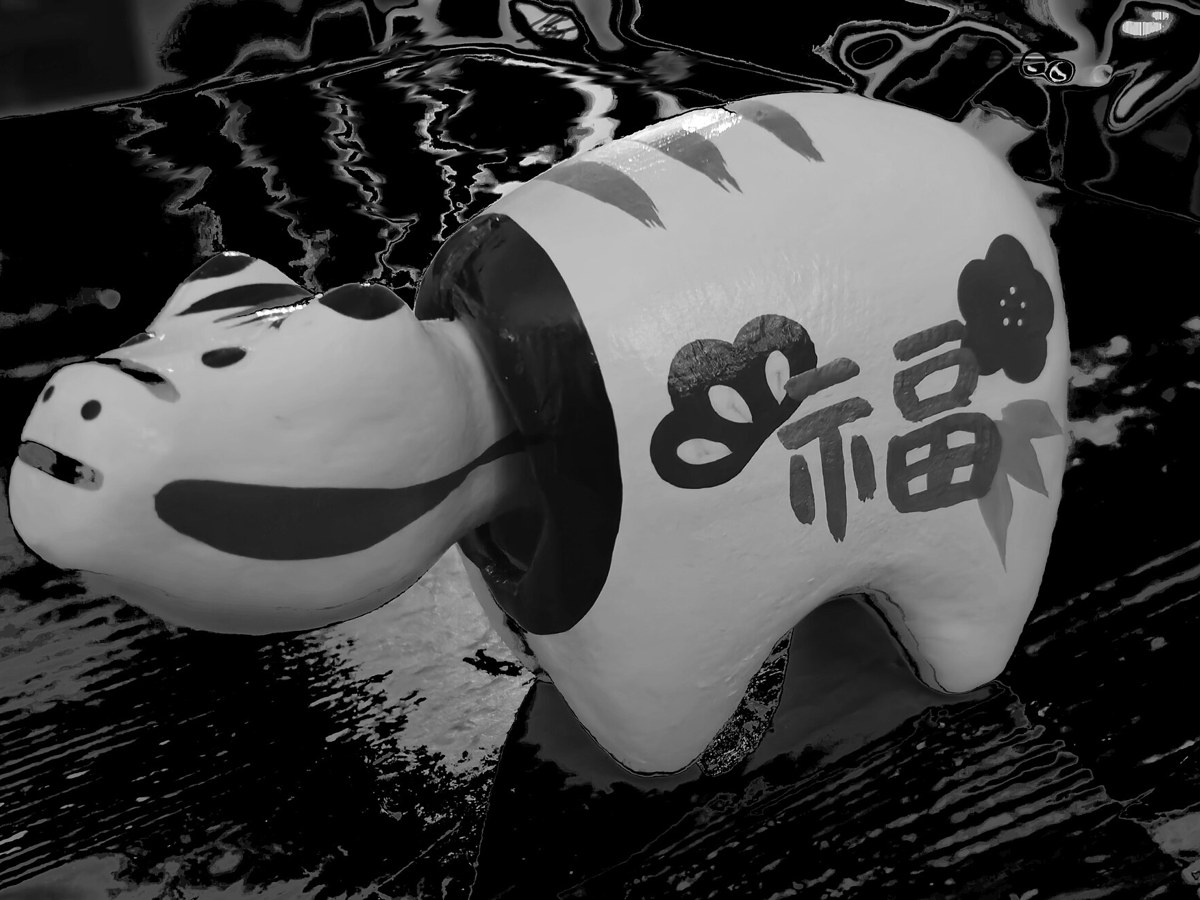
Tap its head and it nods — patiently, for seconds, as if agreeing with you. The akabeko, a red papier-mache cow from the Aizu region of Fukushima, has been bobbing at children for over 400 years: a toy, a good-health charm, and now the symbol of Aizu-Wakamatsu. Fewer than a dozen family workshops still make them by hand, each taking about ten days over a single cow.
The cow that carried a temple
Tradition — and this page reports it as tradition — roots the akabeko at Enzoji temple in Yanaizu, where a red cow is said to have hauled materials for the temple's building in the ninth century and vanished when the work was done. Centuries later, in the late 1500s, Aizu's artisans turned the legend into a toy, and families bought the red cows as charms: red was held to ward off illness, and the akabeko became a guardian against smallpox and childhood sickness in the stories told with it.
Japan's Tourism Agency dates the toys to more than 400 years ago, made as playthings and good-luck charms for children. The charm logic is still printed on the souvenir shelves: health, safety, a child growing up strong — wished in cow form.
Two pieces of paper and wood, ten days of work
An akabeko is two pieces: a body, and a head-and-neck balanced so it bobs. The making is papier-mache over wooden formers — wet washi paper wrapped and layered, dried, then painted black first, then the characteristic red, then the white eyes and each workshop's own markings — and finished with lacquer. The whole process takes about ten days, and it is held today by fewer than a dozen family workshops whose markings differ like signatures.
That fragility of supply is worth stating plainly: the handmade akabeko is a small, finite craft. The capsule toys and resin goods that now carry the cow's face across Fukushima are merchandise riding the symbol — fun, and documented below at their own price — but the toy this page is about is the paper one, from Aizu hands.
Practical details: prices, where to buy, painting experiences
Price: there is no single price, and this page will not invent one — handmade akabeko are sold by size and workshop, from small shelf cows upward. The documented pocket-money form is the prefecture's akabeko capsule toy at ¥300 a play, at roadside stations across Fukushima. For a handmade piece, budget by size at an Aizu craft shop and check the workshop's markings.
Where to buy: craft shops and roadside stations throughout Fukushima — the deepest stock in Aizu-Wakamatsu and Yanaizu — with Nozawa Folk Craft in Nishiaizu among the makers also running an online shop. Painting experiences (book ahead): Tsurugajo Kaikan beside Tsurugajo Castle, Aizu Hanko Nisshinkan, Bansho, and Hot in Yanaizu, all listed by Fukushima's official tourism site. Type of edition: regional edition — an Aizu folk craft.
Paint your own cow
The workshops are the souvenir this page recommends most: you are handed the classic red, white and black paints, a blank cow, and about an hour in which a 400-year-old design tolerates your handwriting. School groups do it on trips; the result — slightly wobbly eyes and all — is the one akabeko in the world with your markings instead of a workshop's.
If you buy instead, buy in Aizu and turn the cow over: look for the hand-painted markings and the paper body under the lacquer. The nod is the test — a handmade akabeko's head moves with a slow, weighted patience that the plastic versions only imitate.
Scope: what 'limited' means here
Akabeko are documented as an Aizu, Fukushima folk craft: handmade papier-mache cows from the region's family workshops, sold across the prefecture. Mass-produced akabeko merchandise is a separate, stated category. Checked 2026-11-09. Prices vary by size and maker; the ¥300 figure is the capsule toy's documented price.
Sources — checked 9 November 2026
- Fukushima Travel (official prefectural tourism): Paint Your Own Akabeko
- Japan Tourism Agency (MLIT): Traditional Craft — Akabeko Painting
- Neft (Fukushima guide): Akabeko — meaning, painting and where to buy
- Wikipedia: Akabeko
Original prose and official links only; no source text or maker media reproduced. Photos are credited Creative Commons works, not product photographs.
Editorial review 2026-11-09