Most pottery towns begin with clay. Tobe began with rubbish. The town in Ehime's hills was famous for its iyoto whetstones, and famous whetstones leave famous waste — mountains of stone scraps too small to sell. In 1777 the local domain ground the scraps down, fired them, and got porcelain. Two and a half centuries later Tobe is Shikoku's leading ceramic town, its kilns still turning out the thick white ware, hand-painted in indigo, that Japan's folk-art movement once crossed the country to defend.
White with a touch of gray
The KOGEI JAPAN account fixes the ware's look first. What makes Tobe ware unique is its beautiful white ceramic texture, which appears to let light pass through; compared to Arita ware, made in Saga Prefecture, the white of Tobe carries a slight touch of gray. The gray is geology speaking: the colouring changes depending on the amount of iron in the porcelain stone, and Tobe's artisans answered it with technique — improving the glaze, and having design artisans hand-draw the patterns that became the ware's signature, the indigo motifs brushed over that honest, slightly gray white.
The result is a ware defined by use as much as by looks. Tobe ware continues to be loved by people as a handmade ceramic ware that is easy to use in the home, the account concludes — tableware first, ornament second. The town around it shares the definition: Tobe, in the Iyo district of Ehime, is known as the leading ceramic ware producing area in the Shikoku region, located on the pottery-material-abundant Japanese Median Tectonic Line, Japan's longest fault system, where high-quality porcelain stone is mined in the mountainous country behind the town and many kilns remain in operation today.
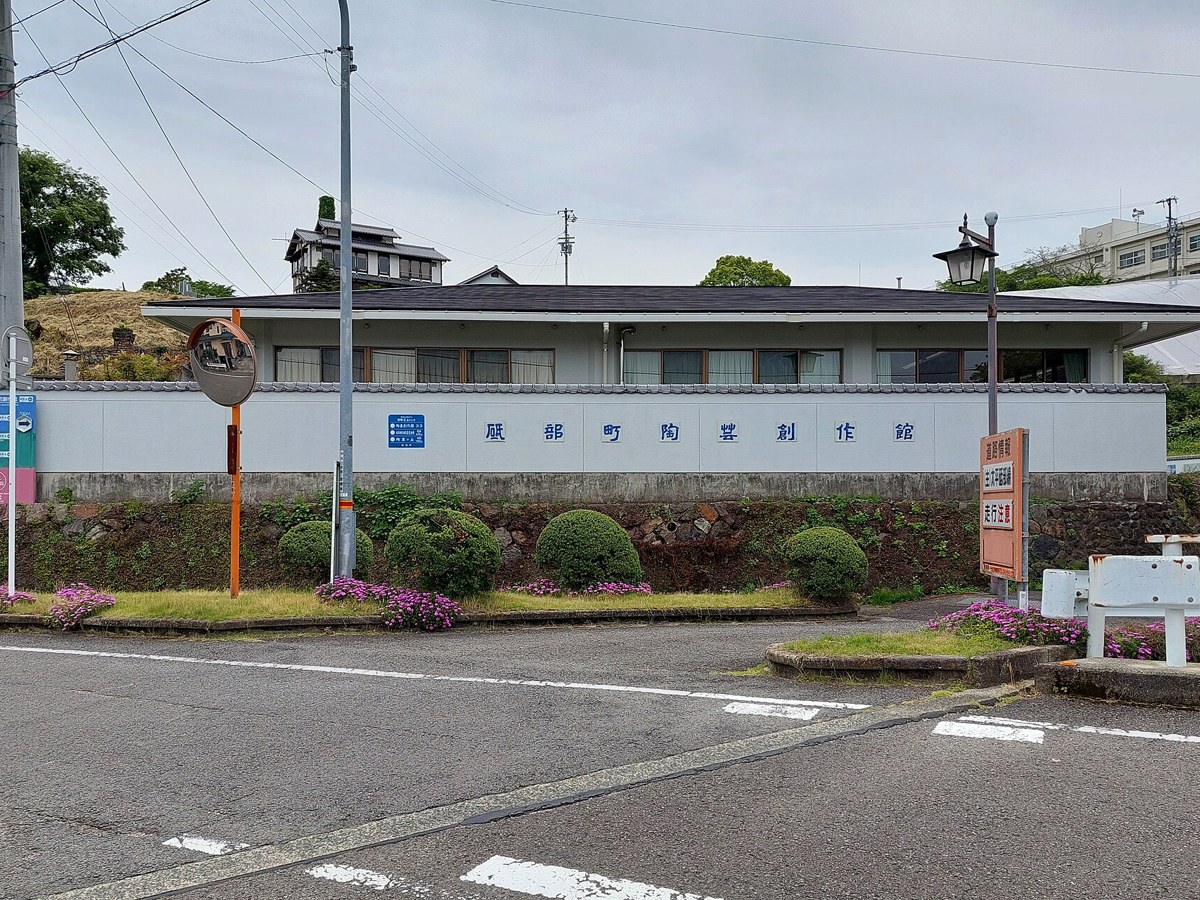
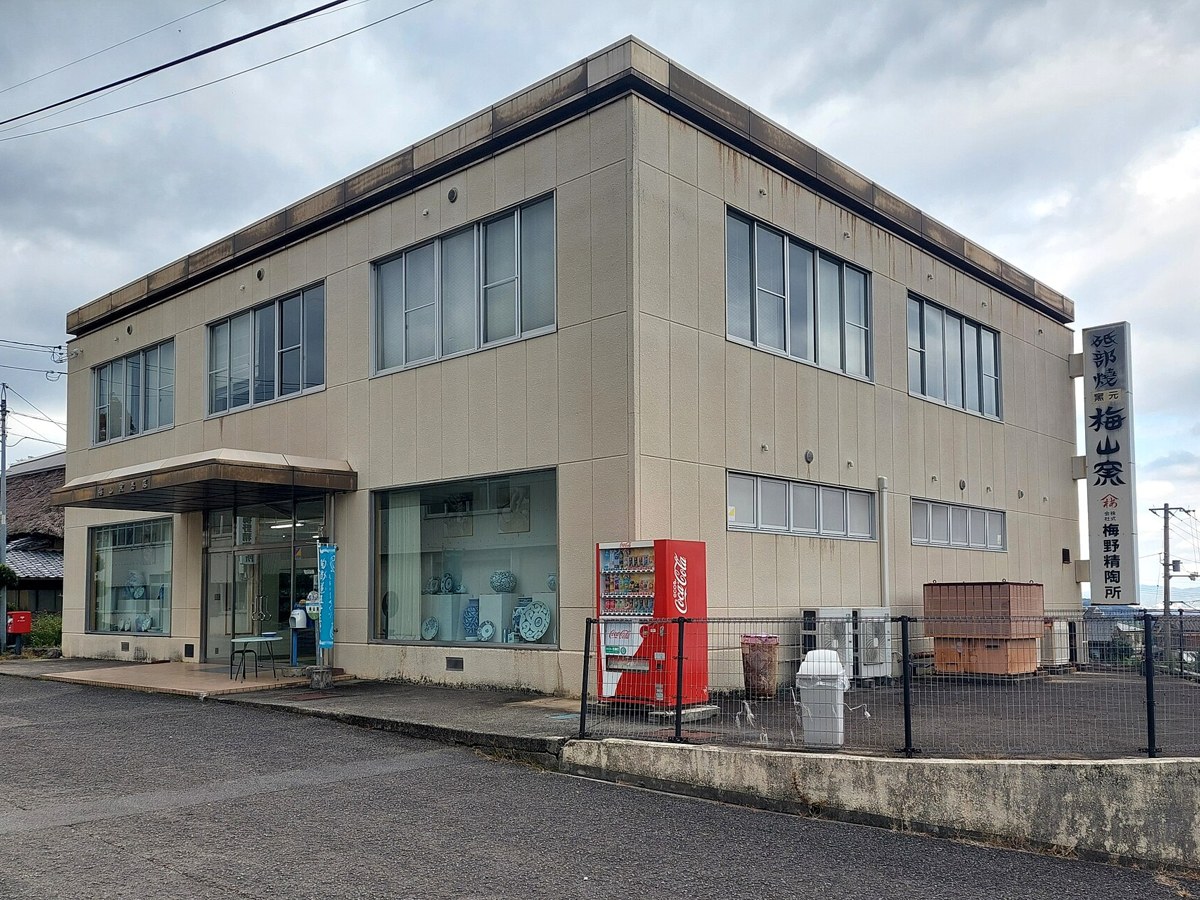
1777: porcelain from the whetstone pile
Tobe ware was established in 1777, when the Ozu domain, in what is today the Iyo district, independently began to study ceramic ware. Originally a whetstone called iyoto was the local specialty — but the resource was rare and not much could be made from the stone itself, so Tobe ware was developed with the scraps of Iyo whetstones: the waste of the sharpening trade became the body of a porcelain. It is one of the neatest industrial births in Japanese craft — a domain monetising its own offcuts.
Isolation shaped the young ware. During the Edo period, Tobe ware was produced independently, since there was limited information from other domains; only after the abolition of the domains in 1871 could technology flow in from famous production areas such as Karatsu and Seto, and Tobe expanded rapidly, its market reaching Southeast Asia. Then the wheel turned: as Seto and others adopted modern machinery and raised their volumes, the handicraft production of Tobe stagnated — until Muneyoshi Yanagi, the philosopher of the Mingei folk-art movement dedicated to rescuing the lowly pots used by commoners, valued its high quality handicraft technique, and the ware's second life began.
Twenty-five hours of milling, 1,300 degrees of fire
The account's process begins underground. Clay production extracts porcelain stone from the quarry — stones containing high iron are common around Tobe, and trachyandesite from the Uebi mountain ridge serves as raw material. The stone is sorted, crushed, and purified by elutriation, separated by specific gravity; then it is pulverised for over 25 to 45 hours in a ball mill while a magnet draws out the iron, and filter-pressed for about two hours into pure potter's clay. Before mechanisation, the kneading alone took an apprentice at least three years to learn.
Shaping Tobe clay is physical work: the clay is hard and is not softened by adding water, so the potter's wheel demands strength, the clay struck by hand to hold its centre as it is coned up and down. Bisque firing runs to 950 degrees over some 18 hours; the underglaze decoration is hand-drawn in a pigment called gosu, which turns indigo in the fire; and the glost firing finishes the ware at 1,300 degrees for 15 to 24 hours. Every blue line on a Tobe plate has therefore survived two firings and a day of milling — the whetstone scrap's long road to the table.
Paint a teacup in the kilns' own hall
The ware has a showroom run by its makers' town. The Tobe-yaki Togeikan, the pottery centre in Tobe, sells the work of about 30 local kilns on its first floor, the Setouchi official guide records, and runs the workshops upstairs: try the potter's wheel, shape by hand, or paint Tobe ware. Porcelain painting is priced by the piece — teacup ¥1,100, plate from ¥1,100, bowl ¥1,430, mug from ¥1,760 — hand-shaping is ¥2,750 per person for about two cups or plates, and the wheel is ¥3,800 per person, with reservations required for the shaping courses; firing takes about two months to complete.
Ehime's standing stories are a dango, a towel and a fish cake — Botchan's sweets, Imabari's weave and the jakoten of the coast. Tobe ware is the prefecture's fourth and its first porcelain: the inland answer to the coastal shelf, in white and indigo. Between Imabari's softness and Tobe's stone, Ehime equips a house completely — cloth for the bath, porcelain for the table, both made within an hour of each other.
Sources — checked 11 November 2026
- KOGEI JAPAN: Tobe Ware (Tobe Yaki) (checked craft account)
- Setouchi official travel guide: Tobe-yaki Togeikan (Tobe Pottery Center) (checked official guide)
Original prose and official links only; no source text or maker media reproduced. Photos are credited Creative Commons works, not product photographs.
Editorial review 2026-11-11