Nagoya took the cheapest cut on the chicken — the wing tip joint that butchers sold off for soup stock — fried it bare, drenched it in sweet-spicy tare and built a civic religion on it. Tebasaki karaage was invented in 1963 by Furaibo, the originator house, and radicalised in 1981 by Sekai no Yamachan and its phantom pepper. The city has argued about the two plates ever since, five wings at a time, and the argument is the dish.
1963: the soup-stock cut becomes a signature
Furaibo’s own birth story, kept on the house’s official site, starts with a cut nobody wanted. In 1963 founder Otsubo Kenko was running his young Nagoya shop when wings — tebasaki — were a two-a-penny ingredient, sold off as soup-stock material. The idea that made the dish was a transfer: take the tare, the matured sweet-soy sauce of the shop’s signature fried half-chicken, and put it on fried wings for a regular customer. The regular approved. Nagoya’s most durable drinking food was born.
The official Nagoya-meshi definition is just as plain: chicken wings fried unbreaded — suage, no batter — then finished with a sweet-spicy tare, spices and sesame. Furaibo’s form of it is the tare-and-sesame balance: wings double-fried so the skin crisps and the joint stays juicy, brushed with the aged tare, scattered with white sesame and the house spice. The house still signs the dish ganso tebasaki karaage — the original — because, on its own record, it is.
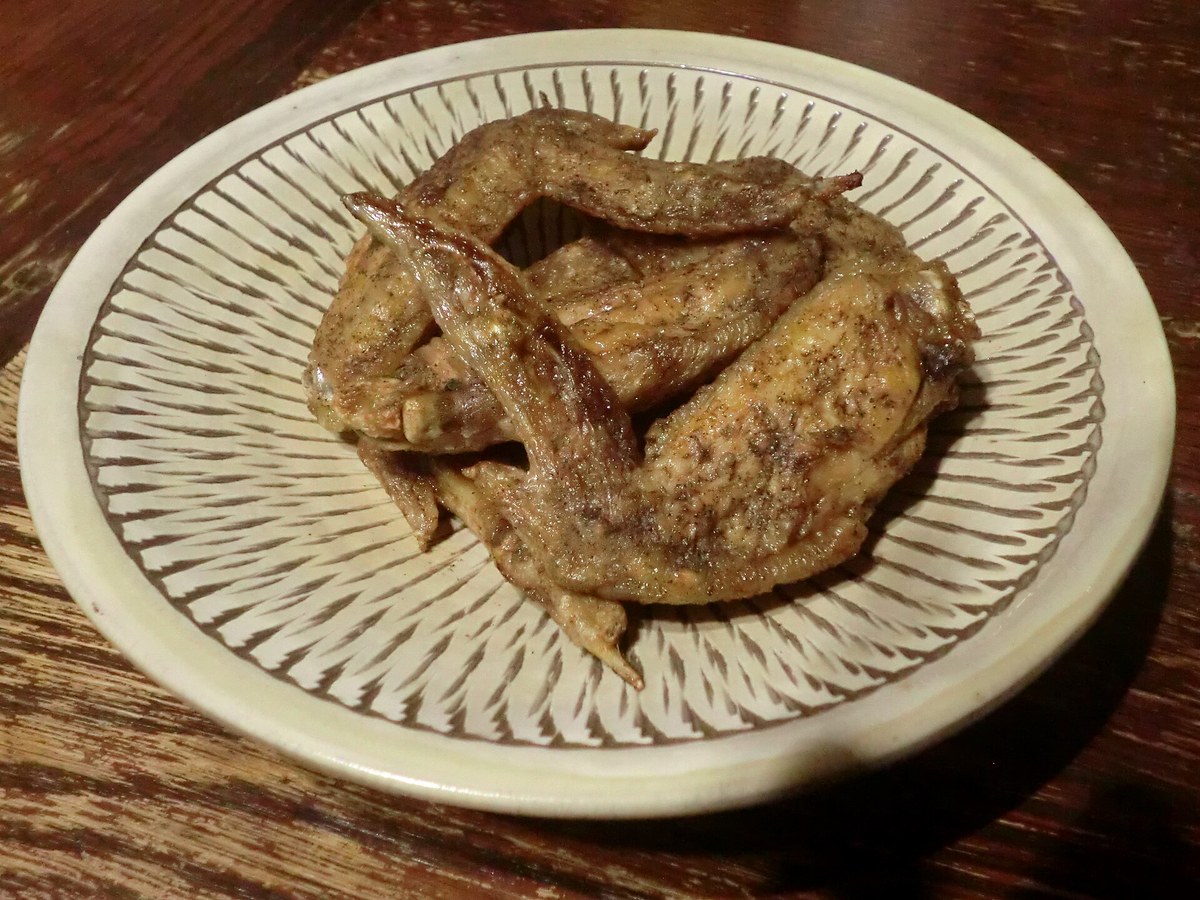
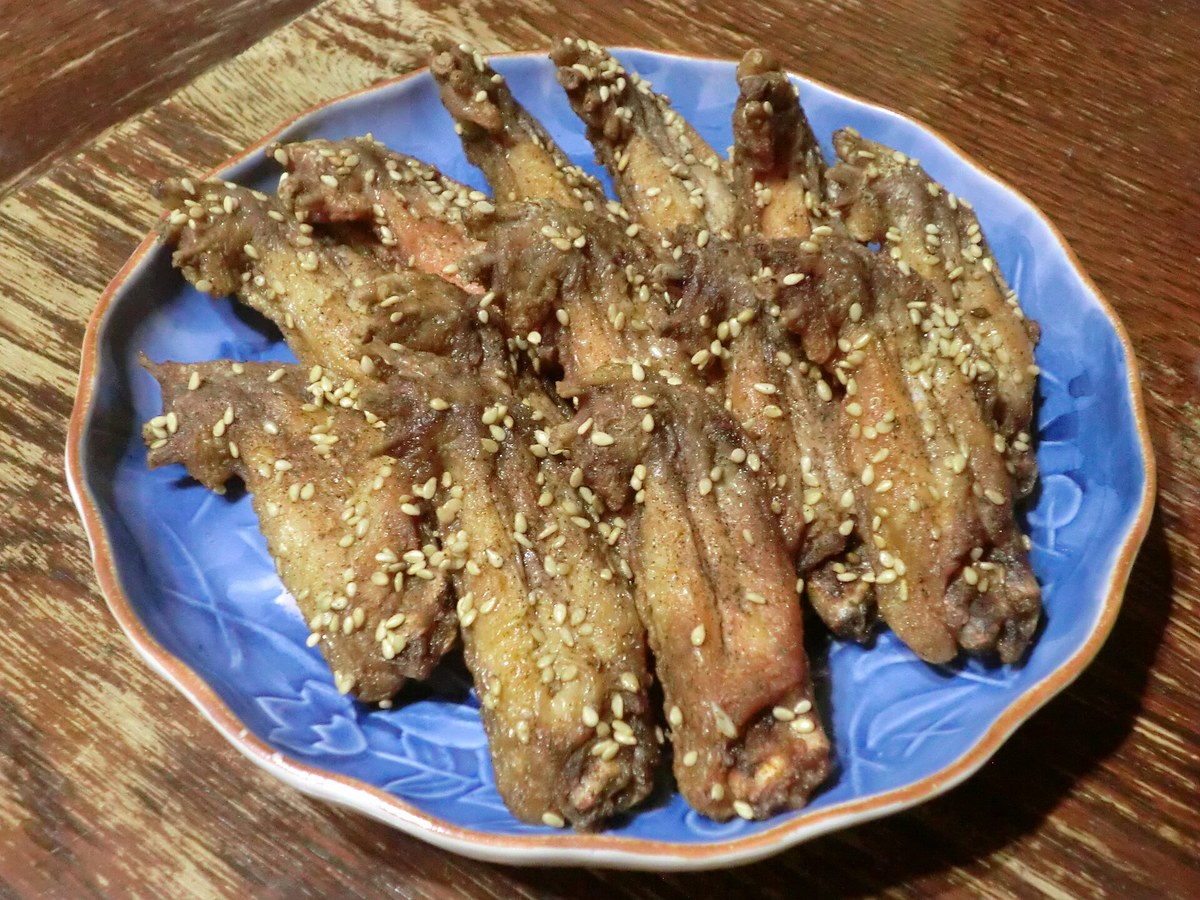
1981: the phantom pepper answers
The challenger arrived eighteen years later and four tsubo wide. In 1981 Yamamoto Shigeo opened a tiny kushikatsu-and-yakitori shop in Shin-sakae, Nagoya — thirteen seats — that grew into Sekai no Yamachan, the World’s Yamachan. His answer to Furaibo was not balance but assault: the Maboroshi no Tebasaki, the phantom wings, drenched in the sweet-spicy tare and then hit with the house’s secret spice blend, the “phantom pepper”, hot enough to make the beer order itself.
This story’s two photographs are the argument on plates: Yamachan’s peppered wings, dark and dry-spiced, against Furaibo’s glossy sesame-dressed wings. Nagoya people have a house the way they have a baseball team. Visitors are expected to pick a side by the second plate — and to learn the local technique, which both houses teach the same way: hold the joint, twist, and strip the meat in one pull.
How a plate of wings works
A serving is five wings, and the wings are eaten in a strict spirit of demolition. The skin should shatter, the tare should be sweet first and hot second — pepper heat at Yamachan, sesame warmth at Furaibo — and the cabbage on the side is not garnish but a fire extinguisher and a palate reset. The dish is izakaya architecture: cheap, fast, salty-sweet, engineered to be ordered by the second and third plate alongside highballs and draft beer.
It is also Nagoya’s most portable souvenir. Both houses run takeout counters in and around Nagoya Station — Furaibo inside the station area and the Esca underground mall, Yamachan on the JR Nagoya Takashimaya food floor — and the five-wing box, eaten on the Shinkansen with the smell announcing itself to the whole carriage, is a recognised regional ritual. Cold, the tare sets glossy and the wings stay good; the station shops exist because the ritual demanded them.
Five wings, honestly priced
Tebasaki has stayed a working dish with working prices. The 2026 Nagoya comparison, compiled from the houses’ official shop listings, prices five wings at 651 yen including tax at Sekai no Yamachan’s JR Nagoya Takashimaya shop and five wings at 700 yen at Furaibo’s Esca underground shop; across the station’s takeout counters the five-wing range runs 651 to 930 yen including tax, with Nagoya Cochin wings at the top. In the izakaya themselves, expect the same five-wing plate at the same order of price, ordered repeatedly.
Choose by palate and defend your choice loudly: tare depth and sesame at the originator, pepper shock at the challenger. Either way the correct order in Nagoya is never one plate. It is the first plate, and then the same again, and the argument about which house is better is not a distraction from the meal. It is the meal’s second course.
Sources — checked 14 November 2026
Checked 14 November 2026 (stored links re-fetched and judged per product): reserved where the page says so, with an editorial review note kept per product. Press, PR and travel use stays outside the grant.
Editorial review 2026-11-14