An unaju gives you eel on rice. A hitsumabushi gives you eel on rice three times — plain, sharpened with condiments, then flooded with hot dashi until it becomes something like a soup — and asks you to choose a favourite. Nagoya invented this small ceremony in the Meiji era, liked it so much that the developing house registered the name as its trademark, and has been eating eel this way, in a wooden tub with a paddle, ever since.
The tub, the paddle, the cross cut
The checked guides fix the form's furniture first, because the furniture is the method. The eel — grilled kabayaki style, crisped at the edges — is chopped fine, far finer than the fillets laid whole on an unaju, and spread over rice in a wooden tub, the ohitsu, which arrives with a wooden scoop, a small empty bowl, a pot of hot dashi, and a plate of condiments: chopped green onion, wasabi, toasted nori. The opening move is always the same: divide the tub's contents into four quarters with a cross-shaped cut of the paddle. Four quarters, three ways of eating, one quarter held back — the arithmetic is the ritual.
Chopping the eel is the functional heart of it. A whole fillet can only be eaten as it comes; chopped eel can be mixed through rice, portioned exactly, seasoned precisely, and drowned in dashi without falling apart — every stage of the sequence depends on that first decision at the grill. The developer's own definition, reported from its website, is exactly this: finely chopped grilled eel, kabayaki style, served over rice.
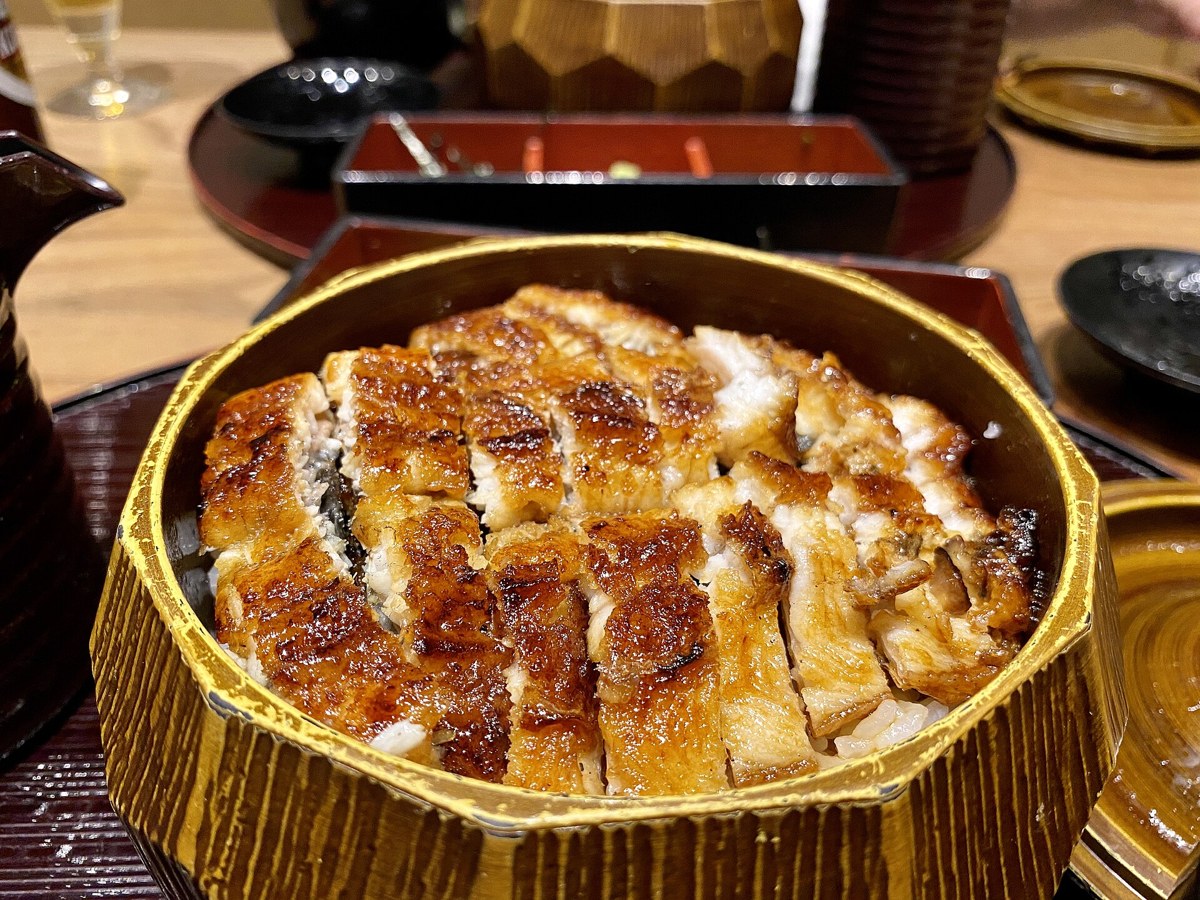
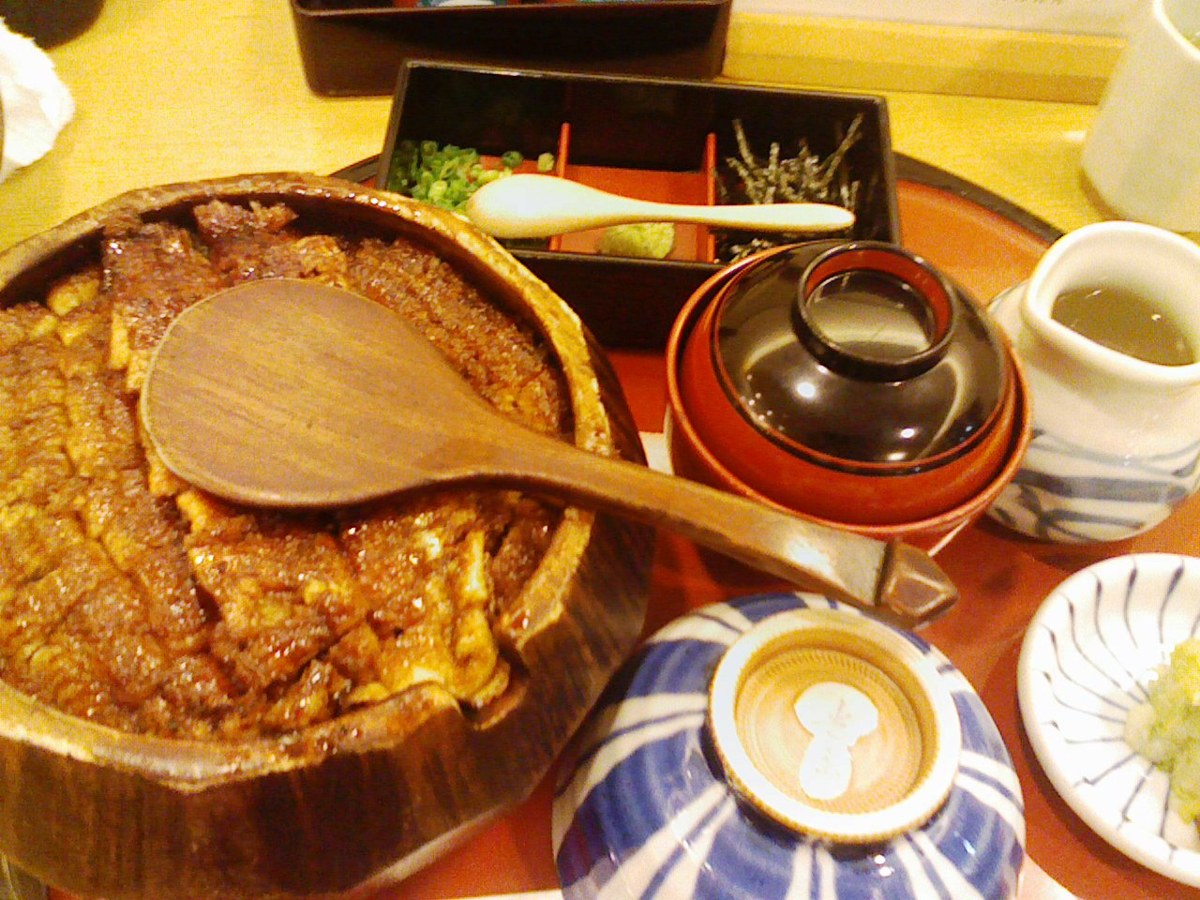
1873: the house that owns the word
The developer is named by both checked guides, from the house's own published history: Atsuta Horaiken, founded as a ryotei restaurant in 1873 in the Atsuta district near Atsuta Shrine, one of Japan's great shrines. The house developed the format in the Meiji era — chopped eel served for eating in stages — and in time registered the very word hitsumabushi as its trademark, a claim both guides state plainly and the house itself asserts. The dish is now made by restaurants across Nagoya, but every one of them cooks under a name that belongs, legally, to the house by the shrine.
Horaiken today keeps three dining branches at one price, the guides report from its site, and keeps its Meiji-era directness about bookings: reservations are taken by phone only, and not for hitsumabushi alone — for the dish itself you walk in, register, and wait, as Nagoya has always done. A second house is credited in some accounts with an early version of the dish; this page follows the checked guides in recording the trademark and the development with Horaiken, and notes the dispute rather than settling it.
Three ways, in the house's own order
The founding house states the order most simply, and both guides carry it: eat the first bowl as it is, to taste the eel itself; add the condiments to the second — green onion for brightness, wasabi for heat, nori for depth; make the third into ochazuke, pouring the hot dashi over eel, rice and condiments together; and eat the last quarter whichever way you liked best. Three dishes, genuinely distinct — the grilled richness plain, the same richness sharpened, then the same richness dissolved into broth — from one tub and one eel.
The prices are Nagoya-serious rather than ceremonial. At the founding house the dish is ¥4,950 with tax at all three branches on the house's own published prices, with the larger ichihan — one and a half times the eel and rice — at ¥6,600. Across the six restaurants the second guide checked, regular servings ran from ¥3,100 to ¥5,640; the first guide's city standard is ¥3,500-5,000. Aichi's standing stories are a prawn cracker, an ancient miso and a pottery town; hitsumabushi is the prefecture's first eel, and Nagoya meshi's crown.
Hitsumabushi is not unaju
The distinction matters at the counter. Unaju and unadon serve the fillet whole over rice, usually in a lacquered box, and the eating is linear: eel, rice, eel, rice. Hitsumabushi chops, tubs and sequences — the same ingredients reorganised into an event with a beginning (plain), a middle (condiments) and an end (dashi), plus a free final quarter that regulars guard for their favourite stage. If your eel arrives whole and there is no dashi pot, whatever its merits, Nagoya would not call it by the trademarked name.
Eat the first quarter slowly. It is the only plain taste of the grill you will get — after the condiments and the dashi, there is no going back to it — and it is the benchmark the other two stages are judged against. Most first-timers, on the guides' accounts, end by spending their free quarter on the ochazuke. Nagoya, which invented the choice, declines to judge.
Sources — checked 11 November 2026
- Like Nagoya: Hitsumabushi in Nagoya — Where to Eat Unagi and What to Order (checked city guide)
- Honto Japan: Hitsumabushi in Nagoya — 6 Restaurants, How to Eat It (checked guide reporting each restaurant's own website, read September 2026)
Original prose and official links only; no source text or maker media reproduced. Photos are credited Creative Commons works, not product photographs.
Editorial review 2026-11-11