Aichi's two stories so far can both be eaten — a golden tin of shrimp crackers' seasoning and a miso aged in wooden barrels. Its third comes out of the ground. On the Chita Peninsula, potters have dug iron-rich clay and fired it red for some nine hundred years, and the city they built, Tokoname, gives this collection its first Aichi craft: the teapot capital of the Six Ancient Kilns.
The largest of the ancient kilns
Tokoname ware was created in the latter part of the Heian period, and KOGEI JAPAN's account does not hedge about its scale: Tokoname was the biggest pottery-producing area even among the Six Ancient Kilns of Japan — the six medieval kiln centres, with Bizen, Tamba, Echizen, Seto and Shigaraki, whose traditions survive today. Some 3,000 anagama kilns, dug into the hillsides, are said to have worked the Chita Peninsula hills, and the Six Ancient Kilns project records that Tokoname used its sea routes to become the largest production area of the six, shipping its big pots and jars as far as Tohoku and Kyushu.
Aichi Prefecture's official page gives the modern frame. Tokoname-yaki was designated a Traditional Craft on 2 June 1976; its local association is the Tokoname-yaki Cooperated Association; and its listed major products run from tea ceremonial goods and flower vases to liquor cups, ornaments and flowerpots. A ware that began with storage jars for aristocrats and temples now signs its name on a teapot — the continuity is the city's, not any single product's.
Red clay, and why it matters
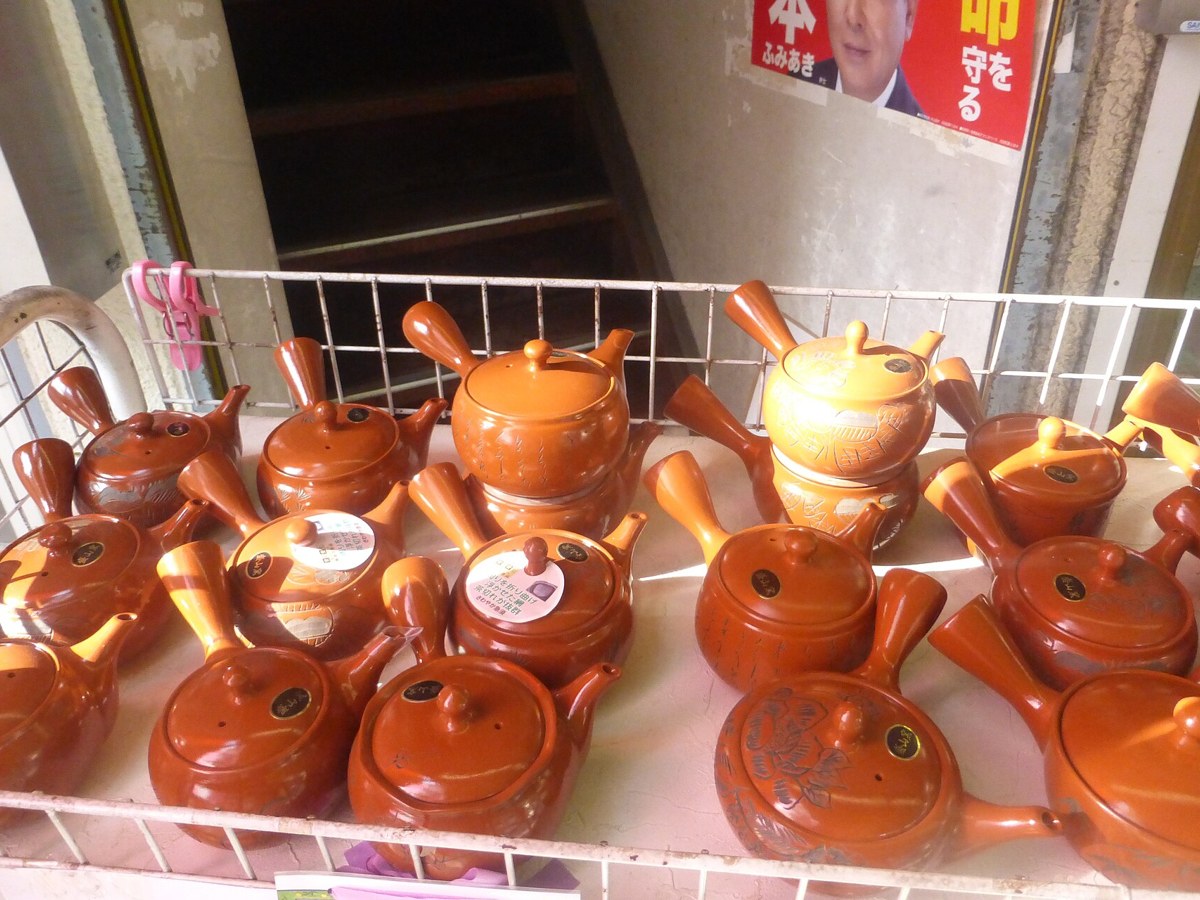
The signature is a colour the clay chooses itself. Tokoname's clay, collected from the Chita Peninsula, contains a large amount of iron; fired, the iron turns the unglazed ware a reddish brown — shudei, in the craft's own word. The prefecture's page calls shudei-yaki, which takes advantage of the iron in the clay to develop its red colour, the well-known leading product of Tokoname-yaki, and traces its line to the tea bowls of the Momoyama period and the red, white and fire-coloured wares of the Edo period, all built on that same iron-rich local clay.
The red clay found its definitive form in the small teapot. The kyusu — the side-handled pot for sencha — was first produced here in the Edo period and is today the ware's most popular product; the craft account adds the functional claim that made it famous, that the iron in the clay is said to smoothen the bitterness and astringency of the tea. Whether or not a drinker credits the chemistry, the form is Tokoname's: a small, light, unglazed red pot whose lid fits its body so exactly that lids are not interchangeable between pots.
Ten steps to one teapot
KOGEI JAPAN's production account for a shudei kyusu reads like a checklist of patience. The clay is extracted, refined and kneaded to a muddy liquid; body, lid, handle and spout are thrown separately on the wheel; the drying parts are shaved and adjusted until body and lid match perfectly, then assembled — the fit decided before firing, while correction is still possible. After slow, even drying, the unglazed surface is polished with cloth until a gloss appears, patterns are engraved by hand with a seal carving knife, and the pot fires for twelve to eighteen hours at about 1,100 degrees, shrinking to about eighty per cent of its pre-firing size.
The prefecture adds two Tokoname-only touches. After forming, the surface is burnished with a piece of cloth — a unique process in Tokoname-yaki — and salt is used in the final firing because Tokoname is located near the sea; unglazed products are polished with feathers after firing to bring up the gloss. A thousand years of production, and the finishing tools are still cloth, salt and feathers.
What it costs, and where to walk
Prices for the ware run from souvenir cups to a master's life's work, so the anchors here are named ones. The tea retailer Obubu lists its Tokoname kyusu — 285 cc, in Tokoname red clay, by master craftsman Umehara Jiro, a certified traditional craftsman whose Gyokuryu kiln is a Regional Brand 'Tokoname-yaki' Certified Kiln — at ¥10,000; it stood out of stock at this check, and is quoted as a listing, not a promise. At the other end of the day out, Tokoname's INAX Live Museum — seven clay-and-tile facilities in the pottery city — charges ¥1,000 adult admission on Aichi's official guide.
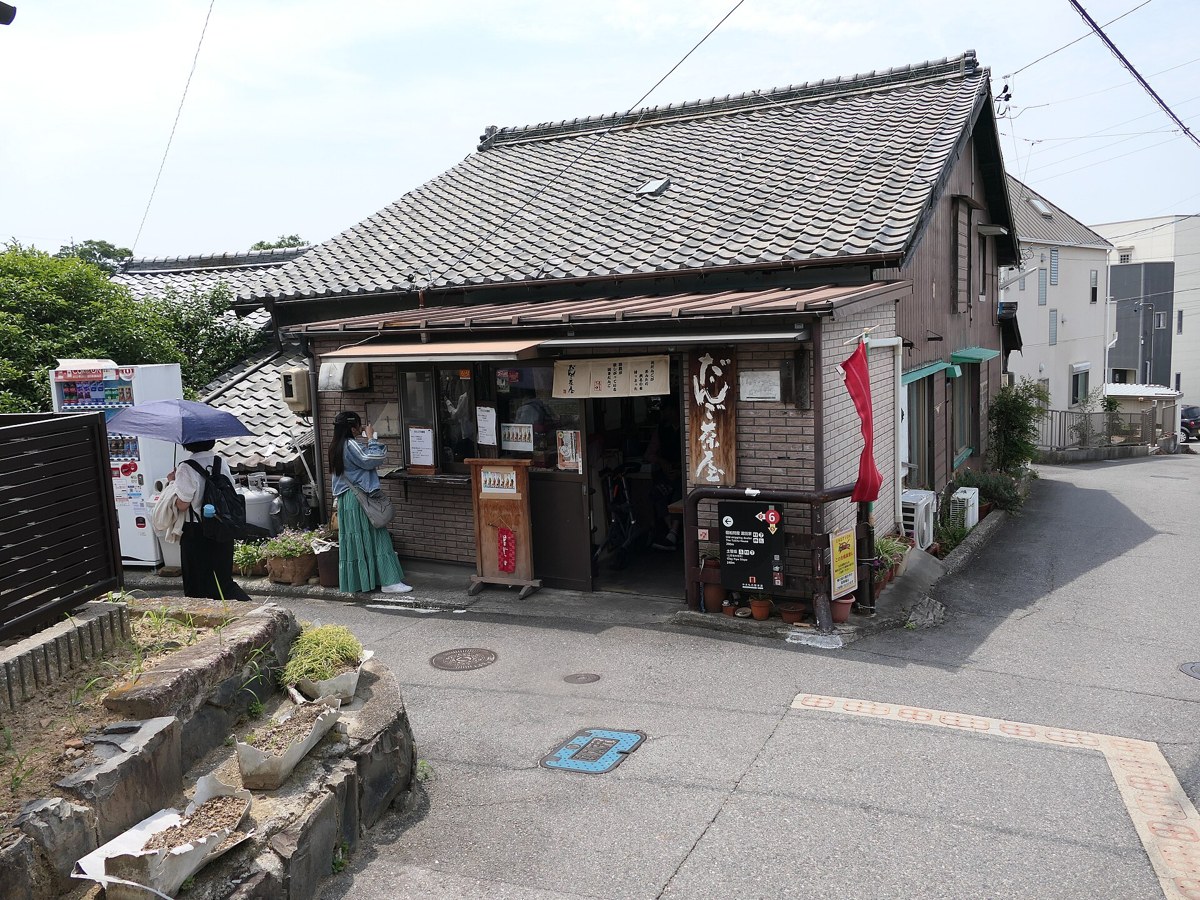
The town itself is the showroom. The Tokoname Pottery Footpath starts at the City Ceramics Hall, five minutes from Tokoname Station, and its A course winds 1.6 kilometres — about an hour — past brick kilns, chimneys and black-walled factories, free to walk; the guardian cat Tokonyan, the city's giant maneki-neko, keeps watch over the route. Buy the teapot where the clay comes out of the ground and the maneki-neko — the Six Ancient Kilns page notes, with a straight face, that the lucky cat is the other thing modern Tokoname is known for, and that both it and the kyusu are newcomers in a nine-hundred-year history.
Sources — checked 10 November 2026
- Aichi Prefectural Government: Traditional Crafts in Aichi — Tokonameyaki
- KOGEI JAPAN: Tokoname Ware (Tokoname Yaki)
- The Six Ancient Kilns (official project): Tokoname — outline and history
- Obubu Tea: Tokoname Kyusu Teapot (Umehara Jiro, Gyokuryu kiln)
- Aichi Now (Aichi Prefecture official travel guide): INAX Museums and the Tokoname Pottery Footpath
Original prose and official links only; no source text or maker media reproduced. Photos are credited Creative Commons works, not product photographs.
Editorial review 2026-11-10