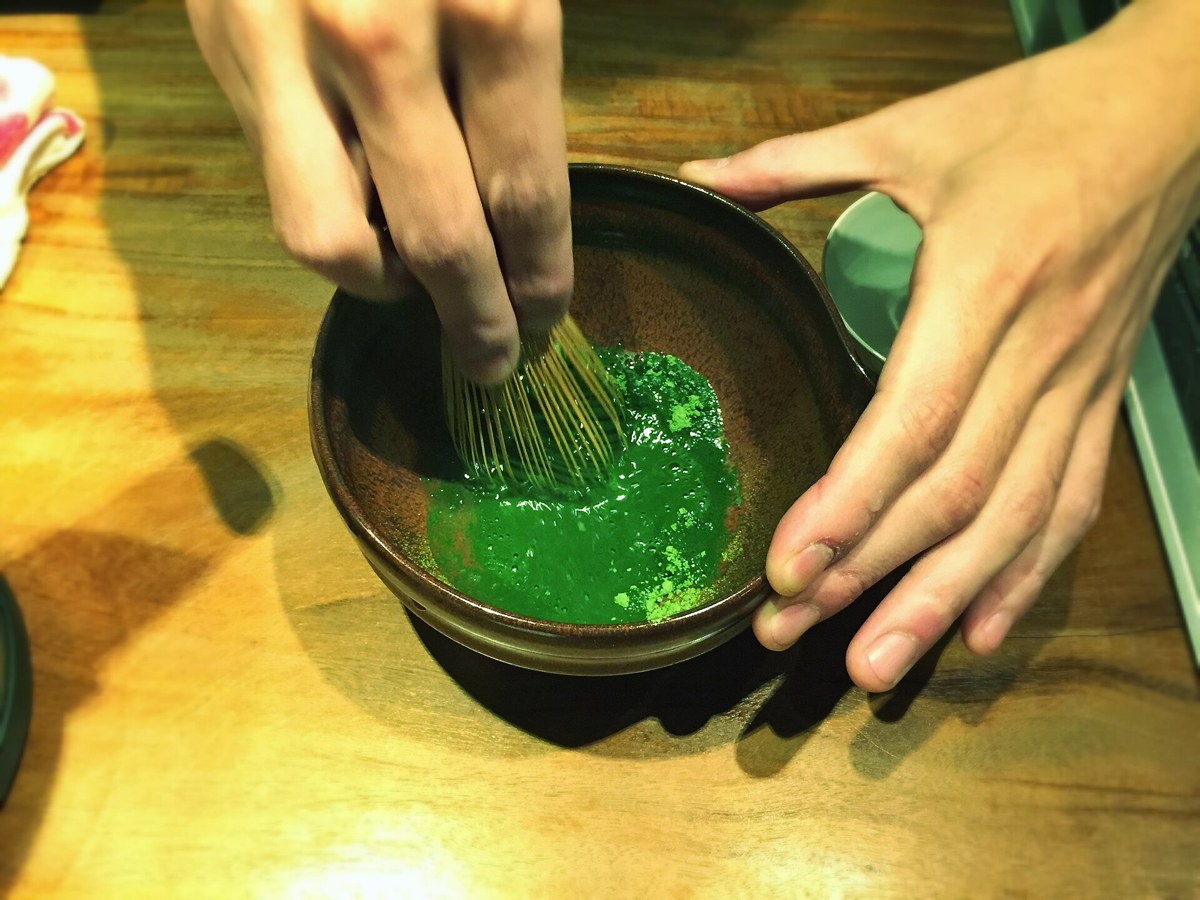
Every bowl of matcha ever whisked in Japan's tea ceremony was frothed by an object from one village. The chasen — a single tube of bamboo split into a spring of fine tines — is made by hand in Takayama, in the city of Ikoma, Nara, and essentially nowhere else in the country. The craft is five hundred years old, the makers left to practise it number about sixteen, and demand, the checked listings warn, currently outruns them.
One bamboo, split into a spring
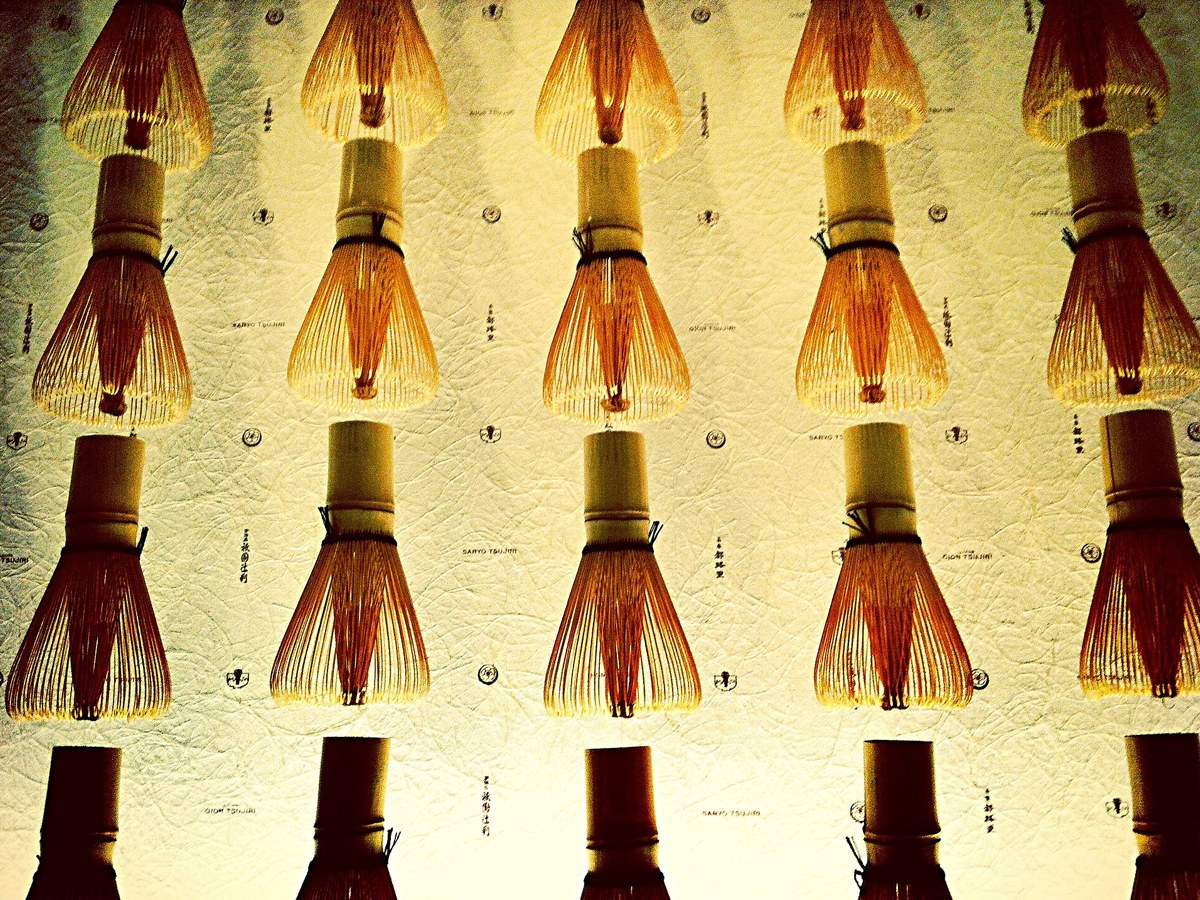
The KOGEI JAPAN craft account describes the object precisely. A Takayama chasen begins as a bamboo tube about ten centimetres long; its end is finely split — into dozens of tines — and the split crown is bound with thread, the outer tines curled to froth and the inner core left standing to hold the shape. Each whisk is completely made by hand. The bamboo itself is rested before work even begins: cut and left for one to two years, then sized. Three bamboos are in common use — henon, the white bamboo; black bamboo; and soot-coloured bamboo, darkened by years above a hearth — and the finished whisk's character changes with each.
What the hand buys is variety under discipline. More than sixty types of Takayama whisk are made today, the account records, because the tea schools each specify their own: the shape of the whisk, the type of bamboo and the colour of the binding thread all differ by purpose and by school — down to the tips themselves, straight for the Mushakouji Senke school, curved like a fish hook for Urasenke. A mould can copy a whisk; it cannot hold a catalogue of sixty school-correct forms in one craftsman's fingers.
Murata's request, five centuries of secrecy
The origin is carried by the craft account as tradition, and this page keeps its wording: tea-whisk production started in the middle of the Muromachi period, and it is said that Juko Murata — the founder of wabi-cha, the rustic tea ceremony — requested Minbunojo Nyudo Sosetsu Takayama, of the local lord's house, to make him tea whisks. From that request, on the checked accounts, the craft settled in Takayama and stayed: passed down as a family secret, generation to generation, in the lord's line and then in the retainer households of the village.
The concentration is the modern fact. Ikoma, the checked retailer account states, accounts for about 90 percent of domestic tea-whisk production, and the craft tradition is described as making Takayama Japan's only tea-whisk-making city. The makers' own listings add the human figure: only around sixteen artisans in Japan are said to make Takayama chasen today, each whisk handcrafted piece by piece — and at least one Takayama maker's current listing states plainly that production cannot meet demand and the next restock is undecided. Five centuries of secrecy preserved the skill perfectly and the headcount barely at all.
What a real one costs
The price of the genuine article is modest for a five-century craft, and the checked listings fix its band. A Takayama-made white-bamboo Kazuho whisk of seventy prongs, from the Takayama workshop tradition, is listed at ¥5,500; a short Takayama whisk by the Chikumeido house is listed at ¥3,500 — so a real Takayama chasen runs about ¥3,500-5,500 depending on bamboo, prong count and maker, before the smoked and black-bamboo specialities climb higher. Against that, the honest warning the listings carry: if a whisk's listing does not say where it was made, it was not made in Takayama — most whisks sold worldwide are industrial copies of this village's form.
Nara's standing stories are a persimmon-leaf sushi, the brushes of Nara's own calligraphy tradition, and Miwa's hand-pulled somen. The chasen is the prefecture's first tea ware — and its most quietly essential object: no whisk, no froth, no tea ceremony as the schools practise it. It is also the only story in this collection whose entire national supply fits in one village's workshops.
Reading a whisk before you buy
Buy by the three marks the craft account gives you: the bamboo (white for the everyday whisk, black and soot bamboo for the older, smokier character), the prong count and tip shape for your school or your bowl — a seventy-prong Kazuho for general use, tips straight or hook-curved by tradition — and the thread colour that binds the crown, which is not decoration but part of the school specification. Then treat it as the perishable tool it is: a chasen is a consumable of the tea room, its tines softening and breaking over months of whisking, which is precisely why a village of makers has had steady work for five hundred years.
If you pass through Ikoma, the workshops themselves are the souvenir's source — Takayama's makers sell at the bench the whisk was split on. Few crafts anywhere let you hold the entire national tradition in one hand. This one weighs about as much as the bamboo it came from, and froths like nothing else on earth.
Sources — checked 11 November 2026
- KOGEI JAPAN: Takayama Tea Whisks (Takayama Chasen) — description, history and production process (checked craft account)
- YUGEN (Kyoto): Takayama Chasen, white bamboo Kazuho 70-prong — maker's listing (checked retailer listing)
- Japan Traditional Crafts Aoyama Square via Cool Japan Videos: Takayama Tea Whisk — characteristics and history (checked craft introduction)
Original prose and official links only; no source text or maker media reproduced. Photos are credited Creative Commons works, not product photographs.
Editorial review 2026-11-11