Every cuisine has a first address, and Japanese somen's is a shrine town in Nara. In Miwa, at the foot of the sacred mountain in Sakurai City, thin wheat noodles have been pulled by hand for a reported thirteen centuries — long enough for the name to end up protected in law. It gives Nara its third story in this collection.
The shrine where noodles began
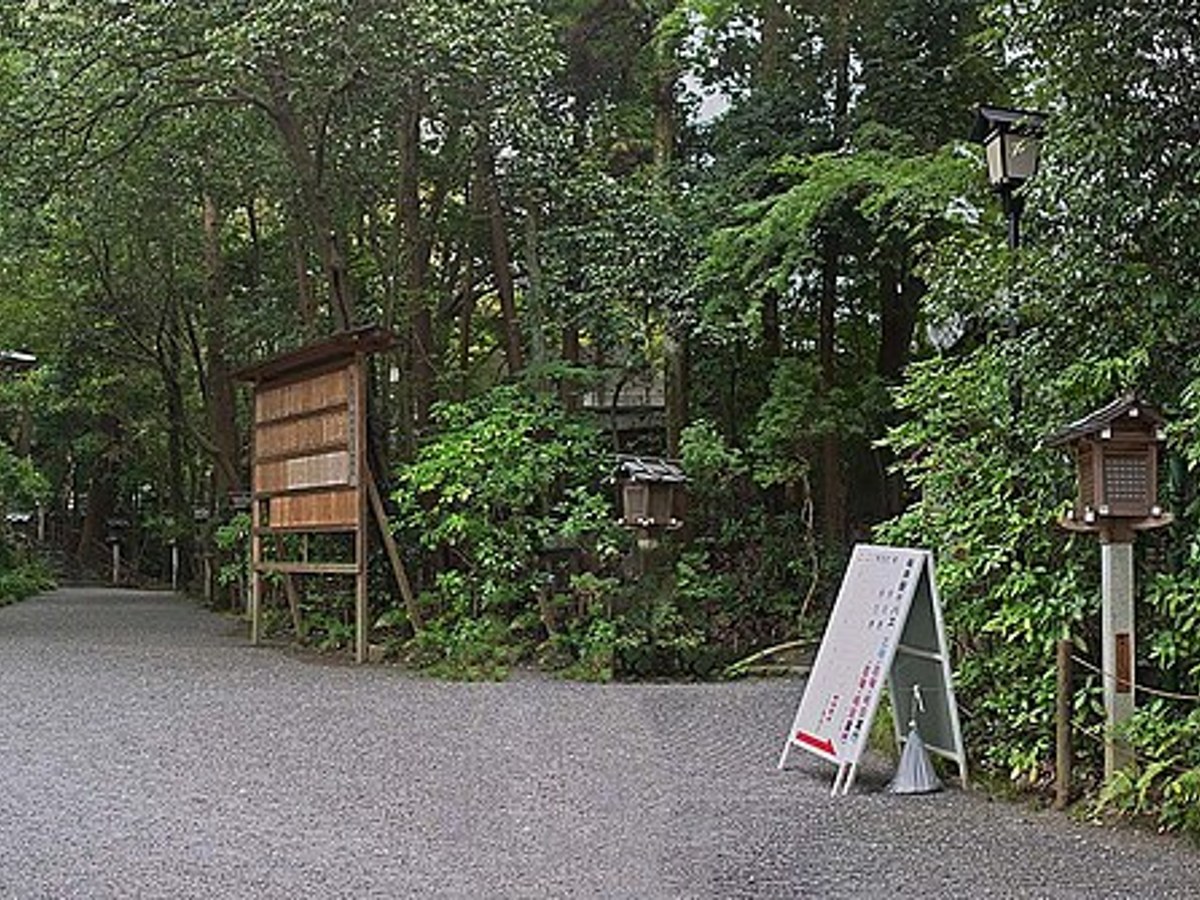
The GI site's account is the one Miwa itself tells: somen production reportedly started about 1,300 years ago at Omiwa Shrine, Japan's oldest shrine, as relief food for people suffering from famine and plague. Somen was already being eaten in the Nara period — the ancient documents the GI account cites, the Kojiki and the Shosoin records of around 750, mention it — and Miwa, in the Yamato heartland, became the place that made it best. By 1754 a document could write the verdict that Miwa still quotes: Yamato Miwa somen are slender like threads, white like snow; they do not swell even when boiled, which cannot be equalled by somen from other regions.
The town still organises its year around the noodle. Every February 5, everyone connected with handmade noodles gathers at Omiwa Shrine for Bokujo Sai, a ritual that forecasts the market price of the year's somen — a price-prediction ceremony as a shrine rite, testifying, in the GI account's words, to Miwa as somen's original birthplace. And each year Miwa Somen is presented to the Imperial Household Agency, the modern form of an old tribute.
Ninety-five strands in ten grams
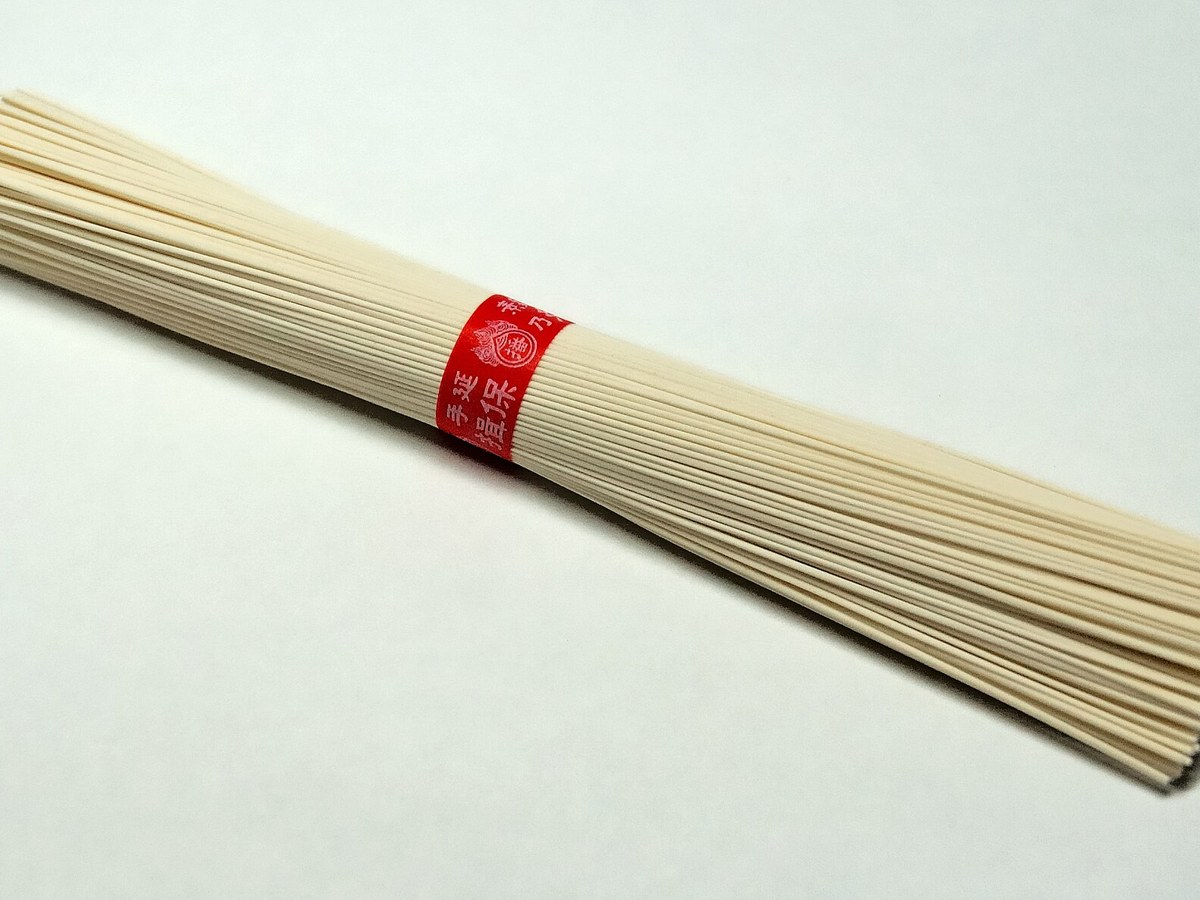
The method the GI protects is a study in patience with a rope of dough. Wheat flour, salt and water are kneaded into dough, pressed and stretched into strips; the gluten forms the fibre's base. The strands are then twisted and drawn out thin while edible vegetable oil is applied, rested so the dough leavens, then twisted and drawn again — and finally dried until their moisture falls to 13.5% or less, and cut to length. Mechanisation has reduced the hand processes since, but the GI account is explicit that the traditional hand-drawing method is still followed.
Thinness is the measurable glory. Somen grades are counted in strands: the GI account records that Miwa's fineness reaches the highest grade, over 95 strands in a 10-gram bundle — individual strands well under a millimetre, hair-fine, with an elasticity that keeps them from swelling slack in the bowl. Makers grade their own lines upward from there into named rarities, and aged noodles — rested a year or two — are prized in the checked guides for a smoother, firmer bite, and priced accordingly.
Makers of three centuries, and what a box costs
Miwa's noodle houses are dated like temples. Miwa Yamamoto, founded in 1717, has made and served somen at the foot of Mt Miwa for over three hundred years; its restaurant's directory budget starts at ¥900. Senjutei, by the approach to the shrine, was opened in 1980 by the fourth-generation head of Ikeri, a somen maker founded in 1850, with a typical budget around ¥1,000 — the makers' own dining rooms are where the noodles are eaten at home.
For taking away, the gift box is the standard form. Miwa Yamamoto's own shop sells its Hakuryu — extra-fine hand-pulled somen aged a year — at ¥3,564 for a 600-gram gift box of twelve 50-gram bundles. The Torii-mark boxes sold through the Japan Post shop run ¥3,240, ¥4,320 and ¥5,400 including tax, and a two-year-aged Miwa Somen lists at ¥5,400: the older and finer the noodle, the higher the box climbs, in a price ladder as graded as the strands themselves.
How to eat it, and how to check it
Miwa somen is a summer noodle in its home form: boiled briefly — the finest strands need barely a minute — rinsed cold, and eaten in cold water or ice with a dipping broth, so the elasticity and the clean wheat taste carry everything. In winter the same strands go into hot broth as nyumen. Either way, undercook slightly: a noodle famous for not swelling still rewards being caught early.
Check the name the way the GI intends. 'Miwa' on the box should mean produced in Miwa by the protected method — the registration exists because the name alone, unpoliced, would drift onto any thin noodle. Buy from the Miwa makers' own shops and restaurants in Sakurai, or their official channels, and the thin white bundle in your hands is the one the shrine town has been pulling since the Nara period.
Sources — checked 10 November 2026
- Japan Geographical Indication Products site: Miwa Soumen
- GOOD LUCK TRIP directory: Miwa Yamamoto Oshokuji-dokoro, Sakurai
- Miwa Yamamoto official shop (Yahoo Shopping): Hakuryu extra-fine hand-pulled somen, 600 g gift box
- Japan Post online shop: Miwa Somen Torii-mark listings
- GOOD LUCK TRIP directory: Senjutei, Sakurai
- Food in Japan guide: Miwa Somen — Japan's finest hand-stretched noodles from Nara
Original prose and official links only; no source text or maker media reproduced. Photos are credited Creative Commons works, not product photographs.
Editorial review 2026-11-10