Most yakisoba is built on sauce. Oga built its yakisoba on a fish sauce older than the town’s modern name: shottsuru, the hatahata sandfish liquor that Akita fishermen have salted down for centuries. In 2009 the city’s chamber of commerce, its fishery and its noodle makers sat down to invent a dish that would carry that flavour out of the pickle jar — and produced pale-green noodles kneaded with wakame and kelp, a shottsuru tare, and a strict rule that no meat would ever touch the pan.
2009: a city invents a dish for its fish sauce
Shottsuru — salt-fermented hatahata, Akita’s prefectural fish — was famous in exactly one form, the winter hotpot, and the Oga City Chamber of Commerce wanted it eaten all year. In December 2008 chamber volunteers began trialling a use for it; in January 2009 the Shottsuru Utilisation Council — the city’s food businesses, fishery people, the chamber and Akita Prefecture — formed to develop the product properly. By April 2009 the dish was on sale at restaurants across Oga City under the name Oga no Yakisoba, Oga’s yakisoba.
The promotion body reorganised in June 2011 as the Oga Yakisoba Association, the dish took its full name — Oga Shottsuru Yakisoba — that September, and the name was trademark-registered in January 2012. The association keeps a shop list that carried twenty shops inside Oga City and six outside it in 2022, and the noodle maker Hachiro-men sells the boiled-noodle-and-tare set into supermarkets and souvenir shops, so the dish travels as well as it queues.
The association’s three rules
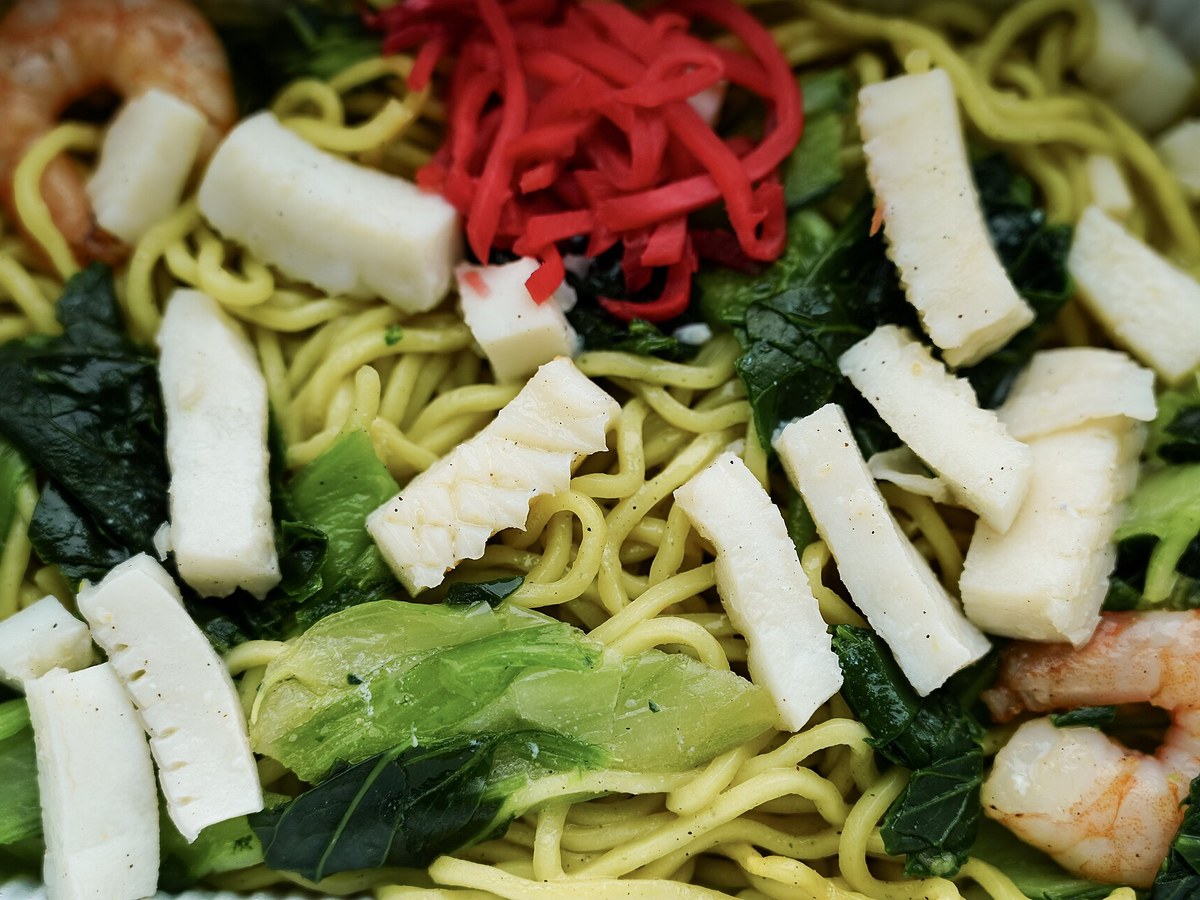
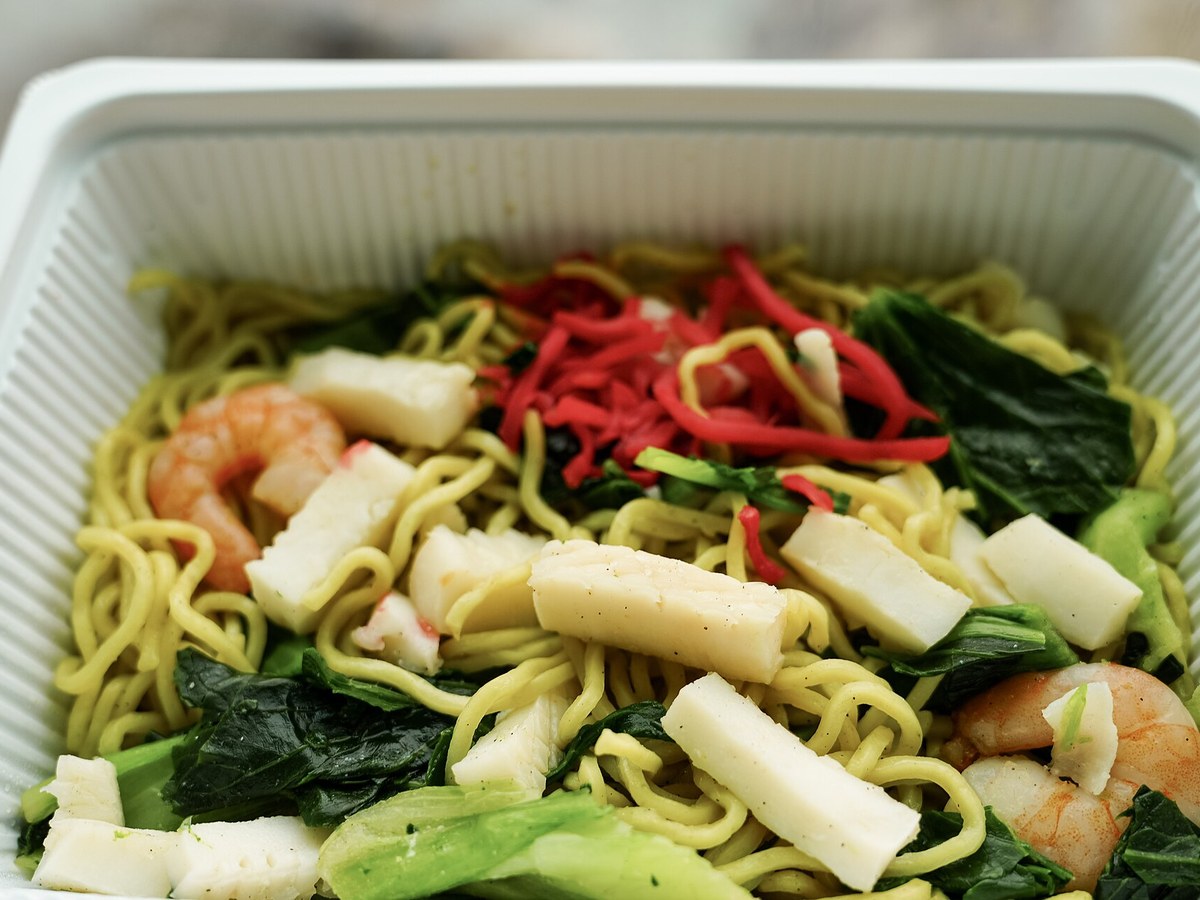
What makes the dish itself — and not just any seafood noodle — is a three-point rule the association publishes and its member shops keep. First, the noodles: a special curly noodle kneaded with powdered wakame and kombu dashi, pale green from the seaweed, made to carry a fish-sauce tare. Second, the tare: built on shottsuru, in two standing versions, salt and soy sauce. Third, the fillings: seafood only. No meat — the pan is for shrimp, squid, crab, seaweed and vegetables, and within that rule each shop finishes the dish its own way, some of them under a starchy ankake veil.
This story’s two photographs are the rule on a plate: green-tinted noodles under shrimp, white squid batons, leafy greens and beni shoga, the seafood bright against the seaweed noodle. The shottsuru itself is the invisible ingredient — a fermented fish liquor whose depth reads as salt and sea at once — and Oga’s brewers, Moroi Jozo first among them, still make it from hatahata and salt alone, a year or more in the barrel.
Where Oga eats it
In Oga the dish is infrastructure as much as menu: restaurants in the city, the food court and stalls at events, and — the detail that tells you it worked — the frozen-food vending machines at the Ogare roadside station, where the ready-cooked frozen version is the machines’ best seller. The association’s song, kept on its official site, sings the specification like a jingle: hatahata shottsuru as the hidden flavour, wakame-and-kombu curly noodles, salt or soy, your choice.
Order by tare. The salt version is the purist’s plate, all fish sauce and seaweed; the soy version is rounder and darker. Both come seafood-loaded, and both are built on noodles you can identify blind: the wakame green and the gentle curl are the dish’s passport, checked by the association’s rules before any shop’s name goes on its list.
The frozen set, priced
The home route is unusually good for a dish this young. Oga City’s hometown-tax listing on the JAL store offers the ready-cooked frozen set — five 200-gram meals, CAS-frozen and microwaved back to serving in about three minutes — at a 16,800 yen donation, in stock, provided by Oga Nabi. The same frozen meals stock the Ogare vending machines in Oga itself. In the city’s restaurants the plate is an ordinary lunch price; the frozen set is the souvenir form, and the noodle-and-tare retail set from Hachiro-men is the cook-it-yourself form.
Buy the frozen set for the true test: if a yakisoba survives freezing and still tastes of the sea, its tare was built properly. Oga’s does — the shottsuru was a preservation liquor long before it was a sauce, and the dish was designed by a council that included the fishery. Few invented dishes are this well engineered; fewer still publish their rules.
Sources — checked 14 November 2026
- Oga Shottsuru Yakisoba — the association record (Oga Yakisoba Association pages, as compiled with their citations)
- JAL hometown-tax store — Oga Shottsuru Yakisoba frozen five-meal set (Oga City)
Checked 14 November 2026 (stored links re-fetched and judged per product): reserved where the page says so, with an editorial review note kept per product. Press, PR and travel use stays outside the grant.
Editorial review 2026-11-14