Ordinary udon is cut. Inaniwa udon is pulled — strand by strand, by hand, over three days, until the dough that began as a rope ends as something closer to silk thread. It was good enough to be made an official product of the Akita domain's lords, secret enough to be passed to a single heir for two hundred years, and it remains the lightest, glossiest noodle in Japan: three minutes in the pot, and gone in a cool, smooth swallow.
Rope first, noodle last
The craft atlas defines the form by its making, and the making is unlike any other udon. The dough is kneaded, then twisted into rope-like strands, aged, and finally stretched thin by hand — no rolling pin anywhere in the process. At Sato Yosuke Shoten, the district's best-known house, the maker-visit account watches the same grammar at work: as much air as possible kneaded into the dough for firmness, the strands stretched long by hand as though twisting rope, hung over two poles, and left to dry, the whole judgement done by instinct and feel. The full cycle takes three days, the flagship's own directory confirms, including the ripening — and the craftsmen fine-tune the texture against the temperature and humidity of each particular day.
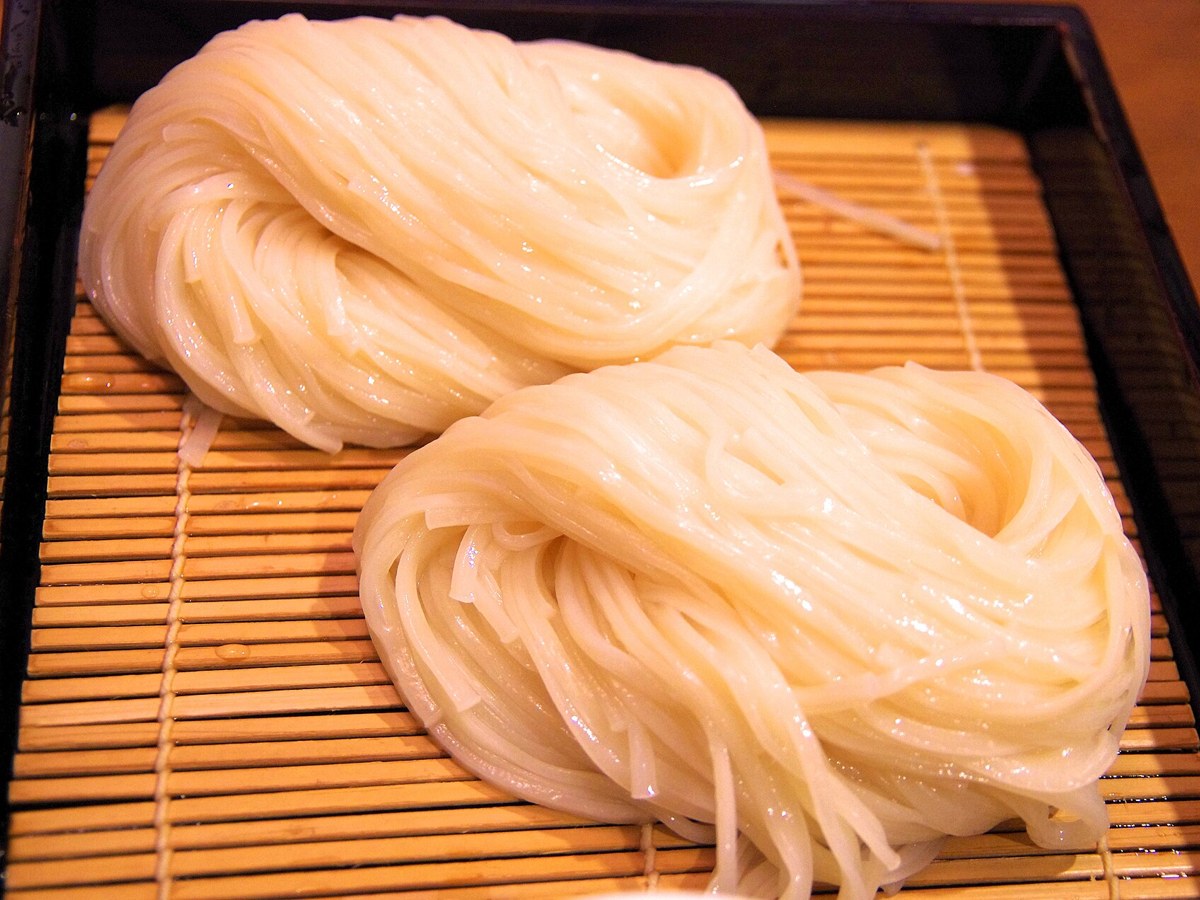
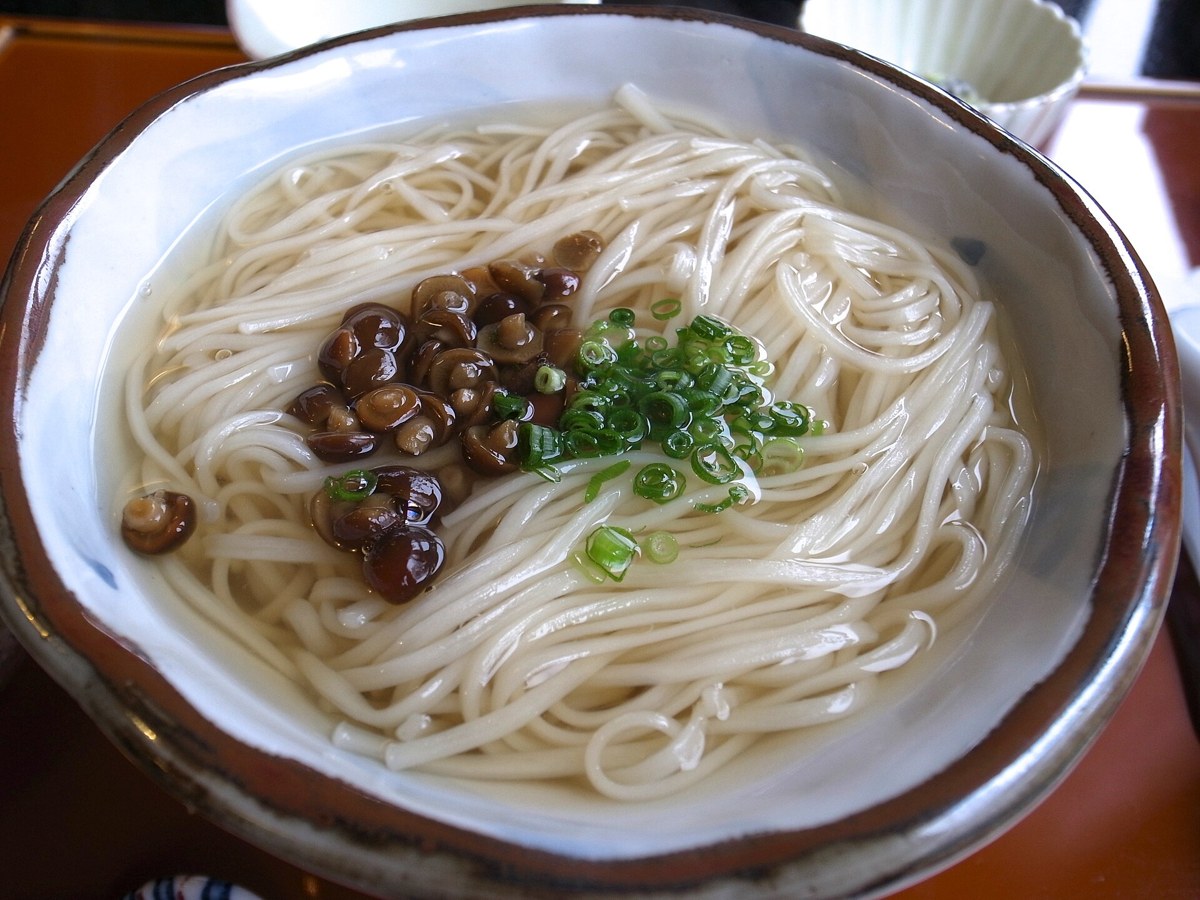
The result explains the reputation. Because the noodle is stretched rather than rolled and cut, its surface is smooth and unbroken, its cross-section fine, its cooked texture firm yet silken — the atlas calls the texture smooth yet firm, rewarding the chew the longer it goes on. Boiled for only about three minutes and served cold with a dipping sauce, Inaniwa udon eats less like the thick white udon of the west and more like a cool, elastic thread.
A domain's official noodle, a family's secret
The atlas traces the line carefully. The origins go to Sato Ichibee, making noodles in the Ozawa hamlet of Inaniwa Village under the Akita domain; the technique was inherited and refined by Inaniwa Kichizaemon I, and the hand-stretching method is said to have been established in 1665, in the early Edo period. About a century later, in 1752, the noodle was designated an official product for the Satake family, the lords of the Akita domain — domain produce, carried up to the castle, and treated accordingly: for a long time the technique was a closely guarded secret, passed down to only one heir in each generation.
The secret's release is the modern story. Fearing the line might die with its keepers, the holders specially taught the method to Sato Yosuke II late in the Edo period; in 1860 his house, Sato Yosuke Shoten, was founded, and in 1972 the manufacturing method was finally made public, after which — the maker-visit account records — the noodle spread quickly and became known across Japan as Akita's own. The flagship still stands in Inaniwa itself, at the address the directory gives, selling from nine and serving meals from eleven.
Three great udon, one cold bowl
The standing is stated by both checked accounts: Inaniwa udon is counted among Japan's three great udon, alongside Sanuki udon of Kagawa and Mizusawa udon of Gunma — both already in this collection, which makes this page the trio's completion. The three could hardly differ more: Sanuki is thick, white and defiantly chewy; Mizusawa is clear and firm; Inaniwa is the aristocrat — thin, pale gold, glossy, and eaten cold so its texture survives intact.
The prices stay working-noodle honest. At the producing houses and the Akita restaurants the checked guides read, bowls and lunch sets built around the noodle run about ¥1,000-1,800, with a plain two-sauce seiro at a Sato Yosuke restaurant read at ¥1,000 — the lord's noodle at a townsman's price. Dried bundles are the district's classic gift, precisely because the hand process keeps production limited, as the atlas notes.
Akita's shelf, given its noodle
Set Inaniwa udon beside Akita's standing stories and the prefecture's table completes itself: kiritanpo, the pounded-rice hotpot; Hinai-jidori, its certified free-range chicken; the bent-cedar magewappa boxes of Odate. All three are winter-weight, hearth-side foods. Inaniwa udon is the counterweight — the summer noodle, cold and bright — and it is Akita's first noodle in this collection, arriving 350 years after its makers first twisted the dough into rope.
Eat it where it is made if you can: in Inaniwa itself the producing houses serve the fresh-selected noodles with the district's own broths, and the flagship offers the making itself to watch. Failing that, buy the dried noodle and respect the three minutes — this is a noodle that spent three days becoming delicate, and it asks only that you not undo that in the pot.
Sources — checked 11 November 2026
- Takumi Meguri (craft atlas): Inaniwa Udon — origin, history and features (checked craft account)
- Nihonmono: Inaniwa Udon — Sato Yosuke Shoten (maker-visit feature)
- Good Luck Trip: Sato Yosuke Shoten Flagship Store (checked directory)
Original prose and official links only; no source text or maker media reproduced. Photos are credited Creative Commons works, not product photographs.
Editorial review 2026-11-11