Akita's most famous food began as a way to carry rice up a mountain. Hunters and woodcutters in the snowy north of the prefecture mashed leftover cooked rice around cedar sticks and grilled it over the hearth, so it kept; back home, the grilled sticks were cut up and simmered in a rich chicken hot pot to celebrate the harvest. That is kiritanpo — grilled rice sticks in a Hinai-chicken nabe — and in season it costs ¥1,500 to ¥3,000 a person in the restaurants of Odate, its birthplace.
From the matagi's hearth to the harvest table
The matagi — the traditional mountain hunters of the north — and the woodcutters of the Kazuno and Odate districts needed food that travelled and kept. Their answer was engineering as much as cooking: cook the rice, mash it only part-way, wrap it around a thick cedar skewer and toast it over charcoal until the surface firms and browns. Grilled, the stick is portable; cut into chunks, it becomes an ingredient that drinks up broth without falling apart.
At home the sticks anchored the nabekko, the hot-pot gathering that thanked farmers after the autumn harvest: new rice, grilled and simmered with the mountain's burdock, mushrooms and chicken. The hot-pot form itself is the younger layer — it spread in the early Showa period — but it is now the dish the prefecture is known by, and Odate is widely regarded as its birthplace.
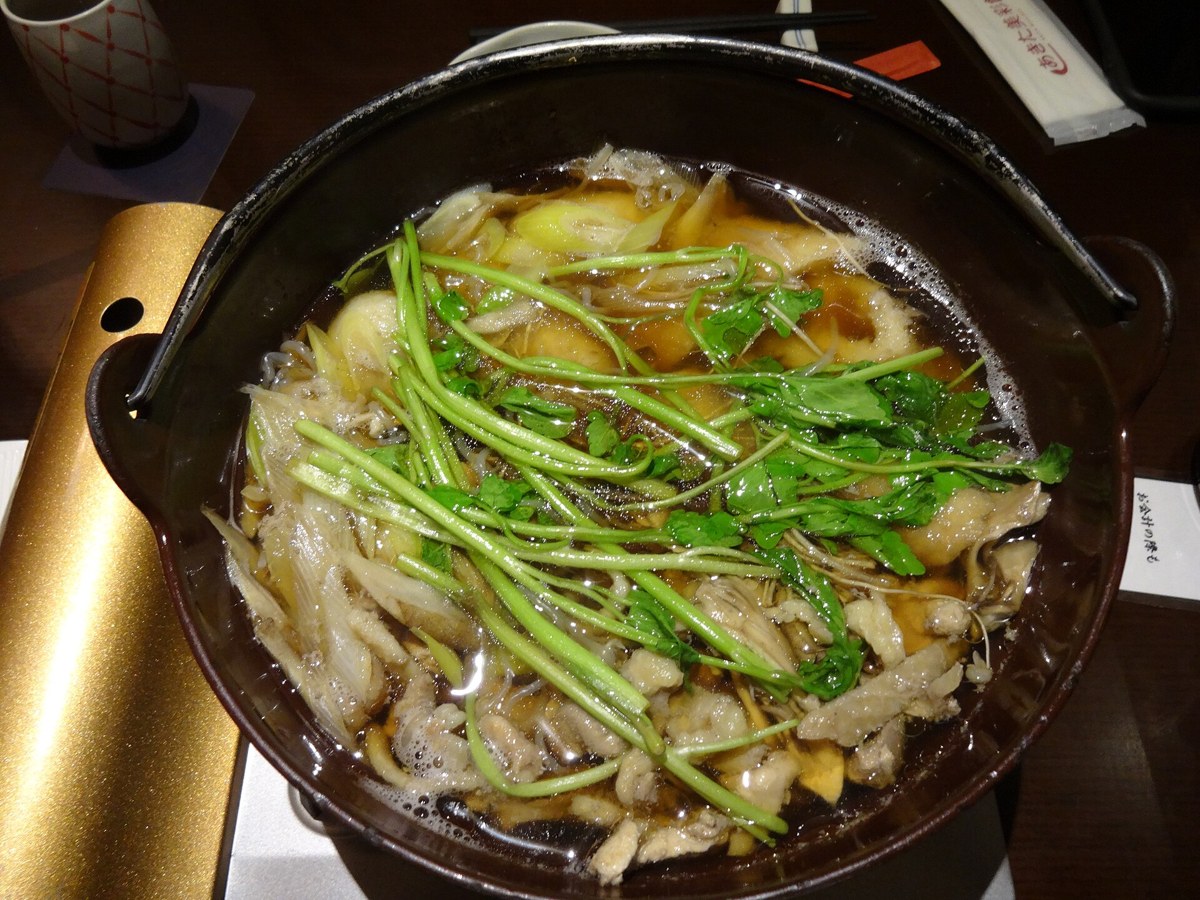
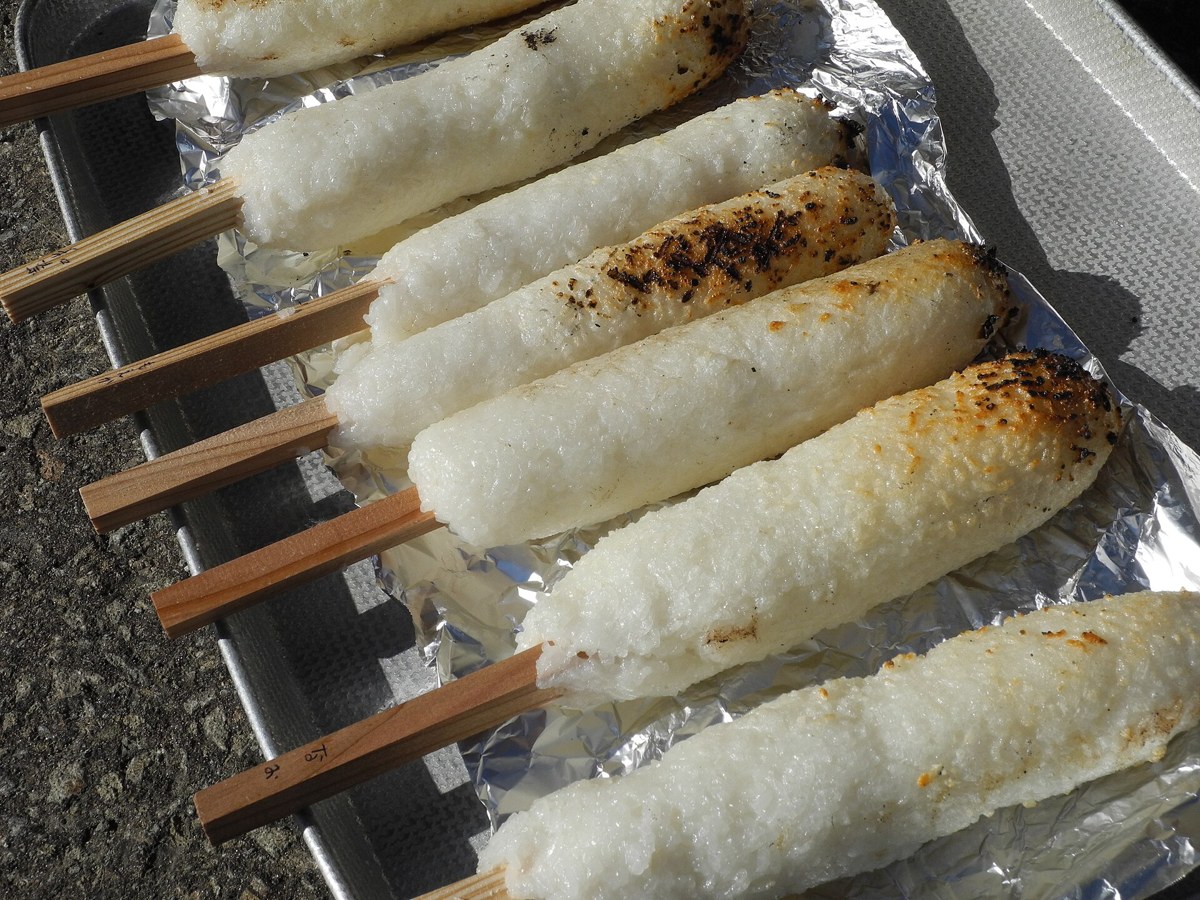
Half-killed rice, three local pillars
The texture is decided by one technique with a violent nickname: hangoroshi, 'half-killing' the rice. The grains are mashed only part-way, so the stick stays chewy and distinct-grained rather than turning to mochi paste; moulded on Akita cedar, grilled until lightly browned, it holds its shape in the pot and comes out with a toasted edge and a broth-soaked centre.
The pot stands on three Akita pillars: Akita Komachi, the prefecture's prized rice, for the sticks; Hinai-jidori — one of Japan's three great local chickens — for the broth; and the northern mountain vegetables, burdock root, seri greens and maitake mushrooms, with green onion. The name itself is a picture: tanpo was the cloth cover on a spear tip, which the rice cylinder resembles, and kiri is simply 'cut' — the stick, cut for the pot.
Practical details: prices, season, where to eat
Prices (checked 2026-11-09): a restaurant kiritanpo nabe runs roughly ¥1,500 to ¥3,000 per person; Akita Kiritanpo-ya by Akita Station serves the pot from about ¥1,500. The simpler street form — a single grilled stick brushed with miso, miso tanpo — is ¥200 to ¥300 and is the festival and station-front version.
Season: October to February, when the new rice, fresh burdock and maitake all peak. Where to eat: Odate for the birthplace houses, Akita City's station-front specialists for the easy version; the sticks themselves are sold grilled, frozen and vacuum-packed as souvenirs across the prefecture. Type of edition: regional edition — a place-defined dish of northern Akita.
Order the pot, not just the stick
A lone miso tanpo is a fine snack, but it is the trailer, not the film. The full dish is the pot: the grilled sticks arriving already cut, sinking into a Hinai-chicken broth that tastes like the whole northern autumn — root, mushroom, herb and rich chicken — and coming out swollen, chewy and deeply savoury.
Eat it in Odate in late autumn if you possibly can, when the new-harvest rice is freshest and the nabekko logic — a whole table sharing one pot after the work of the year — still makes sense. It is one of Japan's great cold-weather arguments for regional cooking.
Scope: what 'limited' means here
Kiritanpo is documented as the grilled-rice-stick dish and hot pot of northern Akita (Kazuno and Odate), with its hunter origin, its three local pillars and its season as cited. Tokyo Akita restaurants and souvenir sticks are stated in the limitations. Checked 2026-11-09.
Sources — checked 9 November 2026
- Food in Japan: What is kiritanpo? — Akita's rice & Hinai-jidori hot pot
- Umami Information Center: Kiritanpo nabe — local cuisine of Akita
- Japan Activity: Akita food guide — kiritanpo & local delights
Original prose and official links only; no source text or maker media reproduced. Photos are credited Creative Commons works, not product photographs.
Editorial review 2026-11-09