Every other takuan in Japan is dried by the sun; Akita's is dried by smoke, because the sun was not available. Akita's fifth story is iburigakko — daikon hung in hearth smoke against the snow, then buried in rice bran — the winter pickle that a GI registration now guards, crisp, amber and faintly of the fire.
The pickle the snow invented
The Japan Geographical Indication Center tells the origin as a climate problem. Akita faces the Sea of Japan: humidity is high, and from late autumn into early winter the snow comes, so daikon radishes hung outside to sun-dry in the usual takuan way would not dry — worse, they could freeze. The farmers' answer was to hang the radishes from the beams of the house and dry them in the smoke of the irori hearth, and the method was passed down among farming households as iburi daikon-zuke, a preserved food for the long snow cover.
The name is the method in the local tongue: iburi, smoked, joined to gakko, the Akita dialect word for pickles. The register records that the combined name was first used commercially in 1967 — the moment the farmhouse workaround became a product — and the form it names is, in the register's phrase, a smoked pickled vegetable rare anywhere in the world.
Two days of smoke, forty days of bran
The GI method is exact about its two halves. Domestic daikon are smoked for two days and nights or more over broad-leaf timber — oak and cherry are the register's examples — which does the drying the sun refused to do and lays the smoke into the root. The smoked radishes then go into a bed of rice bran and are pickled for forty days or more at low temperature, the slow cold ferment of a snow-country storehouse.
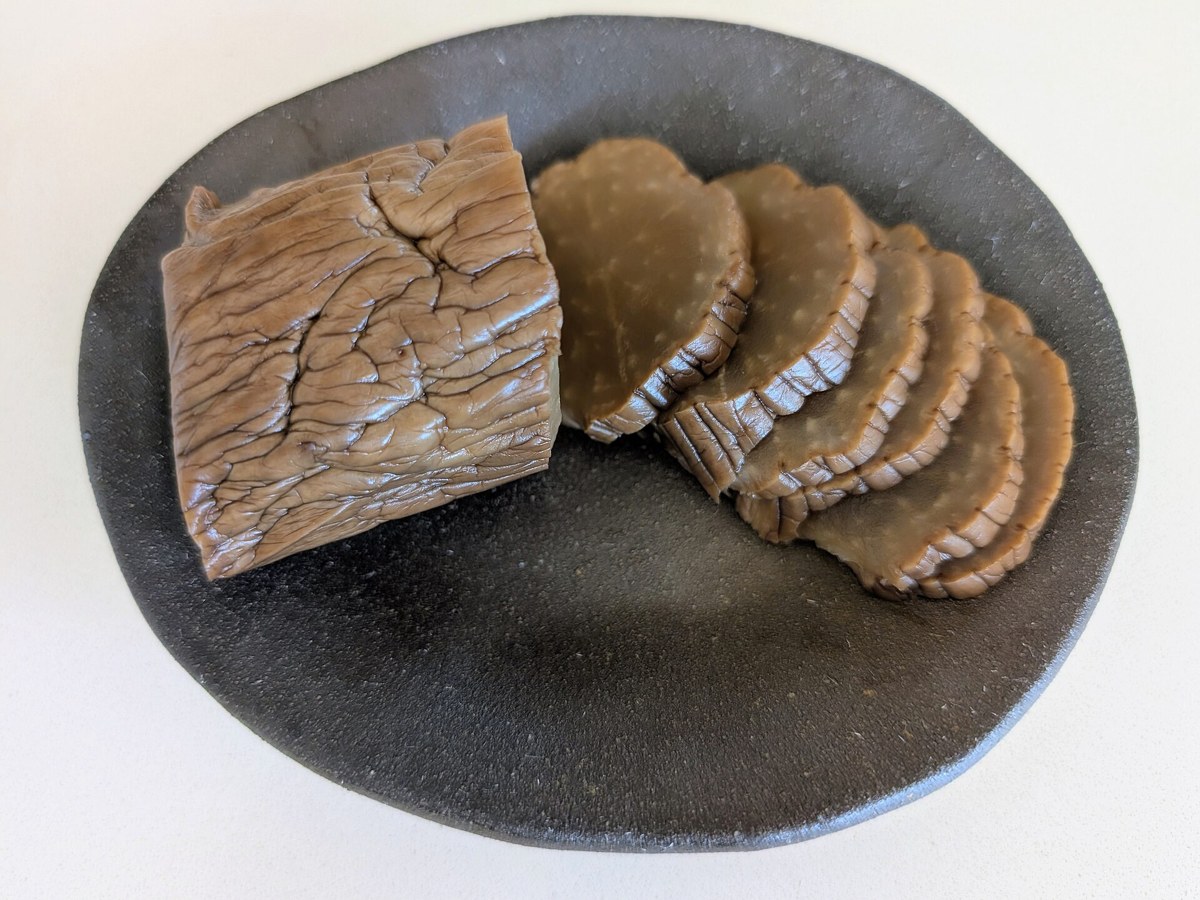
What the register promises from that patience is a particular bite: a crisp texture, the aroma of smoke and the natural sweetness of daikon. It is worth pausing on the crispness — a pickle that spent two days in smoke and six weeks in bran has no business staying crisp, yet crisp is the first word every account reaches for, and the sliced root's dense, even grain shows why: the smoking dries without cooking, so the flesh firms instead of softening. The register's own ordering of the pleasures is exact — crispness first, then the smoke, then the radish's sweetness — and a good root delivers them in that sequence.
GI No.79, and a growing harvest
On 8 May 2019 iburigakko entered the national register as Geographical Indication Product No.79, with Akita Prefecture as the production area and the Akita Prefecture Iburigakko Promotion Association as the registered group; the Ministry of Agriculture's GI page carries the same entry. The register's production figures give the form's scale in its home prefecture: in the 2017 fiscal year, seventeen producers smoked 2.78 million radishes.
The register also records the direction of travel: production of iburigakko is growing, it notes, despite the decline of pickles nationally. A farmhouse preservation trick has become one of the few tsukemono in Japan with a rising curve — helped by the fact that the name on the pack is now a protected indication, not a generic description any smoker of radishes may borrow. The protection has teeth of a quiet kind: as the maker's own retail page puts it, in principle only products that meet the GI standards may carry the name iburigakko at all.
One maker's hundred days
The root behind this page's price is Akita Foodie's 'Akita no Iburigakko', sold whole at 250 grams. The maker's record on the retail page is specific: the daikon are of the Kozuke no suke variety grown in Ugo Town, Akita — a radish bred for pickles — smoked for two days and nights over oak logs in a smoke hut, then pickled in rice bran with zarame sugar and salt and nothing else: no colourings, no sweeteners, no preservatives.
Where the GI floor is forty days in the bran, this maker ages the roots for a hundred days or more — about a month longer than its usual run, the page says — fermenting slowly in cold vats so the bran's sweetness reaches the centre and the acidity stays mild. It is the register's method with the patience doubled, and it is sold, fittingly, as one whole root: the smokehouse shape intact, to be sliced at the table.
Sources — checked 11 November 2026
- Japan Geographical Indication Center: Iburigakko, GI No.79
- MAFF GI register: Iburigakko (Product No.79)
- Yodobashi: Akita Foodie 'Akita no Iburigakko', whole radish 250 g
Original prose and official links only; no source text or maker media reproduced. Photos are credited Creative Commons works, not product photographs.
Editorial review 2026-11-11