Fukushima already has a famous ramen in this collection — Kitakata's broad, flat noodles in a full pork broth. Shirakawa, the prefecture's southern gate, answers with the opposite temperament: a broth kept deliberately clear, chicken leading and pork supporting, and noodles kneaded by hand until they curl unevenly, each strand a slightly different width. It is the quieter bowl, and the city behind it holds more than a hundred shops serving it.
Clear soup, uneven curls
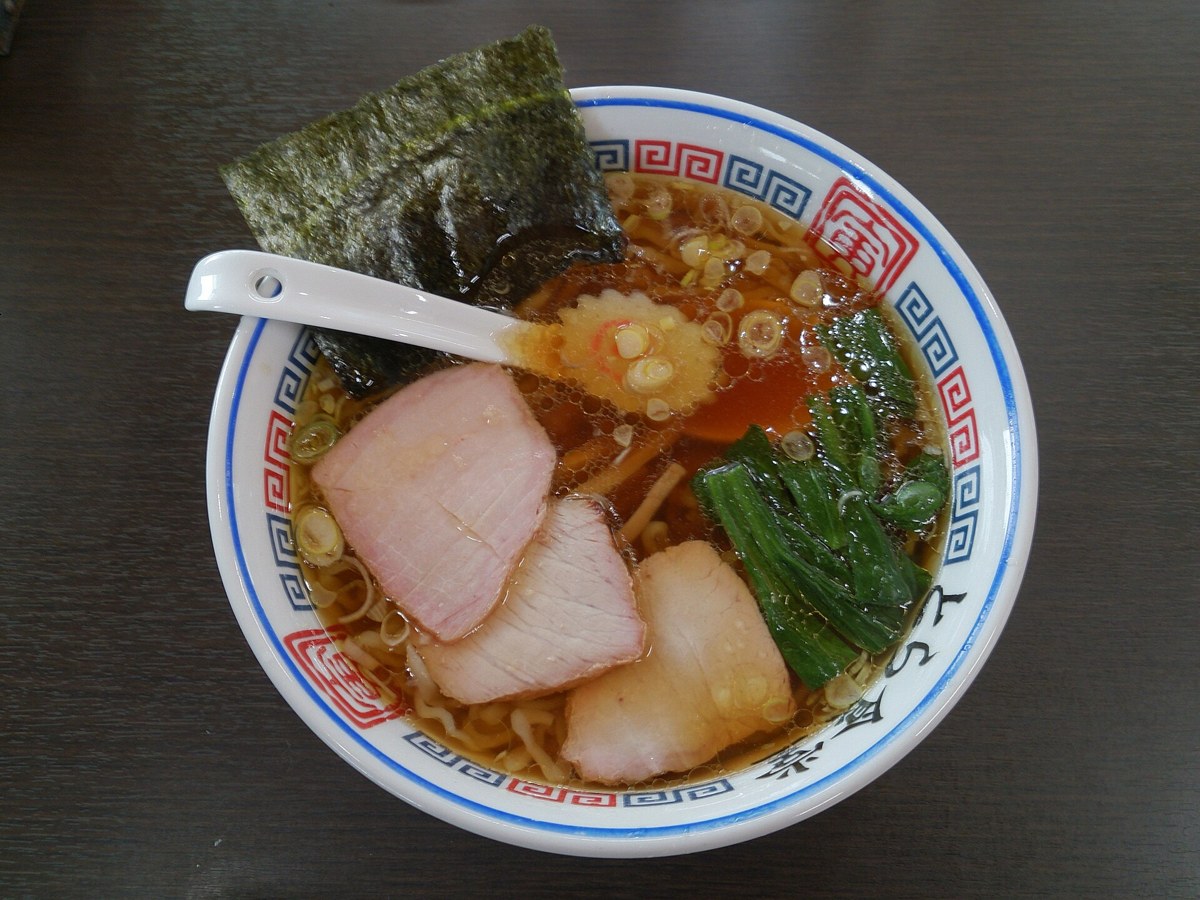
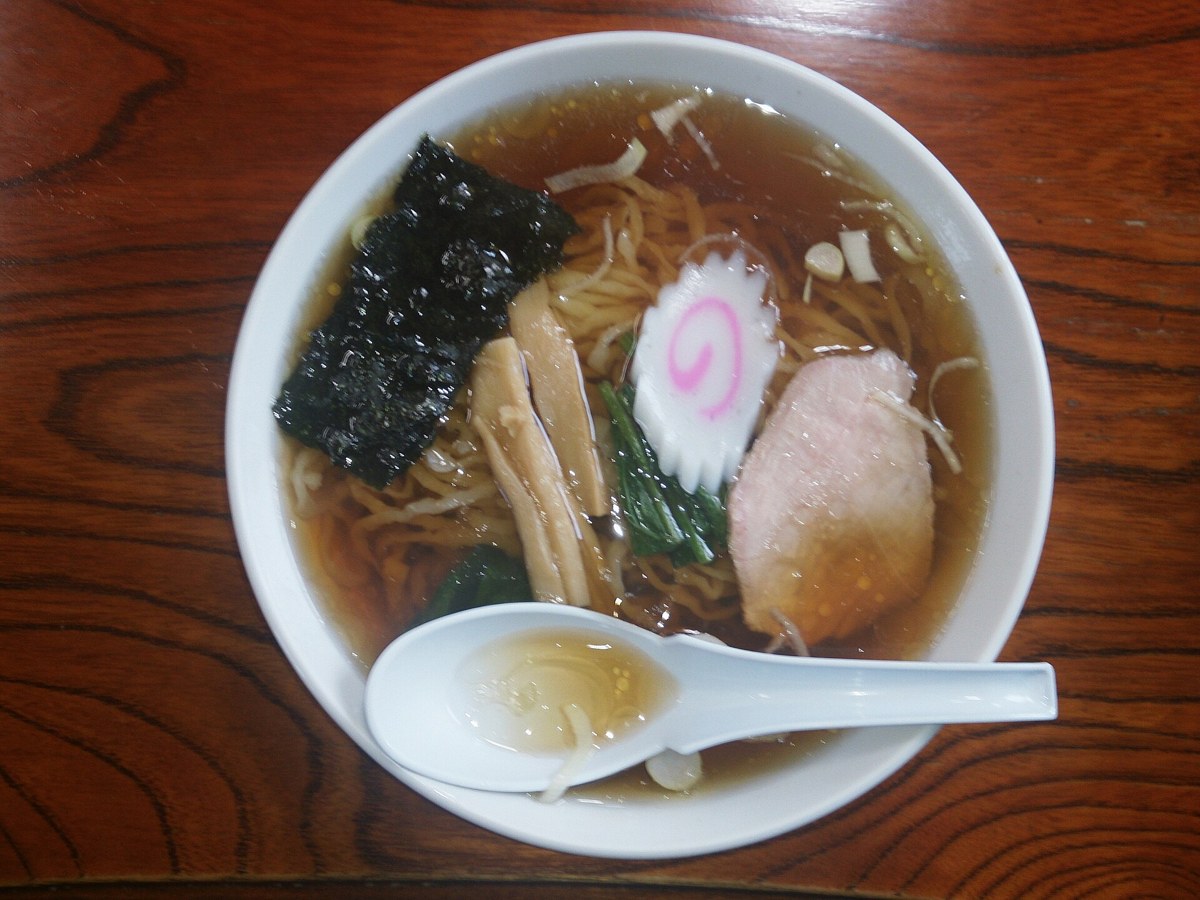
The checked guide defines the form by its balance. The broth combines chicken stock — which provides the main aroma and sweetness — with pork stock for body, seasoned with a soy sauce tare that gives the bowl its amber colour; it stays clear because the chefs avoid the cloudy emulsion of pork-bone styles. Over it, the noodles do the talking: wide, slightly flat, high in water content, handmade and unevenly curled, their folds catching the broth in every bite. The classic toppings keep the same restraint — chashu, menma, spinach, green onion, nori and the pink spiral of narutomaki.
The guide's own comparison with Kitakata fixes the two Fukushima styles against each other. Both are soy-based, but Shirakawa feels clearer and more noodle-focused, its curls irregular and handmade, while Kitakata is known for broad flat noodles and a fuller, rounder broth. One prefecture, two complete theories of what a soy ramen should be — a morning bowl in the west of the prefecture, a craftsman's bowl at its southern gate.
Tora-san and the apprentice city
The origins are carried the way the checked guide carries them: local food histories generally trace Shirakawa ramen to the Taisho era, from 1912 to 1926, when early shops served handmade noodles in soy sauce soup — and the sources differ on the precise first shop, so this page names none. What is widely agreed is the shaping hand: Torajitsu Takei, called Tora-san, whose local hand-kneading methods formed the springy, uneven curls now associated with the style, and whose shop, Tora Shokudo, trained a network of apprentices who spread the form across the city.
The prefecture's official tourism account measures what that network built: over 100 ramen shops in Shirakawa, their chefs — in the account's words — very meticulous, always looking for ways to make their bowls more delicious, until ramen became part of Shirakawa culture itself. The same account places the ramen inside a deeper noodle culture: buckwheat production promoted over 200 years ago by Matsudaira Sadanobu made Shirakawa one of Japan's four famous soba locations, and its restaurants still offer soba, ramen and handmade udon side by side.
What a bowl costs at the source
At home, the form is priced like the working lunch it is. The checked guide reads many standard bowls at around ¥800-1,200 in Shirakawa, with extra chashu, larger portions and special toppings costing more — and it adds the practical warning that defines the city's serious shops: many continue to make their noodles in-house, and popular restaurants may sell out before the afternoon, so an early visit is the wise one.
Fukushima's standing stories are Aizu's lacquerware, its bobbing red akabeko cow, and Kitakata's breakfast ramen. Shirakawa ramen is the prefecture's fourth — its second ramen, but its first clear-broth one — and it completes a Fukushima noodle map that now runs from Kitakata's flat ribbons in the west to Shirakawa's hand-kneaded curls at the southern gate, with the prefecture's soba tradition underneath both.
Eating it in order
The checked guide's eating order is a small discipline worth following. Taste the soup first, before any seasoning, to catch the soy aroma and the chicken sweetness; then eat the noodles while they are still firm, because handmade curls soften as they sit; then take the chashu with a sip of broth, so the pork and the soy sauce meet properly; and only at the end reach for the pepper. The bowl was balanced by hand that morning — the least a diner can do is meet it in the order it was built.
Go early, and go to more than one shop if the day allows. With over a hundred shops working one shared grammar — clear soup, hand-kneaded curls, no fixed recipe — Shirakawa is built for comparison, bowl by bowl, exactly as Sano is in Tochigi. The differences are the point: each shop protects its own soup and its own curl, and the city has turned that variation into its culture.
Sources — checked 11 November 2026
- Food in Japan: Shirakawa Ramen in Fukushima — Noodles, History & Shops (checked specialist guide)
- Welcome Fukushima (Fukushima prefecture tourism): Special Products of Shirakawa (checked official account)
Original prose and official links only; no source text or maker media reproduced. Photos are credited Creative Commons works, not product photographs.
Editorial review 2026-11-11