Shimonita negi is the lord’s onion: a short, thick winter negi from the Kanra district of western Gunma that is too pungent to eat raw and, once heat melts its gelatinous heart, sweeter than any onion has a right to be. Edo-period lords had it sent for by urgent letter; the Jomo karuta still sings it in a pair with konnyaku — “negi and konnyaku, Shimonita’s famous products”.
“Send 200 onions, whatever the carriage costs”
The earliest document is a demand. A letter preserved in a Kanra district headman’s family, dated the eighth day of the eleventh month of Bunka 2 (1805) and sent under an Edo hatamoto’s officer, orders two hundred negi sent urgently, at whatever the transport costs. By then, on the record, the onion of Shimonita was already cultivated and already prized; the shogunate received it in tribute, the shogun’s own kitchen (the gozen-dono) praised it, and the byname stuck: Tonosama negi, the lord’s onion — whether from the tribute itself or, on a second account, from a local lord gifting it to his peers in Edo.
The botanist Makino Tomitaro gave the onion the name it trades under. Its native seed ground (the genshu-ho) is recorded to a single farm: Sato Chotaro’s fields at Koideya in the old Nishimaki village — an origin kept, the record notes, by a New Year custom in which each house offers its five or six finest stalks, replants them in spring, and takes seed in autumn, keeping the line comparatively pure by ceremony as much as by farming.
Fourteen months in gravelly clay
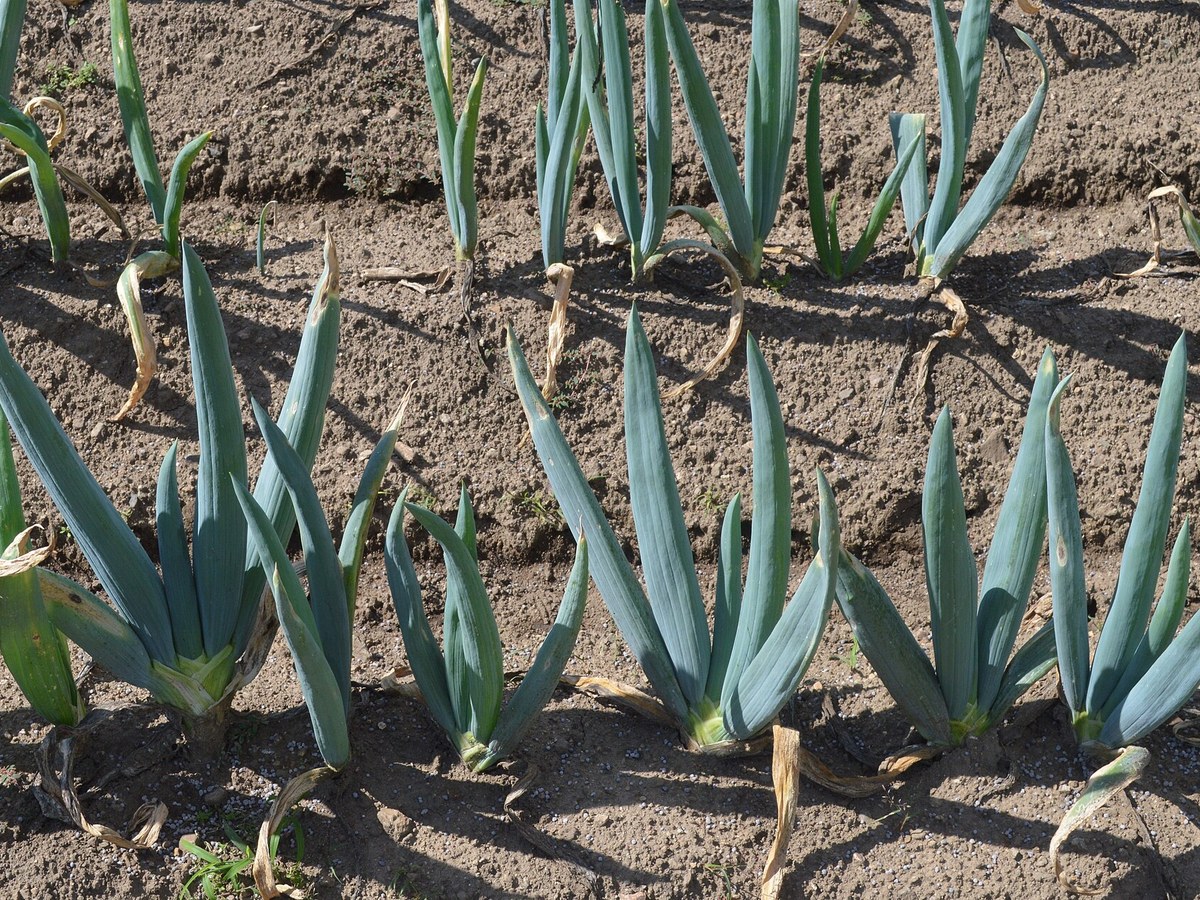
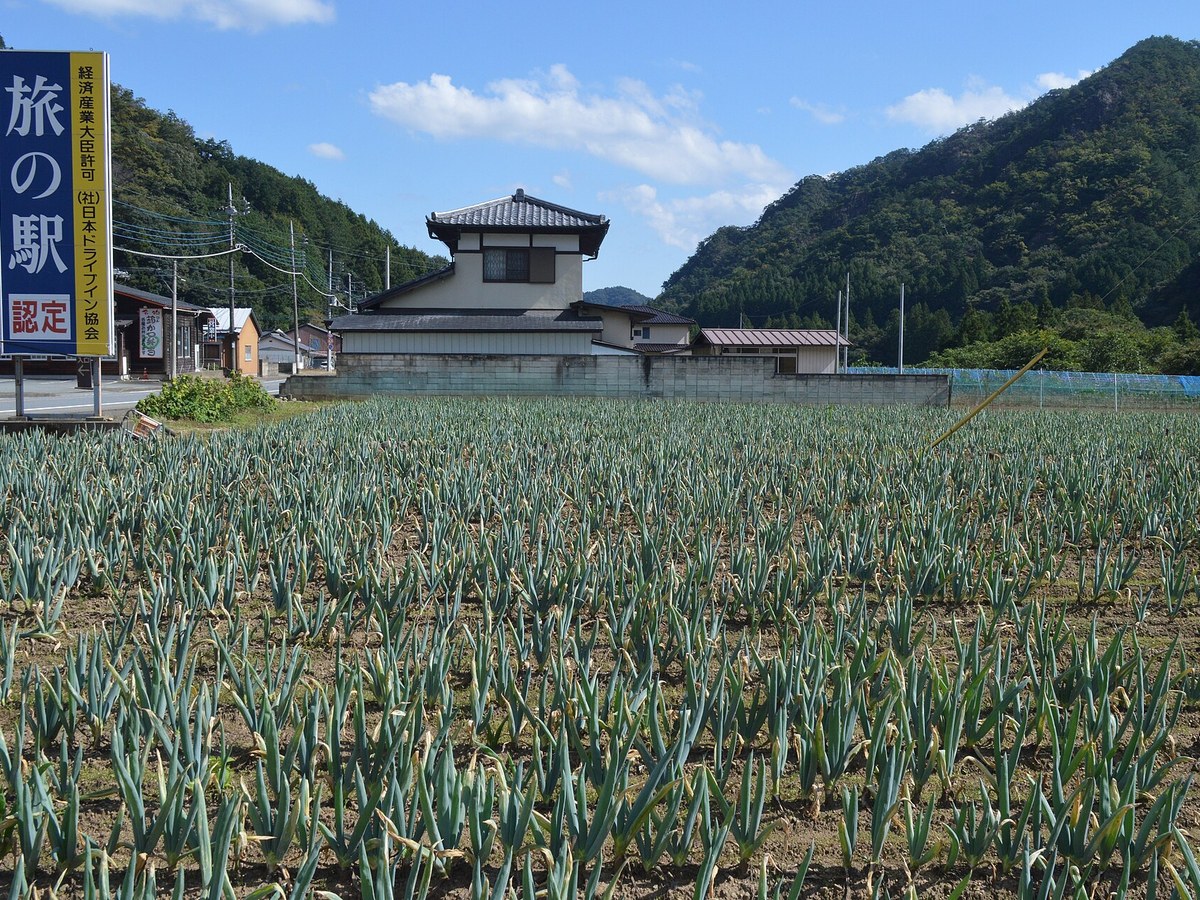
Shimonita negi is slow food at the seed stage: fourteen to fifteen months from sowing to harvest. The seed goes into nursery furrows in October; the seedlings are lifted, replanted in May, transplanted again in July, earthed up two to four times as the white shaft thickens, and lifted one by one from late November into January — the eating season running to late February, and the flavour, on every account, at its best after frost has touched the crop.
The ground is half the recipe. The production district around Mayama — along the Kabura, Yokose and Kamata rivers — averages about 12°C a year on gravelly clay that drains well, and the record carries the failures that prove the rule: the prefectural trial station planted it at Maebashi and failed; Nagano’s station tried and grew inedible rods; even Shimonita soil carried to Maebashi would not perform. The district answers by controlling the seed itself — specialist growers, seed through the JA.
Raw fire, cooked sugar
The form is a signature: a single non-branching stalk whose white shaft runs only 15 to 25 centimetres long but 2.5 to 6 centimetres thick — dumpy beside an ordinary negi, and dense. Raw, it is too pungent to eat; the record’s chemistry is neat — heat destroys the enzyme that makes the pungency, the mucilage inside melts, and what remains is a sweetness higher than a common onion’s, with a soft, almost creamy body.
That transformation is the whole point of the vegetable, and it fixes its place in the winter kitchen: simmered in sukiyaki and hotpots, where a raw onion would bully the pot and a common negi would vanish, Shimonita negi arrives as the sweet course of the dish itself. Production tells the demand story: from about a hundred farm households and 103 tonnes in 1973, the crop grew through the production-adjustment years on gift-season and fine-restaurant demand alike.
Buying the lord’s onion
Buy it in its short season — late November to February — and buy it thick: the squat white shaft is the grade, and the frost-touched winter crop is the one the letters were written about. It keeps about three weeks, and it wants cooking, always: a raw Shimonita negi is not a delicacy but a warning.
On the market record read for this story, JR West’s official mall sells JA Zennoh Gunma’s Shimonita negi at about four kilograms — thirty to forty-five stalks, M to S — for ¥3,000 including tax with shipping included, shipped from Toyosu Market: Edo’s urgent order, two centuries on, at a fixed price.
Sources — checked 14 November 2026
- Shimonita negi — encyclopedia record (the 1805 letter, the ground, the fourteen months)
- WESTER Mall (JR West) — JA Zennoh Gunma Shimonita negi, about 4 kg
Checked 14 November 2026 (stored links re-fetched and judged per product): reserved where the page says so, with an editorial review note kept per product. Press, PR and travel use stays outside the grant.
Editorial review 2026-11-14