Shimane wagyu is the beef of a prefecture that Japan’s cattle history keeps tracing back to: picture-scroll surveys of 1310 and 1369 already name Izumo a land of fine cattle, and the modern brand — Kuroge Washu raised and fattened inside Shimane — has twice taken the Prime Minister’s Prize at the national wagyu olympics and, in 2022, won both of the country’s top beef honours in a single year, a first for any brand.
A small prefecture’s outsized cattle name
Shimane wagyu is, in the plain definition, beef from Kuroge Washu cattle produced in Shimane Prefecture, on the Sea of Japan side of western Honshu. The brand describes its own taste the same way in every telling: fine, close marbling; a clear umami; and fat that reads light rather than heavy, so the richness arrives and then clears. Butchers sell it for the whole wagyu repertoire — yakiniku first, then sukiyaki, shabu-shabu and steak.
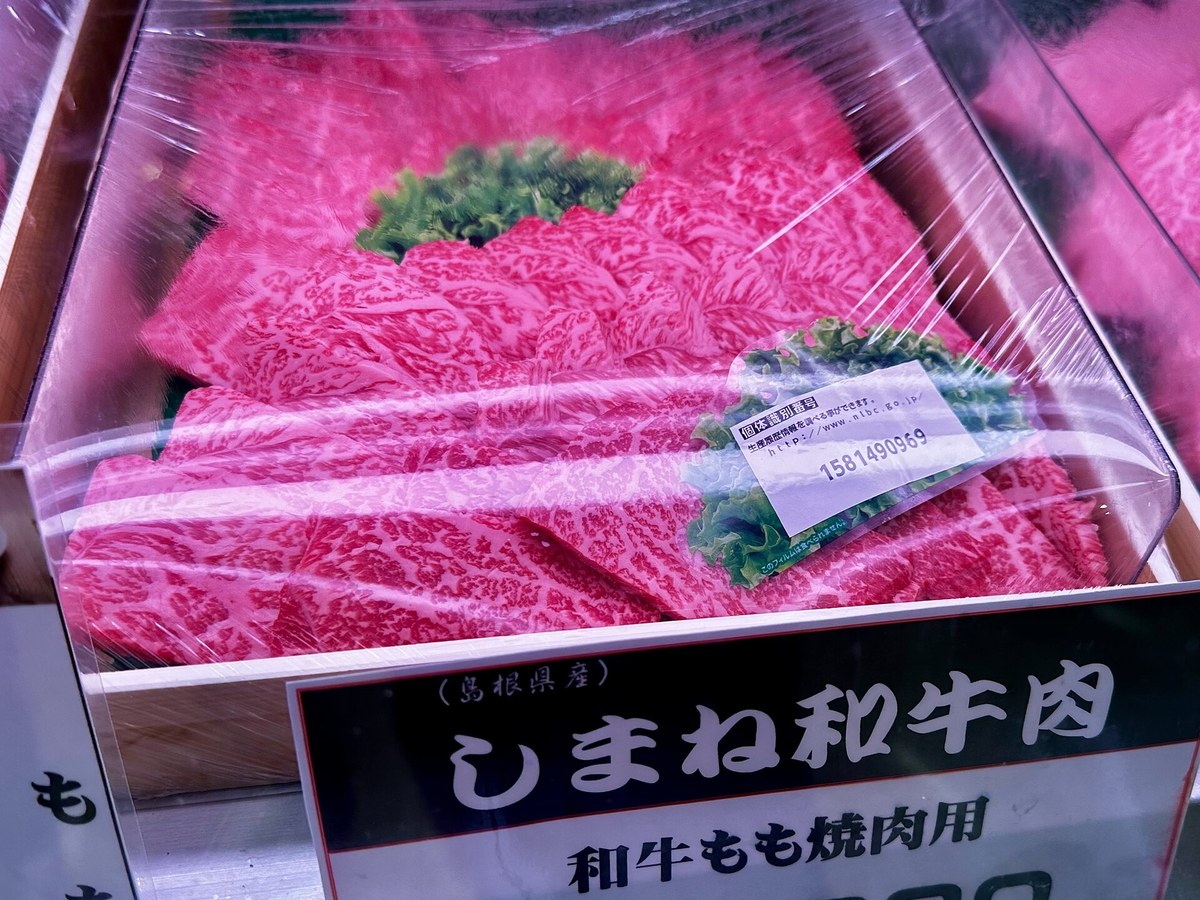
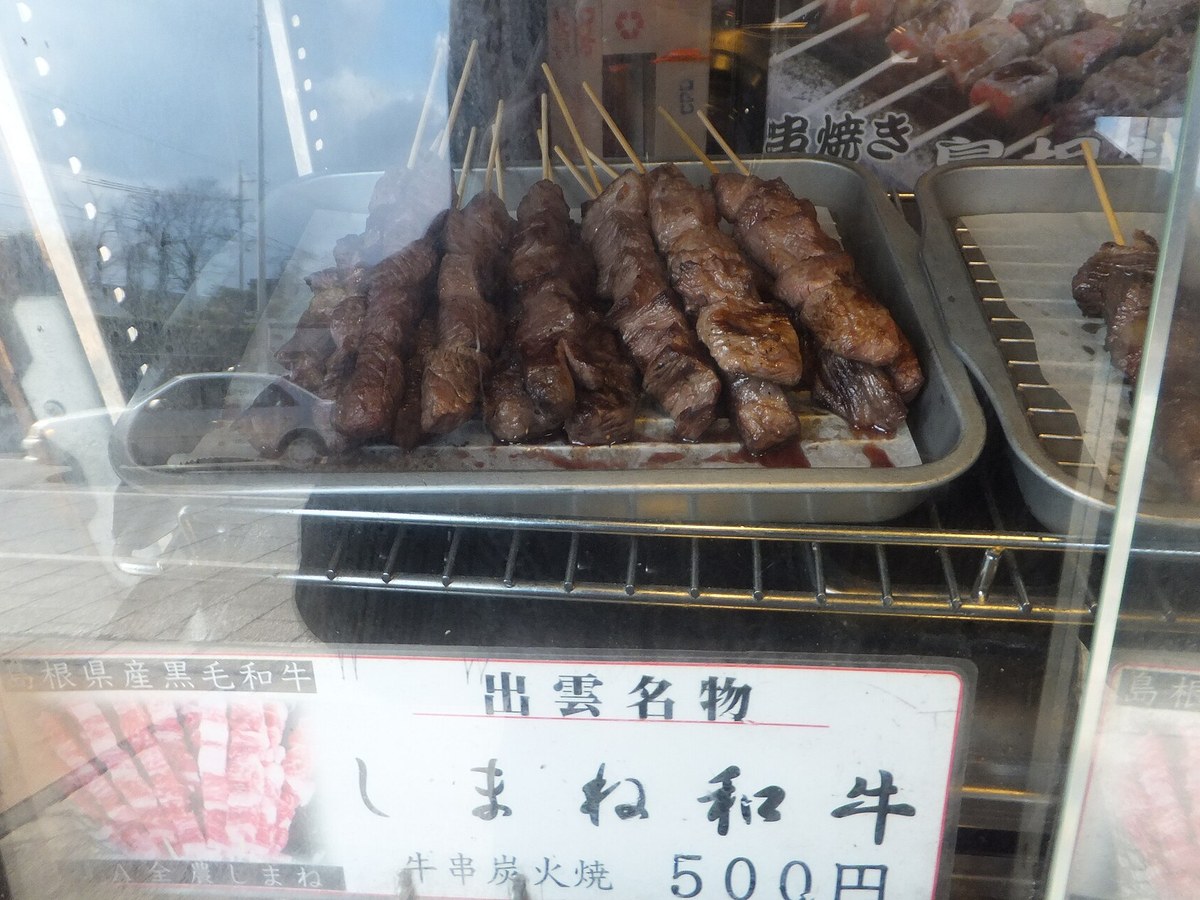
Under the umbrella sit seven local brands of their own — Izumo, Okuizumo, Iwami, Katsube, Ginzan, Matsunaga and Oki among them — each tied to a district or a farm. Our two photographs hold the range in miniature: a retail tray of marbled momo yakiniku cuts under the Shimane Wagyu-niku label, and skewers grilling in the case of an Izumo shop that sells the beef under a sign reading “Izumo speciality: Shimane wagyu”.
Bloodlines out of Izumo since 1310
The brand council’s history reaches back to two illustrated cattle surveys — the Kokugyu Juzu of 1310 and the Shungyu Ezu of 1369 — which already single out Izumo as a source of excellent cattle. Breeders across Japan repeat the claim in modern form: trace the bloodlines of the country’s famous beef brands far enough and an unusual number of them arrive in Shimane.
The show record backs the story. Shimane took the Prime Minister’s Prize at the National Wagyu Capability Olympics in 1977 and again in 1987, and in 2022 it did something no brand had done: first place for carcass quality at the Olympics and the honorary award — the overall top — at the National Beef Carcass Exhibition, in the same year. Two crowns, one small prefecture.
Two names: wagyu and wagyu-niku
Read the labels carefully, because Shimane runs two. “Shimane wagyu” is the wide regional name for the prefecture’s Kuroge Washu beef and carries no grade by itself. “Shimane Wagyu-niku” — the beef of Shimane wagyu — is the brand council’s certified label, and its published standard has three conditions: the animal is Kuroge Washu, it is fattened inside Shimane, and it is shipped through the prefectural meat corporation, with carcasses grading A4, A5, B4 or B5.
The tray in our photograph wears the certified side of the system, its label naming the cut — momo, the round — for yakiniku. That is the honest way to buy this beef: not by the romance of the umbrella name, but by the certified label, the cut and the grade, in that order.
Raw in the tray, grilled on the skewer
At retail the beef is priced like the premium product it is: the photographed momo yakiniku tray is ticketed ¥880, and the Izumo shop’s grilled skewers — the fastest way to taste the brand standing up — are ¥500 a skewer on its case sign. Mail-order gift tiers run far higher, as wagyu gifts do: a Matsue butcher’s pair of 200-gram sirloin steaks heads a ¥24,000 hometown-tax listing.
Cook it the way the brand suggests and the fat explains itself: seconds a side on a hot grill for yakiniku, a bare swish through broth for shabu-shabu, and nothing sweet or heavy over it. The point of Shimane wagyu is not the loudest marbling in Japan — it is the balance the prefecture has been breeding toward since before brands existed.
Sources — checked 14 November 2026
- Shimane wagyu — taste, grades, history and how to eat it (Food in Japan record)
- Shimane wagyu komagire 1 kg — JAL hometown-tax product record (Yasugi, Shimane)
Checked 14 November 2026 (stored links re-fetched and judged per product): reserved where the page says so, with an editorial review note kept per product. Press, PR and travel use stays outside the grant.
Editorial review 2026-11-14