Seri nabe is Sendai’s winter hotpot built around a garnish: whole plants of seri, the Japanese parsley, eaten leaves, stems and — the point of the dish — roots, swished through a savoury broth with chicken or duck. The seri comes from Natori, whose growers have cultivated it in clear groundwater since records of 1620, and the roots, washed until they shine white, are cooked for seconds and eaten like noodles made of spring.
A hotpot built around a garnish
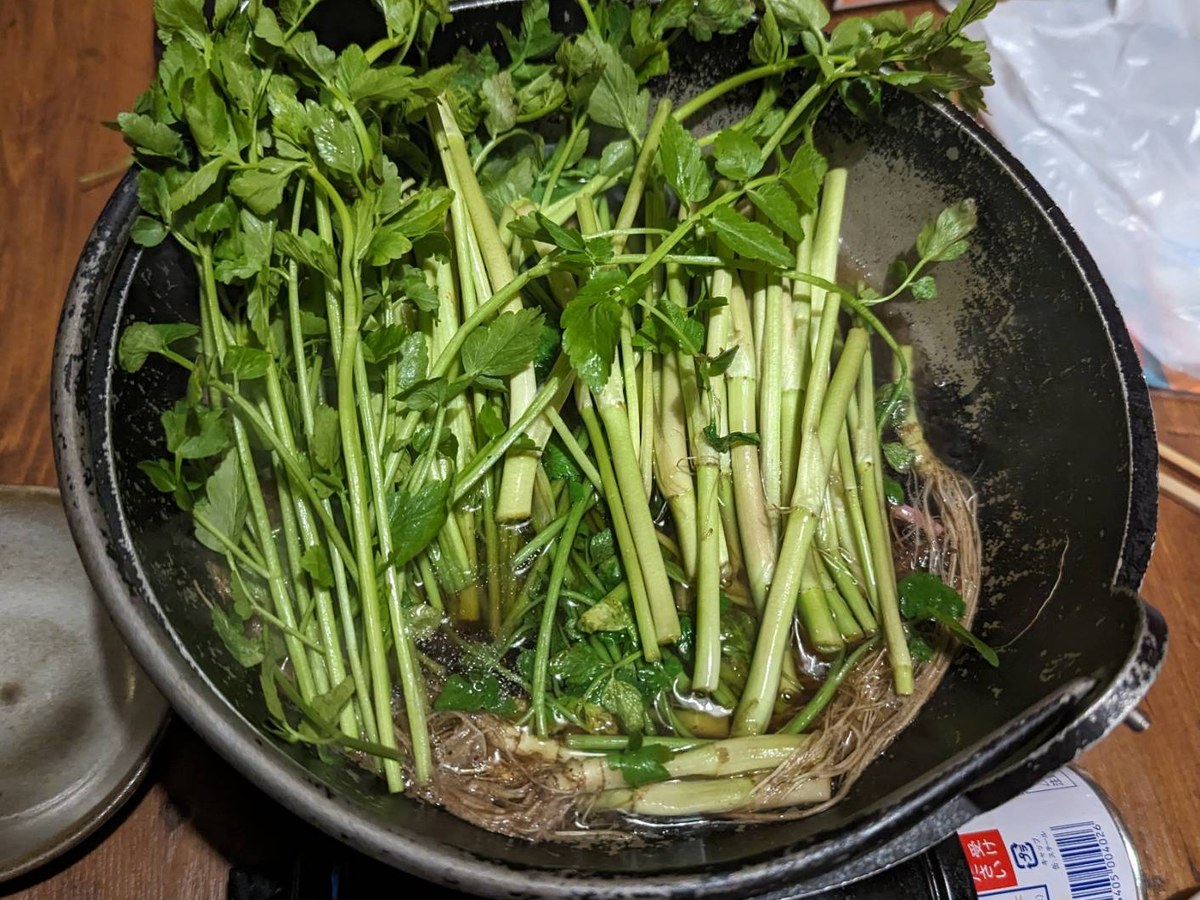
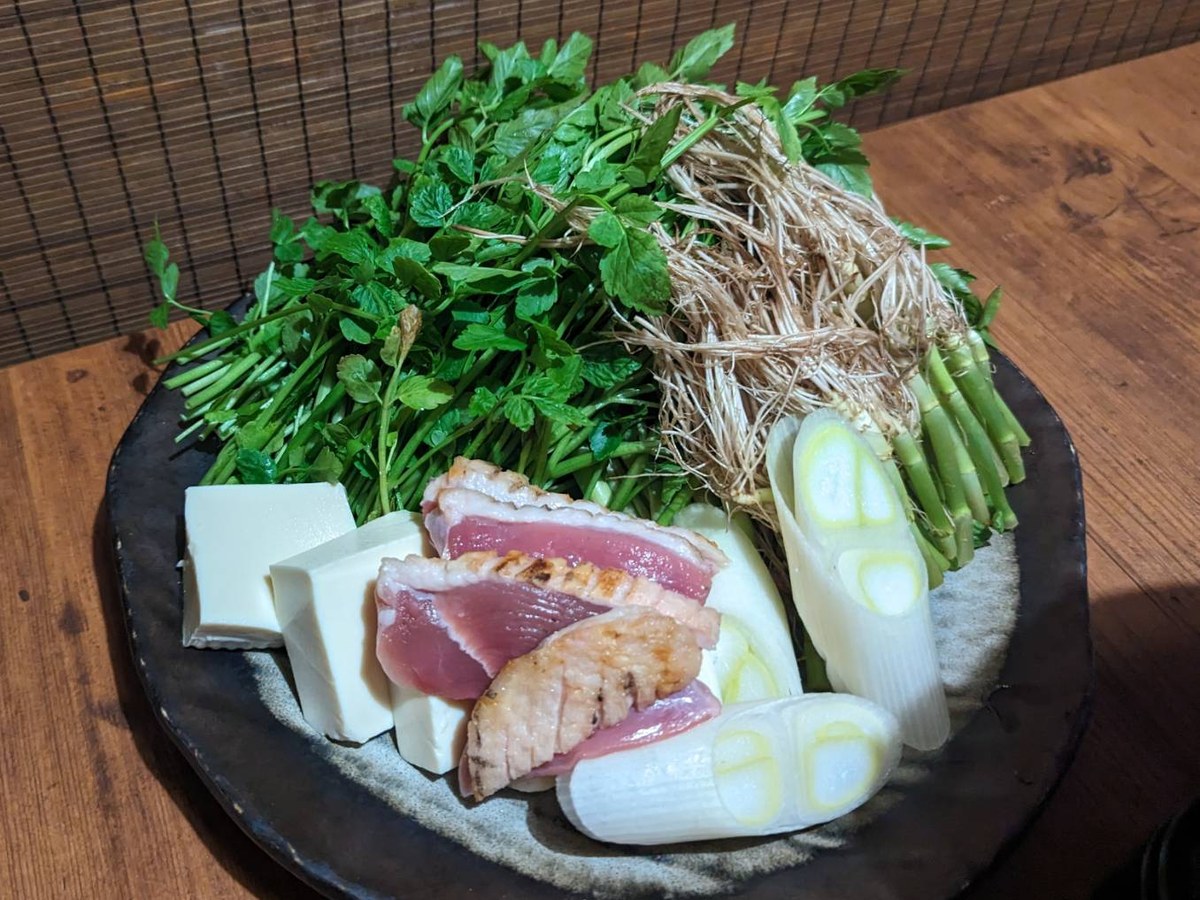
Most hotpots bury their greens. Seri nabe is constructed the other way round: the pot exists for the seri. Whole plants go in roots-first — leaves, stems and the long white roots that summer cooking throws away — alongside negi, tofu, burdock and a protein, usually chicken or duck, in a soy-leaning dashi. Our photographs are the dish’s two beats: the ingredients platter before the pot, seri heaped beside sliced meat and tofu, and the pot itself drowned in green.
The roots are the delicacy, and they set the technique. Washed and re-washed until they are pure white, they need almost no cooking: at Inaho, the Sendai counter shop widely credited with inventing the modern dish, the instruction is a swish of ten to fifteen seconds, so the root stays crisp, sweet and loud with the plant’s clean, celery-like perfume.
Natori’s four-century seri fields
The seri is Natori’s before it is Sendai’s. The mail-order record kept by the dish’s best-known set maker recites the local history: seri cultivation around Natori appears in a document of 1620, in the Genna era, and its spread is dated to the An’ei era, from 1770. The city’s gift to the plant is its water — abundant clear groundwater — and its winters: seri that has taken the cold grows sweet.
That sweetness is why the calendar rules the dish. Seri nabe is a winter food, roughly November to March, when the roots run thick and long; the mail-order season itself closes at the end of March. Outside the season the pot simply does not exist, which is the oldest kind of regional edition there is.
The title Sendai keeps winning
For a dish this young in its modern form, seri nabe carries a formal honour: the set maker’s record notes that Sendai seri nabe won the National Nabe Grand Prix two years running. The dish has since grown the way regional dishes now do — a specialist restaurant opened by Sendai Station in September 2026 serves it at ¥1,980 a person — without losing its first identity as a winter counter food eaten elbow to elbow.
Inaho remains the reference address: a small counter in the Nagakecho arcade, telephone bookings only, booked out weeks deep in the seri season. The dish it is credited with creating now belongs to the whole city — but the white-root standard it set is still the one Sendai judges by.
The pot, posted
The documented way to eat seri nabe outside Miyagi is the mail-order set, and the reference set is Hamaya’s: about 300 grams of Natori seri with roots, 180 grams of Miyagi’s Shinrindori chicken and 180 millilitres of the house kaeshi, for two to three people at ¥6,400 with shipping included — a set certified among Natori’s local specialities by the city’s tourism and products association. A four-to-five-person version runs ¥7,680.
However it arrives, keep the two rules. Eat the roots, not just the leaves — the roots are the dish. And give them seconds, not minutes: seri nabe is a shabu-shabu of a wild-tasting green, and the broth is there to warm it, perfume it and get out of its way.
Sources — checked 14 November 2026
- Sendai seri nabe set (Shinrindori chicken), 2–3 servings — Gyotei Hamaya record, JRE MALL
- Sendai seri nabe set (Shinrindori chicken), 4–5 servings — Nomono Selection record, JRE MALL
Checked 14 November 2026 (stored links re-fetched and judged per product): reserved where the page says so, with an editorial review note kept per product. Press, PR and travel use stays outside the grant.
Editorial review 2026-11-14