Some bowls contain a family reunion. Harako meshi — roe rice — tops rice with salmon and the salmon's own eggs: the parent, simmered until tender, and the children, raw and glistening, in a single mouthful the Japanese call oyako, parent and child. But Watari's version does something the copycat bowls skip: the rice itself is cooked in the broth the salmon simmered in, so the whole bowl tastes of the fish before the toppings even land. It was fishermen's food on the Abukuma River, it was served to Date Masamune when he came to inspect the canal works, and every autumn, when the salmon return, southern Miyagi still eats it — with a day of its own, October 8, marked on the calendar.
Rice cooked in the salmon's own broth
The method is the signature, and the Food in Japan record states it step by step: the salmon is simmered, the rice is cooked in the seasoned salmon broth — mirin and soy sauce in the balance — and only then do the toppings go on, the salmon meat and a thick cover of roe. Cooking the rice in the broth is what separates harako meshi from a mere ikura-don: a roe bowl sits on plain rice, while Watari's bowl is salmon all the way down.
The name keeps everyone honest. Harako is the Miyagi word for salmon roe — ikura elsewhere — so the dish is named for its topping, and a bowl that skimps on the roe has failed its own title. Season does the rest: the dish belongs to autumn, September into December on the town tourism record, when the salmon come back to the Abukuma, and the restaurants of Watari and Yamamoto serve it as a season, not a menu permanent.
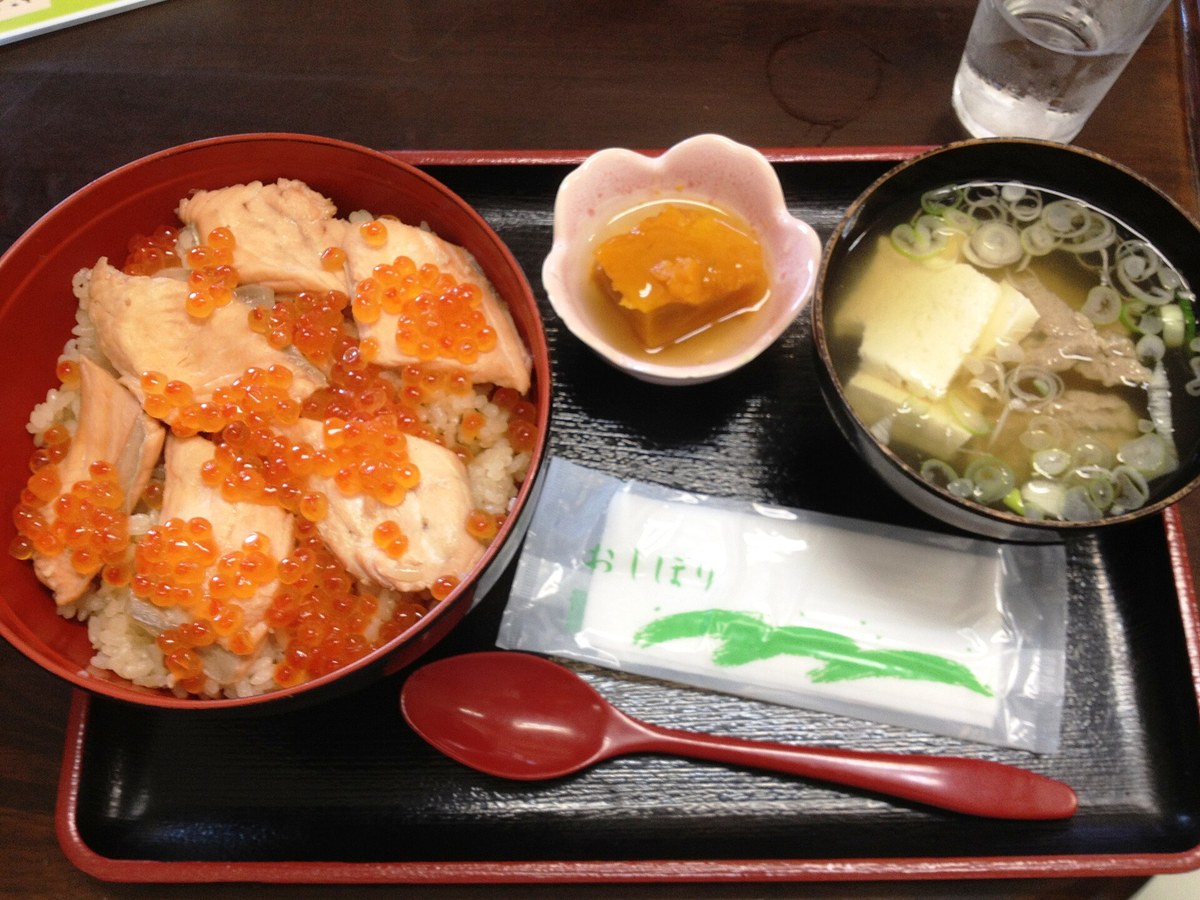
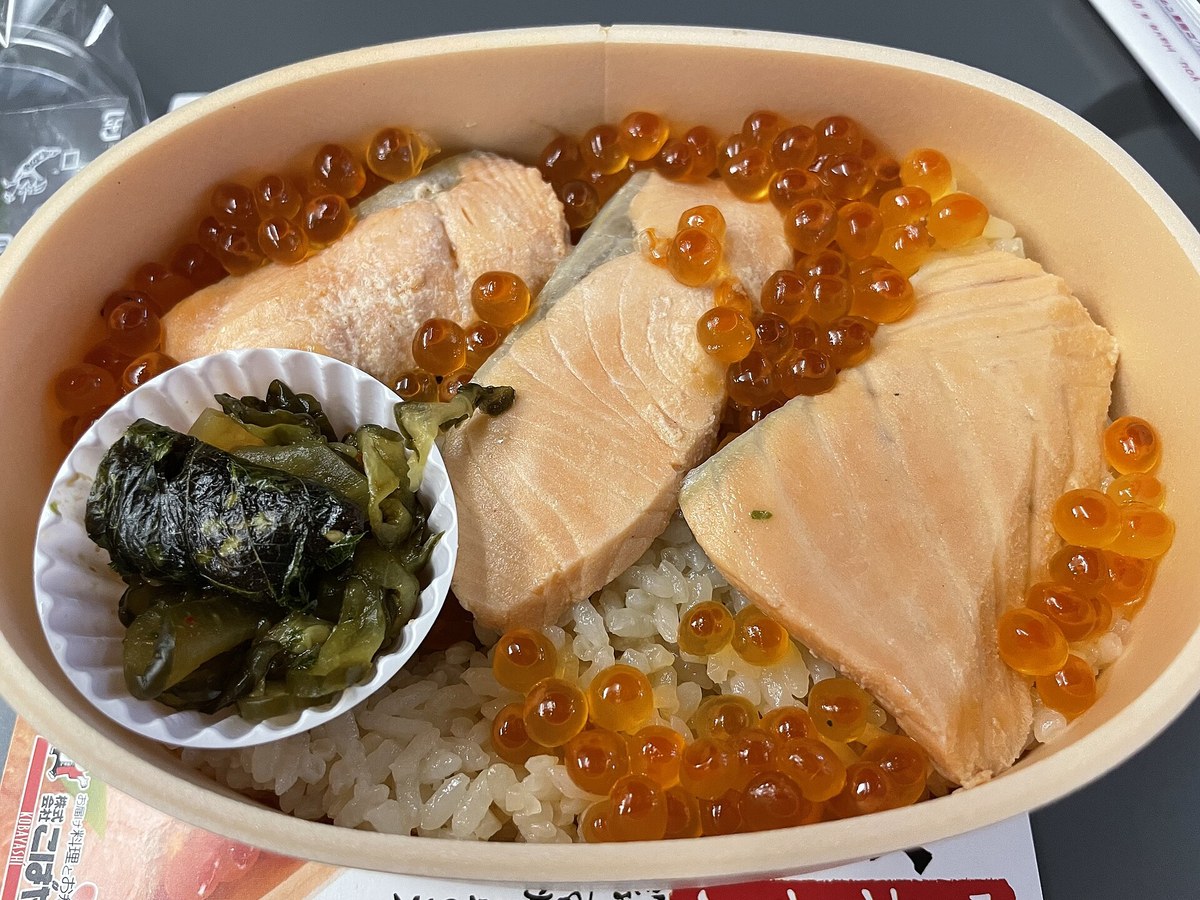
The bowl Masamune ate
Watari sits where the Abukuma River meets the Pacific, and its salmon were tribute goods: the Food in Japan record notes the river's salmon were offered to the shogunate. The Umami Information Center's account gives the dish its famous scene — harako meshi served in autumn to Date Masamune, the one-eyed dragon of Sendai, when he came to inspect the Teizan Canal works, offered by the fishermen of the Watari Arahama area. A fishermen's working lunch, presented to the domain's lord and enjoyed: that is the whole origin story, and it is documented rather than embroidered.
The later chapters are Meiji and after: in the Meiji era, the record continues, restaurants in Arahama began selling the dish, and the fishing port's row of harako-meshi houses became the dish's public home. The Arahama restaurant named simply Arahama — in the birthplace itself, at Nakano-183-8 Arahama — closed after the 2011 earthquake and reopened in 2016, which makes a bowl there also a small act of reconstruction history.
Three houses, one season
The Food in Japan record names the working geography. At Arahama, in Watari, the restaurant Arahama serves the dish in its birthplace, reopened 2016. In Yamamoto Town next door, Denen serves it seasonally, mid-September to mid-December — the tightest window and the clearest signal of how strictly the season binds. And Hama Sushi has been serving harako rice for over fifty years to a grandmother's family recipe — the dish as inheritance, measured in generations rather than reviews.
Then there is the traveller's version: the ekiben. Harako meshi is also sold as a station bento at Sendai Station, which carries the bowl out of its season's geography if not quite out of its season — the ekiben is the form most visitors will meet first, and the record prices it kinder than the restaurant bowl.
Eating it in Watari
Go in autumn, and go to the source: Arahama in Watari Town for the birthplace bowl, Denen in Yamamoto if your trip falls inside its mid-September to mid-December window. A restaurant bowl usually costs around ¥1,700 to ¥3,000 on the Food in Japan record updated 9 November 2026; the Sendai Station ekiben tends to be cheaper, near ¥1,700, and asks nothing of your itinerary but a train.
Time it to October 8 if you can — Harako Meshi Day, the dish's own date — and eat it the season it belongs to. Out of season the honest answer is that the bowl is gone until the salmon return; that disappearance is not a flaw in the record but the record itself: a dish that exists because a river runs with fish for a few weeks a year.
Sources — checked 13 November 2026
- Food in Japan — Harako Meshi: Miyagi's salmon and roe rice bowl (updated 9 November 2026)
- Umami Information Center — Harako meshi, Miyagi (checked 13 November 2026)
- Travel to Tohoku (Tohoku Kanko) — Watari's harako meshi (checked 13 November 2026)
Original prose and official links only; no source text or maker media reproduced. Photos are credited Creative Commons works, not product photographs.
Editorial review 2026-11-13