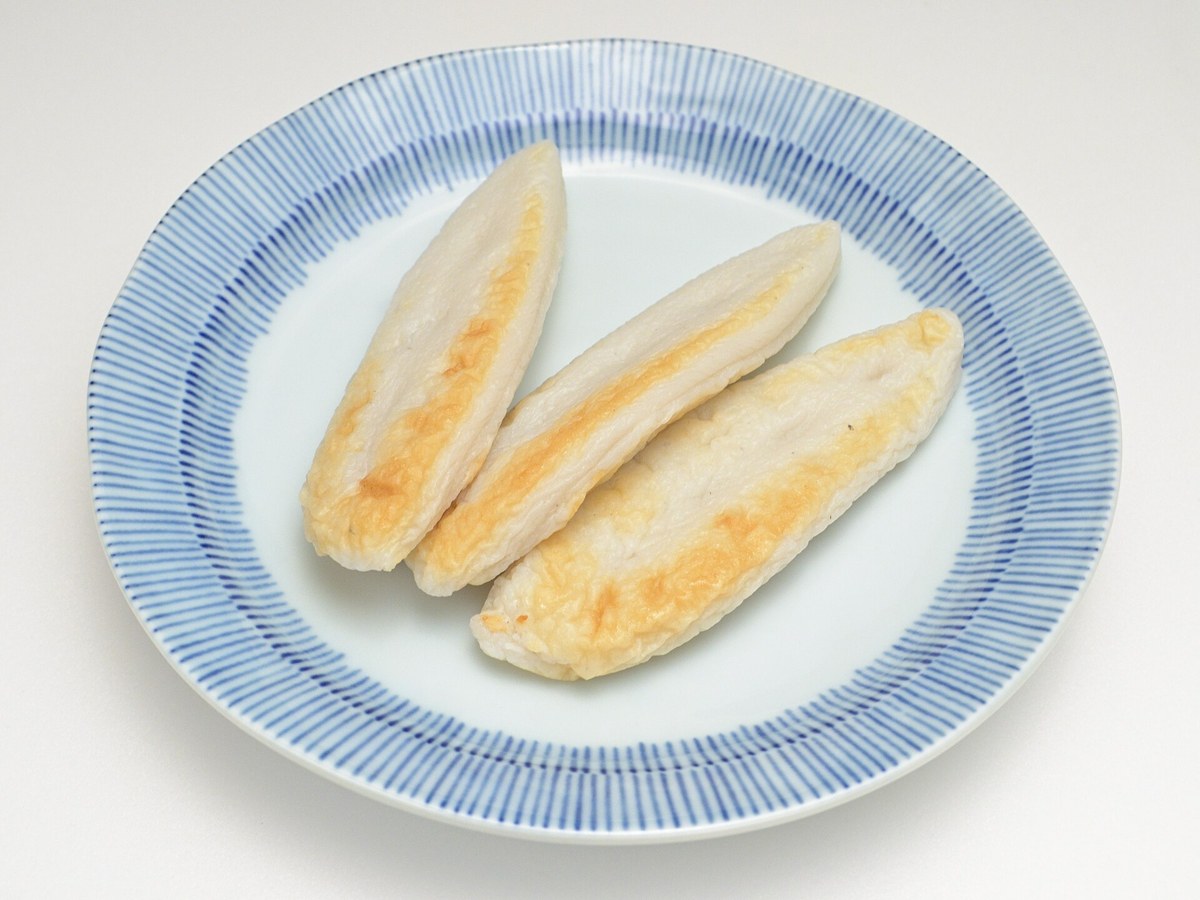
It is a leaf you eat, made of fish, named for a warlord's crest. Miyagi's fifth story is sasa kamaboko — white-fish paste beaten by palm, formed into a bamboo leaf, steamed and roasted — the cake two rival towns, Sendai and Shiogama, both claim as their own.
A leaf made of fish
The Japan Tourism Agency record describes the cake plainly: in Miyagi, kamaboko is culinary heritage, and its emblem is the leaf-shaped sasakama of Shiogama — ground white fish, mainly kichiji rockfish, worked into a paste, steamed, then lightly roasted until the surface takes colour. The shape is not decoration for its own sake; it is the whole identity, pressed into the paste before cooking.
The name is a rebrand with a pedigree. The cakes were first called berokama — tongue cakes, for their shape — until the bamboo leaf in the crest of the Date family, lords of Sendai, gave them a better one: sasa, bamboo leaf, kamaboko. A domain's emblem became a food's trademark, and the tongue cake has been a bamboo leaf ever since.
Born from a surplus
MAFF's SHUN GATE account sets the invention in early-Meiji Sendai, and the motive was waste. Flounder from Sendai Bay came in beyond what the market could take fresh, so the surplus fish was beaten into paste — by palm, in the original method — formed by hand into the leaf shape, and grilled. Nothing about the cake is industrial in origin; it is a glut, solved deliciously.
The making still runs on judgement rather than recipe. SHUN GATE's maker account describes the soaking and draining of the fish being decided by eye and hand, the quantity of ice in the paste mattering to within a hundred grams, and the seasoning kept to mirin and salt. Winter is the flounder season, and the paste knows it: the same cake is a different texture in January and in June.
Two towns, one cake
Sendai invented it; Shiogama industrialised the claim. The tourism record counts eighteen kamaboko producers in Shiogama alone, the port city whose landings feed the paste, and the modern range runs past the plain leaf: cheese-filled, green-onion and shellfish variants sit beside the classic in the producers' shops. The prefecture's two cake towns keep the rivalry friendly and the quality argument permanent.
In Sendai, Kanezaki has made kamaboko since 1947, and its sasakama is a purist's version: no starch and no egg white as binders, the body of the cake coming from the fish paste alone. That restraint is the Sendai school's answer to Shiogama's variety — the same leaf, defended from opposite directions, which is how a regional food stays interesting for a hundred and fifty years.
The variants deserve their own sentence, because they show where a heritage food goes when it is confident. The tourism record lists the fillings plainly — cheese worked into the leaf, green onion, shellfish — beside the unfilled classic, and Shiogama's eighteen producers each keep a house version. None of this is fusion novelty for its own sake: the leaf shape is a pocket and a portion, and a port city's makers fill it with what the port provides. The plain kichiji cake remains the reference against which the fillings are judged, which is why the purist argument between the two towns never resolves — each side is selling the other side's customers a reason to taste again.
Grill your own
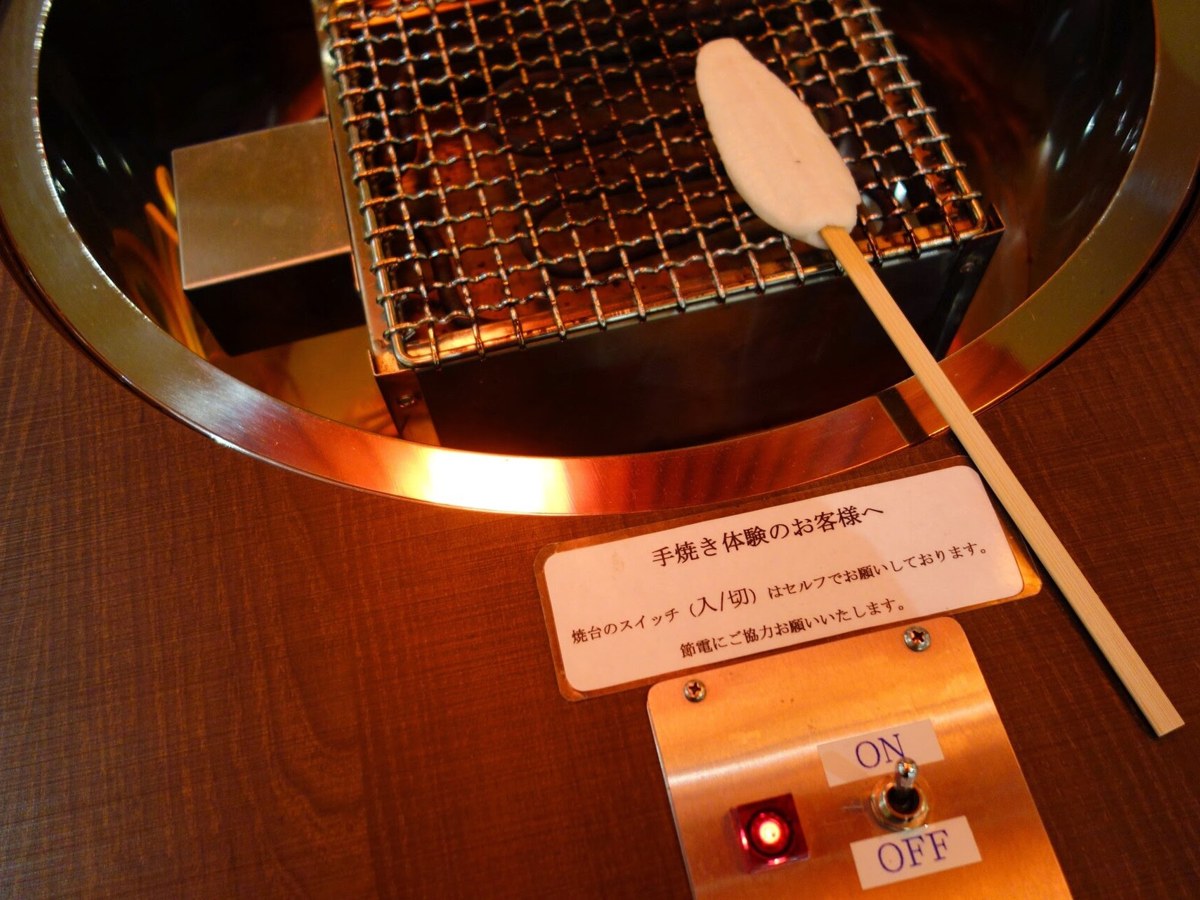
The cake's best showroom is a factory annex. Beside Kanezaki's Wakabayashi-ku plant in Sendai stands its experience hall — the Sasakama-kan, within the Kamaboko no Kuni grounds — where visitors form and grill their own sasa kamaboko and eat it hot off the grate. The hand-making lesson teaches the point of the whole tradition in ten minutes: the leaf is harder to form than it looks.
To take the taste home, the prefecture's own product site lists the other school: Abe Kamaboko of Sendai, whose DSS-A set at ¥2,120 packs four of its 50-gram sasa kamaboko with three cheese balls and three of its saikoron cubes. Between the grill-your-own hall and the posted gift set, Miyagi's leaf is obtainable both ways a regional food should be — as an experience, and as a parcel.
Sources — checked 11 November 2026
- Japan Tourism Agency record: kamaboko of Miyagi and Shiogama's sasakama
- SHUN GATE (MAFF): sasa kamaboko of Sendai
- Miyagi Prefecture product site: Abe Kamaboko set DSS-A
Original prose and official links only; no source text or maker media reproduced. Photos are credited Creative Commons works, not product photographs.
Editorial review 2026-11-11