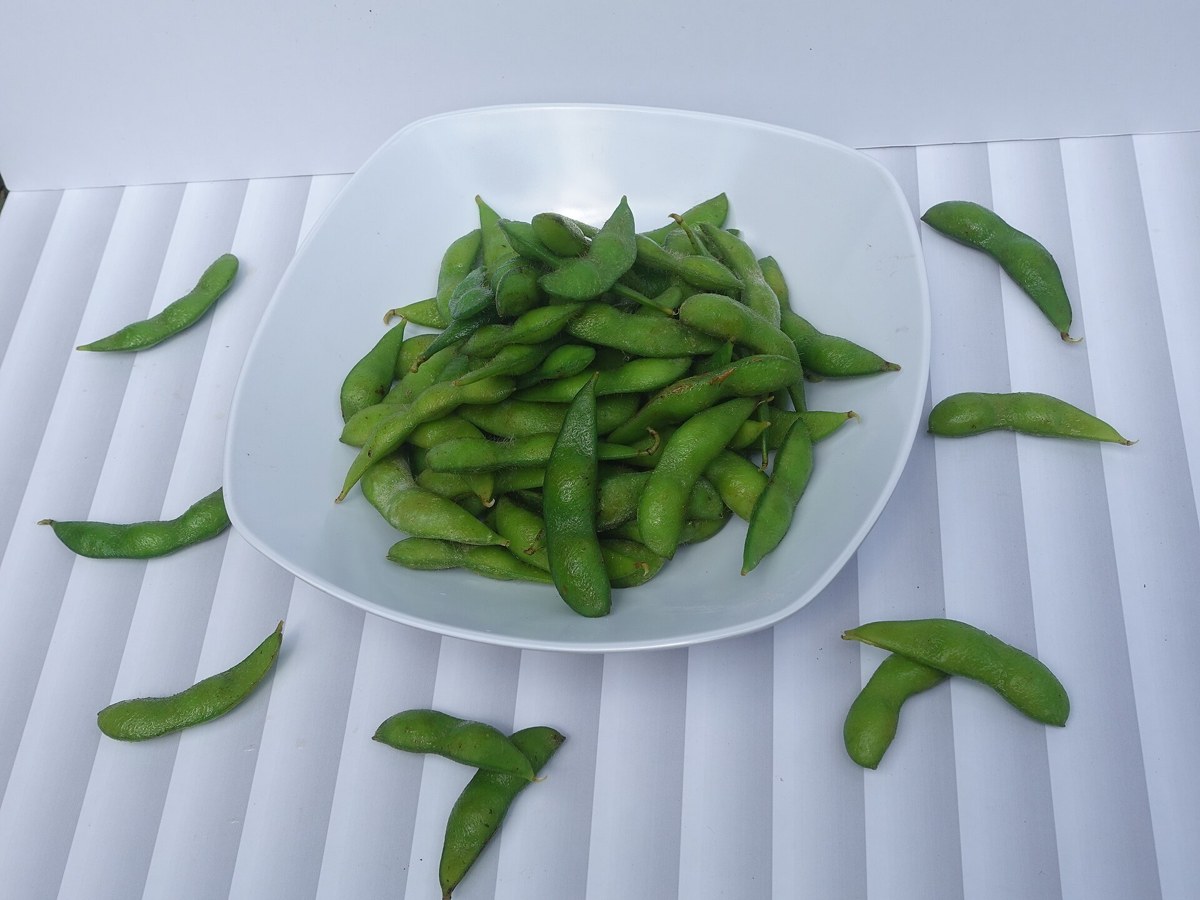
Sendai's other colour is green. Zunda — edamame beans mashed with sugar and a pinch of salt into a bright, bean-sweet paste — goes over soft mochi all over Miyagi, and the house that turned it into a brand is Zunda Saryo, the zunda specialty arm of Kasho Sanzen. Its boxed Sendai Specialty Zunda Mochi is ¥594 for four pieces, keeps about two weeks at room temperature, and is sold where Sendai hurries: the station's third-floor Zunda Lane, with the maker's own shop at its heart.
Edamame, sweetened: the flavour Miyagi claims
Zunda begins as a harvest food: edamame picked young and green, boiled, shelled, then mashed — skins removed by patient hands — and sweetened lightly so the bean flavour stays in front. Spread thick over mochi it is at once a sweet and a vegetable, grassy and rich, and Miyagi treats it the way other prefectures treat red bean paste: as the default. Sendai extended it into shakes, ice cream and cakes, but the mochi remains the reference form.
The mochi matters too. Zunda Saryo's eat-in set uses Miyagi's Miyakogane rice — the prefecture's own glutinous rice — pounded soft, so the cake under the green paste is a local product twice over: Miyagi beans on Miyagi rice, assembled in Sendai.
One house, two Sendai signatures
Kasho Sanzen is already on this site for Hagi no Tsuki, Sendai's custard moon cake. Zunda Saryo is the same confectioner's second idea: a whole brand built on the green paste, with shops that serve the mochi fresh, shake it into drinks and box it for the train. The two brands share a maker and a city, and this page documents the zunda side on its own terms — a different product, a different flavour, the deliberate second pillar of Sendai's souvenir shelf.
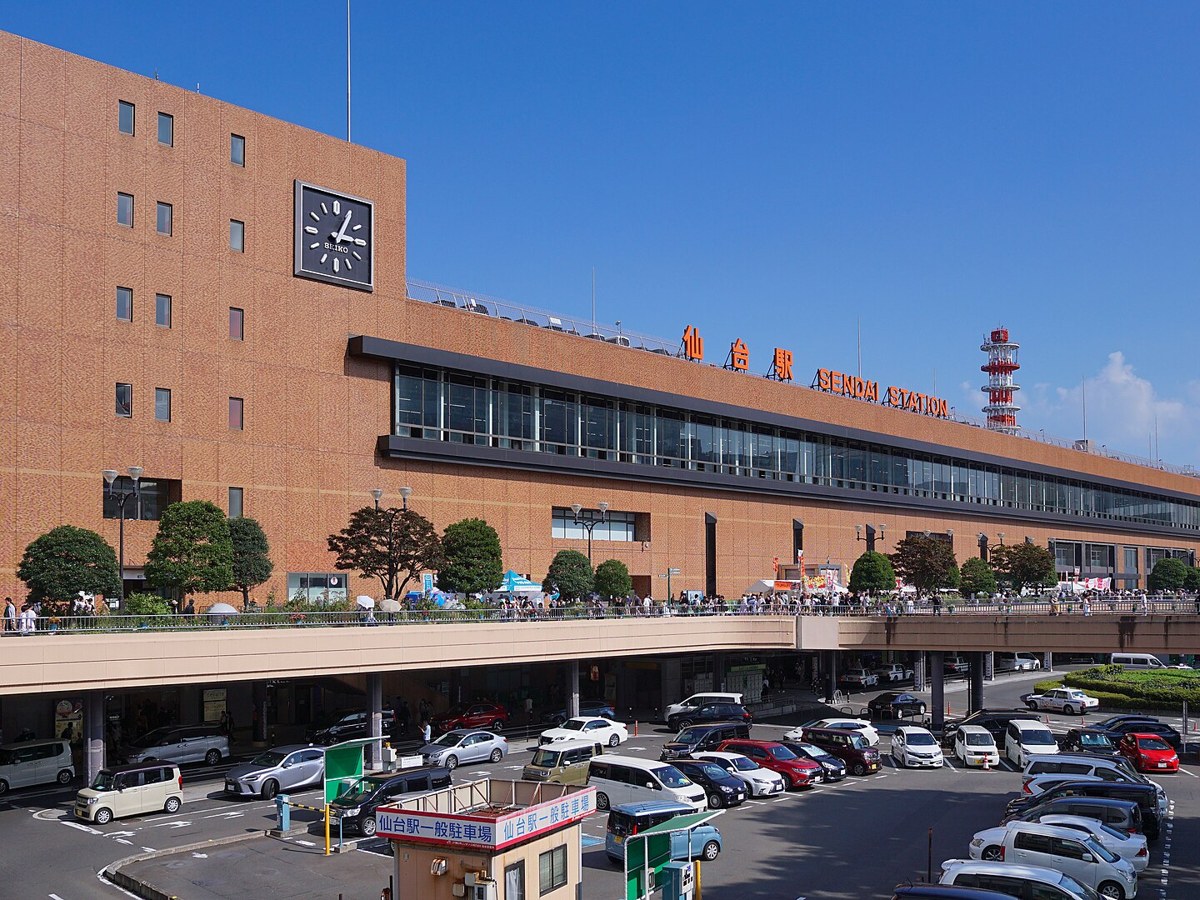
The brand's centre of gravity is Sendai Station, where a small lane of zunda sellers — Zunda Komichi, 'zunda lane', on the third floor — makes the paste impossible to miss. Zunda Saryo's directly run shop anchors it, serving a three-piece mochi set with salted kelp for ¥850 to travellers with twenty minutes to spare.
Practical details: prices, sizes, where to buy, online sales
Prices (checked 9 November 2026): the boxed Sendai Specialty Zunda Mochi is ¥594 for 4 pieces, ¥1,080 for 8 and ¥1,944 for 15, tax included, and keeps about two weeks from manufacture at room temperature — unusually traveller-friendly for a mochi sweet. Eaten in, the station shop's set of three mochi with salted kelp is ¥850.
Where to buy: Zunda Saryo's directly run Sendai Station Zunda Komichi shop (3F Sendai Station) and its counters across Sendai and at Sendai Airport. The documented exception: a Zunda Saryo counter at Daimaru Tokyo, by Tokyo Station — noted here so the scope stays honest. Type of edition: regional edition — a Miyagi flavour in its home city's brand form.
How Sendai eats it
Eat the mochi fresh if you can: the paste is at its greenest the day it is made, and the station set — three soft cakes drowned in zunda, with salty kelp to reset the palate — is the form locals judge the brand by. The boxed version trades a little of that brightness for two weeks of shelf life, which is exactly the trade a souvenir should make.
If the green converts you, the same counters shake zunda into a milkshake that has become the station's second icon. Start with the mochi, though: it is the older form, and the one the brand's name is built on.
Scope: what 'limited' means here
Zunda Saryo's zunda mochi is documented as a Sendai brand of a Miyagi regional flavour, centred on Sendai Station and the maker's Sendai shops; a Tokyo department-store counter is the stated exception. Checked 2026-11-09. Zunda sweets generally are made by many Miyagi makers; this page covers Zunda Saryo's.
Sources — checked 9 November 2026
- Neft (Miyagi guide): Zunda Saryo's Sendai Specialty Zunda Mochi — prices, shelf life, station shop
- Japan Activity: 5 Best Zunda Sweets in Sendai (2026 guide)
- Wanderlog: Kasho Sanzen Daimaru Tokyo branch (Zunda Saryo counter)
Original prose and official links only; no source text or maker media reproduced. Photos are credited Creative Commons works, not product photographs.
Editorial review 2026-11-09