Akafuku Mochi is not decorated, flavoured or filled — it is a wave of smooth red-bean paste combed by hand over a soft white mochi, and it has drawn pilgrims to Ise for centuries. A box of twelve is ¥1,300, and the maker's own store guide draws the map of where it may be sold: Ise and Mie, then a short list of neighbouring prefectures — and nowhere else.
Three ridges, drawn by fingertips
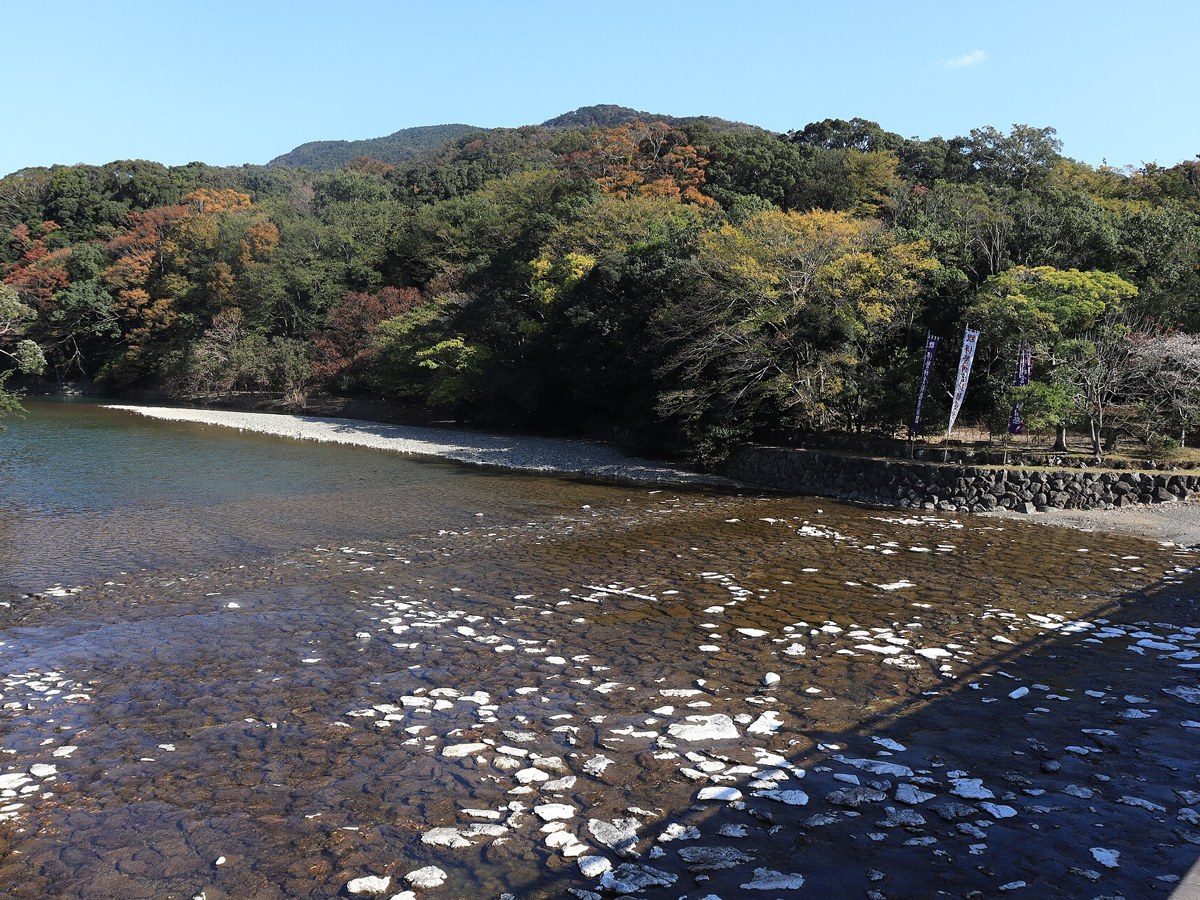
Look at an Akafuku Mochi from above and you see handwriting. The bean paste is not spread flat; it is pulled into three gentle ridges, traditionally read as the clear flow of the Isuzu River that runs past the Inner Shrine of Ise Jingū. The shape is made piece by piece, by hand, in the same gesture the shop has used for generations.
The taste matches the gesture: clean, sweet, soft, and gone in two bites. There is no twist to explain and no filling to discover. That plainness is precisely why the mochi became the taste of a pilgrimage — something bought at the end of a shrine visit, eaten with tea at the main shop on Oharai-machi, or carried home in the flat wooden box before the paste loses its sheen.
The shop on the pilgrim street
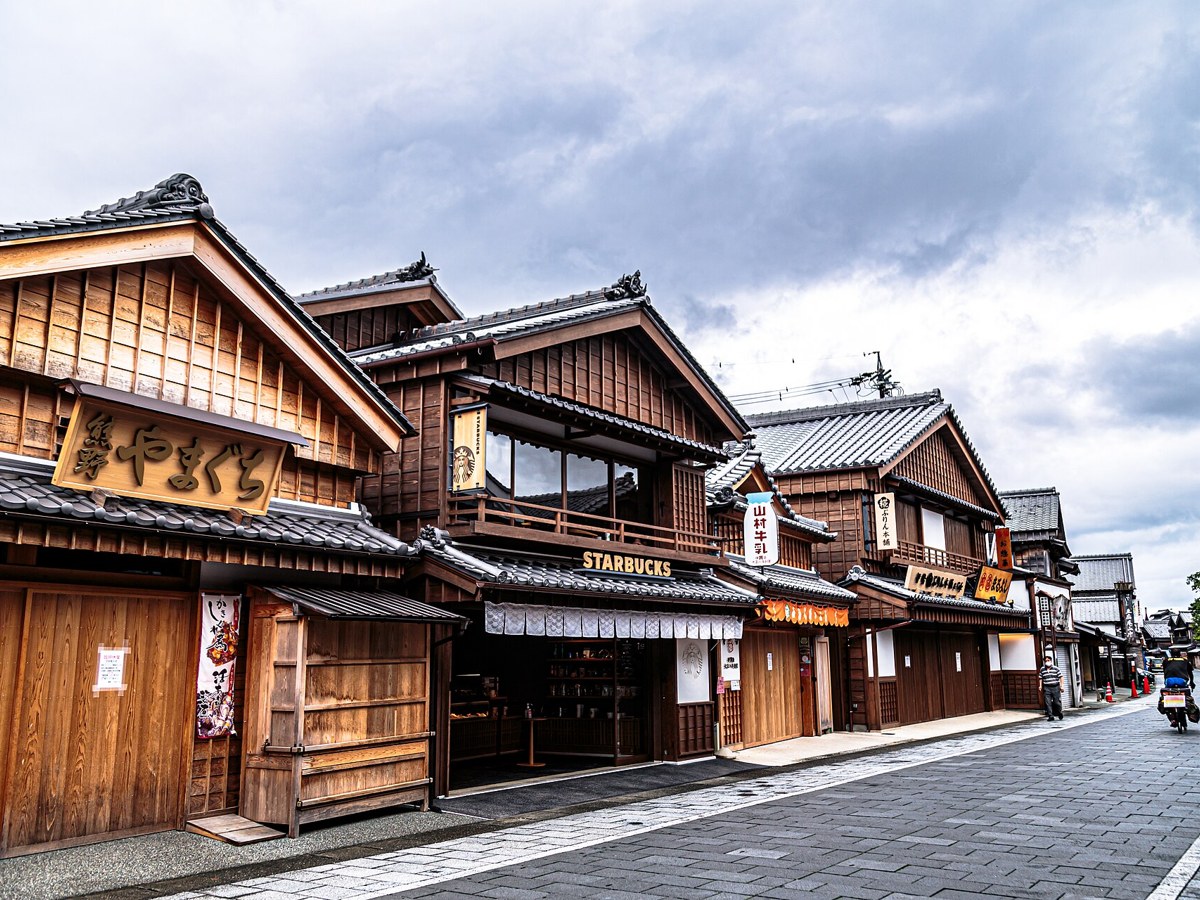
Akafuku's main shop stands on Oharai-machi, the old pilgrim street that runs from Uji Bridge towards the Inner Shrine, in a wooden townhouse where the eat-in plates are made fresh by hand through the day. Around it, the maker's Ise family of shops — Naikū-mae, Isuzugawa, Gekū-mae and the Okage Yokochō corner — forms the centre of a deliberately short map.
From Ise, the map extends only as far as freshness allows: the rest of Mie, then Aichi and Gifu in Chūbu, and Osaka, Kyoto, Hyogo, Shiga and Nara in Kansai. Tokyo is not on it. Neither is anywhere further. Beyond those nine areas, Akafuku appears only as a guest — at department-store food fairs, sometimes with craftspeople demonstrating the ridging by hand.
Practical details: price, boxes, where to buy, online sales
Price and boxes (checked 6 November 2026): Akafuku's own release prices the box of twelve at ¥1,300, tax included; the standard take-home line is boxes of eight, twelve and twenty pieces, with a small individually boxed format (Meimei-bako) also listed. The mochi keeps only a few days, which is the practical reason the sales map stays regional.
Where to buy: the maker's store guide lists shops by area — direct shops in Ise, plus department stores, stations, service areas and airport counters across Mie, Aichi, Gifu, Osaka, Kyoto, Hyogo, Shiga and Nara. The main shop in Oharai-machi, Ise, is the eat-in centre. Official online sales: Akafuku runs an official online shop for its longer-life goods (the release lists the zenzai gift set there); the fresh mochi is the regional product. Type of edition: regional edition centred on Ise.
Why the map is the message
Most famous Japanese sweets eventually surrender to nationwide distribution. Akafuku's refusal — or rather, its inability, given a paste that must be eaten within days — keeps the sweet fused to the journey that produces it. You do not simply buy Akafuku Mochi; you buy it within sight, or within a short train ride, of the shrine it has served for centuries.
That is also why the fairs matter: when Akafuku travels to a department store in Chiba or Tokyo for a week, it brings the craftspeople with it and makes the mochi in public. The region is not a marketing boundary drawn on a map; it is a freshness radius, demonstrated.
Scope: what 'limited' means here
Akafuku's own store guide lists sales areas for Akafuku Mochi as Ise City, Mie, Aichi, Gifu, Osaka, Kyoto, Hyogo, Shiga and Nara — a regional edition centred on Ise, with the maker's online shop serving its longer-life products. Checked 2026-11-06. Time-limited fair appearances outside these areas are documented; resale, imports and stock unverified.
Sources — checked 6 November 2026
- Akafuku: official store guide (areas and products)
- Akafuku press release: products, prices and official online shop
Original prose and official links only; no source text or maker media reproduced. Photos are credited Creative Commons works, not product photographs.
Editorial review 2026-11-06